Sunday, November 06, 2005


1737 The poulets have come home to roost
says Dr. Sanity, "and we should not be glad of it, because this could mean the beginning of the end for a free Europe." She's gathered some comments from other blogs here.1736 Nothing's changed since I was in school
Actually, a lot has, but not this--students don't like to be called on. Usually, because they aren't prepared. In fact, I'm a little surprised anyone had to study this. But 200 introductory psych students were questioned about "being called on.""The “top five” behaviors that 125 introductory psychology students said they use to avoid being called on (each endorsed by over 50 percent of the sample) included:
- Avoid eye contact.
- Look like you are thinking of the answer (but have not come up with it yet).
- Act like you are looking for the answer in your notes.
- Act like you are writing in your notes.
- Pretend to be reading something course-related.
This doesn't sound terribly imaginative of either the students or the authors, but the authors do have some suggestions on getting a discussion going.
1735 More negative news about alcohol advertising
"A study slated to appear in the January issue of Psychological Science suggests the mere presence of alcohol-related images -- including those in advertising -- encourages aggression even if people aren’t drinking." That's all I know, because the issue isn't available yet.1734 Who owns the computer system on which you're reading this?
Ad Age reports something surprising (to me) about blogs--551,000 years of paid work time is being spent on blog reading! Yikes. Turn me off right now and go back to work, you slacker! And if you're listening to AMC on headphones or a tiny TV stuck in your desk drawer, turn that off too.A report last week by Advertising Age Editor at Large Bradley Johnson noted that about 35 million workers -- or one in four people in the U.S. labor force -- spend an average of 3.5 hours, or 9%, of each work day reading blogs. This blogification of workplace time is no minor concern -- the total losses across the national work force are estimated to be the equivalent of 551,000 years of paid time that is being spent on blogs via the employer's own computer systems.
Another important point was that the time spent reading blogs on the job was in addition to the time already spent surfing the Web in personal pursuits. The debate appears to be one of reasonable limits. At what point, or at what length of time, does the use of company assets for personal activities become unreasonable? And is the problem likely to become an even greater one as more and more TV content goes online, becoming easily accessible from one's office computer? Do employers need to find new ways to police their computer systems?
1733 Free marketing and promotion advice
for librarians (but would work for various agencies who are clueless) in ten parts is currently running at Ex Libris. I can't say as I think much of the author's example [Tia Dobi] of the DoD as selling a product for "killing," but once she gets off her liberal soap box, she has some good things to say about how and how not to market libraries.There are some people who by personality and profession are not inclined to use public libraries--my family, for instance. My daughter and I were together Friday evening for dinner. She brought it in because I've been ill and she stayed until about 9:30. She was explaining to me the plot and intricacies of her latest read--The Historian by Elizabeth Kostova. Big, big book. She looked at her watch and said, "Oh Barnes and Noble will be closed. I want to buy 1776." "Don't you ever use a library?" I asked. (I'm totaling up in my head not only the pages, but the cost--it's a mom-thing). "Never. I like to own my books."
OK. I can accept that, but what if libraries had a decent advertising campaign at anytime except when they want to pass bond issues? What if their staff smiled and acted like they were happy to see you, the way boutique clerks do? What if they stopped talking to each other, and asked if you needed help? What if they bought more than 5 copies of books on the best seller list for 2 years? Do librarians think people are immune to advertising? Why is it that magazines, TV and newspapers actually support their product with advertising and appealing to their niche market, if it won't work on the homogeneous general public within driving distance of the public library?
Then there's my husband. He always has a beautiful, fancy library card because he uses the library so rarely, he is always issued a new one each time he shows up. Mine is about 30 years old and has a glued bar code on it because I stop by about once a week. But even that is way down from what it used to be before the internet, databases on-line, and Google.
Come on, librarians, toot your horns a bit.
1732 There's this guy in Bucyrus
who sells gasoline about 15 or 20 cents higher than the competition. Friday it was $2.39 for regular and Saturday he had dropped to $2.29, but the Mobile and Shell were $2.17. Around here the Sunoco is selling for $2.15, and the cheap gas places are probably less. So I'm thinking, how does this guy stay in business? It isn't just one week-end, but week after week. He's always way higher than stations two blocks away. Surely he can't be living on the loyalty of his relatives and the naivete of motorists coming in from Columbus and Cincinnati. He also has the dirtiest restrooms this side of the Third World--which I discovered the last time we stopped there. When I complained to the cashier she told me it wasn't her job. Well, maybe not, but did she go across the street when nature called? It was a sewer.Maybe he sells something else and tries to keep the rest of us away.
1731 Save a plant and it might return the favor
Plant and animal biodiversity isn't just for tree huggers. We've got Lyme Disease because the white footed mouse doesn't have enough natural enemies, and we need to protect the plants too, because they may be the source of treatments that will prolong our lives. This is not saving a snail species because it has "rights" but because it is the smart, productive and safe thing to do."Preserving biodiversity also means preserving a reservoir of as-yet-undiscovered medical treatments and cures. Consider the cancer drug Taxol, made from the Pacific yew tree; morphine, which was initially derived from poppies; and Artemisia, which yielded chloroquinine and other treatments for resistant strains of malaria. In addition, microbes -- the most diverse organisms on the planet -- also hold promise: aminoglycosides, a group of antibiotics used in the treatment of severe infections, were derived from a bacterium found in tropical soil.
Animal species too are treasure troves of medicines: the cone snail yields a toxin (recently FDA-approved under the name "Prialt") that is a thousand times more potent than morphine as a painkiller but does not lead to tolerance or addiction. That same snail also yields a broad-spectrum anti-epileptic used for the treatment of intractable epilepsy. It should go without saying that the destruction of species such as these means that potential cures are lost forever. Even species that may seem inconsequential to human life (like soil microbes or cone snails) actually have the potential to improve human life greatly -- if they are not driven to extinction."
American Council on Science and Health
Animal species too are treasure troves of medicines: the cone snail yields a toxin (recently FDA-approved under the name "Prialt") that is a thousand times more potent than morphine as a painkiller but does not lead to tolerance or addiction. That same snail also yields a broad-spectrum anti-epileptic used for the treatment of intractable epilepsy. It should go without saying that the destruction of species such as these means that potential cures are lost forever. Even species that may seem inconsequential to human life (like soil microbes or cone snails) actually have the potential to improve human life greatly -- if they are not driven to extinction."
American Council on Science and Health
Saturday, November 05, 2005
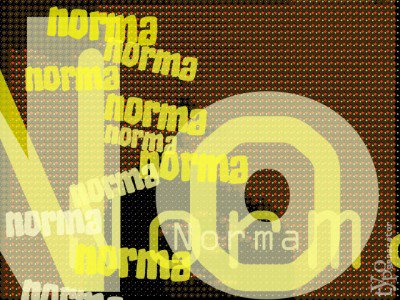
1730 Creating a piece of art?
I found a neat site called typoGenerator. Type in the words, change the font, or colors or background, or toss two of the three and move on.

1729 Ohio should vote
NO on Tuesday there's a bunch of incomprehensible issues on the ballot--called 2,3,4,and 5. They address absentee voting rules (Issue 2), campaign finance laws (Issue 3), the drawing of legislative boundaries (Issue 4) and replacing the Ohio secretary of state with an appointed board (Issue 5). The liberal organizations are supporting this wholeheartedly. They are still mad that Bush won Ohio by 180,000 votes last November. Still think he stole the election. The voice over ads on TV and radio say absolutely nothing, on both sides. Here's how Richard Finan sees it: • Issue 2 would allow more people to vote before the election but contains not one provision to assure voters that those votes are protected from fraud. In fact, in combination, Issues 2 and 5 obliterate Supreme Court rulings, Ohio attorneys general opinions and secretary of state policies that have protected the integrity of the vote in Ohio for generations.
• Issue 3 would limit the dollar amount people could give to candidates but would allow special interests never-before-imagined opportunities to stuff secondhand money into campaigns. For example, while it would prohibit Ohio’s employers from making political contributions, it would allow millionaires, such as Jerry Springer, the 2004 Democratic man of the year, to spend his own money unchecked for his promised campaign.
• Issue 4 would snatch the vote out of the hands of Ohioans while replacing that vote with a board of bureaucrats sealed off from the public. Ohioans have in every decade since 1970 thrown the rascals out, when they wearied of a party or its leaders. It is hard to believe that Ohio voters do not relish this power or that, as some reformers have said, are too easily tricked into misusing it.
Then comes Issue 5, which would remove the secretary of state as Ohio’s chief elections officer. That job, performed by dozens of different Democratic and Republican elected officials for generations, would be handed over to another appointed board. The board would mean more full-time state jobs and benefits for bureaucrats. The bureaucrats would set their own salaries, vacations and staffing needs, and taxpayers would get the bill."
• Issue 3 would limit the dollar amount people could give to candidates but would allow special interests never-before-imagined opportunities to stuff secondhand money into campaigns. For example, while it would prohibit Ohio’s employers from making political contributions, it would allow millionaires, such as Jerry Springer, the 2004 Democratic man of the year, to spend his own money unchecked for his promised campaign.
• Issue 4 would snatch the vote out of the hands of Ohioans while replacing that vote with a board of bureaucrats sealed off from the public. Ohioans have in every decade since 1970 thrown the rascals out, when they wearied of a party or its leaders. It is hard to believe that Ohio voters do not relish this power or that, as some reformers have said, are too easily tricked into misusing it.
Then comes Issue 5, which would remove the secretary of state as Ohio’s chief elections officer. That job, performed by dozens of different Democratic and Republican elected officials for generations, would be handed over to another appointed board. The board would mean more full-time state jobs and benefits for bureaucrats. The bureaucrats would set their own salaries, vacations and staffing needs, and taxpayers would get the bill."
1728 Debunking the myths of journalism graphic design
Although I didn't know there were myths about design of newspaper graphics, after reading this article at Poynter, I can see it. Some, I even think I've heard, although I'm no journalist. But I certainly think rag right is easier to read than justified right. Oh, the horrors of justifying paragraphs when we used the typewriter!"Somewhere along the way, the myth developed that justified type conveys more of a hard news feel -- and that and rag right is more featurey. Readers don't make any differentiation between the two. Some reasearch has shown that rag right is easier to read because justified text can create large spaces and more hyphenation. Either way, the achieve the best reader experience, it's important to have someone with a skilled eye tweaking the size, letter and word spacing, and acceptable hyphenation."
Read the article, Debunking Myths by Ann Van Wagener
1727 And liberals complain about Christmas?
What would they do with these holidays so beautifully described and visually enhanced by Avik (see Oct. 10)?"With the beating of drums and a surge of humanity flocking marquees since the morning despite warnings of thundershowers, the five-day Durga Puja, the biggest festival of the Bengalis, began in West Bengal on Sunday.
The festivities begin from Mahasashthi (the sixth day from the day after Mahalaya), when the priest unveils the goddess Durga during a puja known as bodhan.
This is followed by the three main days of Mahasaptami, Mahaastami and Mahanavami when the chanting of hymns, arati and anjali (floral offerings with chanting of hymns by men, women and children in new clothes) mark the rituals.
The fifth day of Bijoya Dasami, when the idols are immersed, marks the end of a carnival in West Bengal that goes beyond religions and communities."
1726 The continuing devastation in Alabama
Most teen bloggers write about the opposite sex, clothes and tech-toys. Not Rebelution. These teen brothers who are homeschooled have written about the wake-up call they got when driving through ground-zero of Katrina. It's still a mess, they report. They couldn't find a restaurant open, nor a grocery store to buy food. They needed to have their car repaired, and discovered there was no way to use a credit card. Residents of the area were still driving 50 miles to get gas. People are still living in tents. It's not over 'til it's over folks, and the press has gone home."In the past two weeks Alex and I have driven along the Gulf of Mexico from Montgomery, Alabama to San Antonio, Texas and back. We were struck not so much by the devastation wrought by Hurricane Katrina, but by the continued devastation. There have been three major hurricanes since Hurricane Katrina hit in late August: Ophelia, Rita, and Wilma. And while it has been legitimate for the media to switch their attention to these new natural disasters, a perhaps unintended consequence is that most Americans, not directly affected by Katrina, have assumed that unless an area was just "re-hit" by Wilma, everything's "O.K. down there." To most, it's old news."
Friday, November 04, 2005
1725 Google's Sergey Brin
I just love Google. As a librarian, I'm not at all distressed that it is achieving librarianship's goals of access to information for everyone even while threatening to put librarians out of work!*But I especially love that one of its founders, Sergey Brin, is an immigrant. Is this a great country, or what? And not just any immigrant, but he's from Russia. I was a Russian major in college and most of my classmates were immigrants--Ukraine, Latvia, Lithuania, Czechoslovakia, Yugoslavia, Poland, etc. I think I only met one or two actual Russians.
Google's new plan to digitize works still under copyright is explained in Lawrence Lessig's November column in Wired. It's short and to the point and easy to understand.
And would you believe, my ancestors were immigrants too?
*The American Library Association has come out against torture and the war in Iraq, but has said nothing officially about Google's digitization project. They're leaving that up to publishers and authors.
1724 Jimmy Carter was my favorite president
until he started acting like he was morally still the president, and that's been for quite a few years now. When he jumped in and helped with Habitat for Humanity, he was doing what an ex-president should do. Finding his own niche. Above the fray. In the 90s he didn't like Bill Clinton, and likes George W. Bush even less. Now he has a new book, "Our Endangered Values." Apparently it is deadly dull, according to reviewer Bret Stephens. I'm not surprised. Like his party, he hasn't had a new idea in 25 years. Here are the key words of the review by Stephens, now you can decide to read the book or not. Me? Not.tedious
boring
irritating
sanctimonious
self-congratulatory
humorless
factual omissions
passive-aggressive
"everything is wrong beginning with the title"
weird lapses of memory
obsessed
Tito--"believed in human rights"
Ceausescu--"our goals were the same"
Arafat--"misunderstood"
Kim Il Sung--"vigorous and intelligent"
I wonder of Carter thinks starvation is an important endangered value?
Article about Kim Il Sung in New Yorker. "the estimates are that two to three million people starved to death in the course of the past decade. Starving to death doesn’t happen overnight. Starving to death isn’t even a matter of having insufficient food for a couple of months. It’s total starvation over a long period of time, a complete breakdown of bodies."
"[Ceausescu's] secret police (Securitate) maintained rigid controls over free speech and the media, and tolerated no internal opposition. In an effort to pay off the large foreign debt that his government had accumulated in the 1970s, Ceausescu ordered the export of much of the country's agricultural and industrial production. The resulting drastic shortages of food, energy, medicines, and other basic necessities drove Romania from a state of relative economic well-being to near starvation. Ceausescu also instituted an extensive personality cult and appointed his wife, Elena, and some members of his family to high posts in the government. Among his grandiose schemes was a plan to bulldoze thousands of Romania's villages and large areas of the city of Bucharest, and move their residents into new apartment buildings. Over one fifth of the built area of central Bucharest, including churches and historic buildings, was demolished during Ceausescu's rule in the '80s." http://www.rotravel.com/romania/history/app4.php
1723 Fourteen entries
now in my new blog called, Memory Patterns. You're invited to take a look, although it is probably only of interest to my family. I'm using sewing patterns and photographs to reconstruct some memories. It is completely politics free, although still somewhat eclectic, because that's just how my mind works. I've come up with some memories that were pretty well buried, like buying an art print with green stamps, and who got the garter at my daughter's wedding. Don't throw anything away. You never know when you might need it!1722 Omidyars of e-Bay finance an old idea
Now they are calling it "microfinance," but when I first went to work in the Agriculture Library in 1978 and worked with the Agricultural Credit and Technology files, I think we just called them small loans. We had hundreds and hundreds of papers in that file on third world rural development and what could be done with small loans. Sometimes it was several sewing machines, or a well, or a fish farm.I think I'd say the same thing today I said in the 70s. Roads. Build them. Then do your miracles with microfinance or small loans. Without them, the farmers and the small business people have no market. With no markets, they move to the city slums. Without roads, aid rots in the ports.
Thursday, November 03, 2005
1721 Writes like a girl--Dana Milbank
Well, it could be a girl's name, I guess."The Senate is witnessing a real-life revenge of the nerd. Alito, bespectacled, hair askew, suit rumpled and ill-fitting, walked into Sen. Tim Johnson's office this week to pay a courtesy call. . .Alito forgot to unbutton his suit jacket, causing his tie to stick out and his jacket to bunch up. The judge's pant leg hiked up as he sat, revealing an untied shoelace. . . What better place for a supreme square than the Supreme Court?. . . Compared with Roberts, Alito looks as if he were in town for a "Star Trek" convention. . . Alito caught his foot in carpeting and briefly stumbled while getting in the elevator. . .his buttoned suit jacket bunching up, his fingers gripping his knees, his toes pointed inward." WaPo
What passes these days for journalism! More catty than a next of kittens. But it's probably a good sign that the MSM is totally without words.
1720 Victoria Toensig’s article in the WSJ “Investigate the CIA”
As excerpted in Powerline. Read this and then tell me again why they are wasting my tax money investigating Scooter Libby when they need to be investigating Joe Wilson, Valerie Plame and whoever at the CIA is trying to undo the Bush presidency. Seven questions the reporters haven't been asking. They need a blogfire.• First: The CIA sent her husband, former Ambassador Joseph Wilson, to Niger on a sensitive mission regarding WMD. He was to determine whether Iraq had attempted to purchase yellowcake, an essential ingredient for nonconventional weapons. However, it was Ms. Plame, not Mr. Wilson, who was the WMD expert. Moreover, Mr. Wilson had no intelligence background, was never a senior person in Niger when he was in the State Department, and was opposed to the administration's Iraq policy. The assignment was given, according to the Senate Intelligence Committee, at Ms. Plame's suggestion.
[My question 1-a: Is Ms. Plame involved in the misinformation about WMD that lead up to the war? 1-b: Did she need to cover her tracks, throw off the scent? 1-c Does Ms. Plame have more power in the CIA that we have been told? After all, she's making assignments related to WMD.]
• Second: Mr. Wilson was not required to sign a confidentiality agreement, a mandatory act for the rest of us who either carry out any similar CIA assignment or who represent CIA clients.
[My question: 2-a: Does this mean Mr. Wilson was not a CIA employee, but just an ordinary citizen since he didn't sign any agreement normal for an employee? 2-b Was the reason his wife wasn't sent was that she had already botched the WMD investigation?]
• Third: When he returned from Niger, Mr. Wilson was not required to write a report, but rather merely to provide an oral briefing. That information was not sent to the White House. If this mission to Niger were so important, wouldn't a competent intelligence agency want a thoughtful written assessment from the "missionary," if for no other reason than to establish a record to refute any subsequent misrepresentation of that assessment? Because it was the vice president who initially inquired about Niger and the yellowcake (although he had nothing to do with Mr. Wilson being sent), it is curious that neither his office nor the president's were privy to the fruits of Mr. Wilson's oral report.
[My question: 3-a: Does this mean Mr. Wilson was a common tourist to Niger? 3-b: Why did the CIA put so little weight on v.p. Cheney's request. 3-c: Were they already aware of their misinformation about WMD and didn't want to raise the issue?]
• Fourth: Although Mr. Wilson did not have to write even one word for the agency that sent him on the mission at taxpayer's expense, over a year later he was permitted to tell all about this sensitive assignment in the New York Times. For the rest of us, writing about such an assignment would mean we'd have to bring our proposed op-ed before the CIA's Prepublication Review Board and spend countless hours arguing over every word to be published. Congressional oversight committees should want to know who at the CIA permitted the publication of the article, which, it has been reported, did not jibe with the thrust of Mr. Wilson's oral briefing. For starters, if the piece had been properly vetted at the CIA, someone should have known that the agency never briefed the vice president on the trip, as claimed by Mr. Wilson in his op-ed.
[My question: 4-a: Who does Ms. Plame know on that Review Board who would pass on this? Or is she much higher up than we've been led to believe and can just go over their heads? 4-b: Why didn't NYT ask about the CIA clearance? 4-c: Was Wilson so naive that he didn't know he needed permission, and the CIA did act because then their ineptness in sending him would have to come out?]
• Fifth: More important than the inaccuracies is the fact that, if the CIA truly, truly, truly had wanted Ms. Plame's identity to be secret, it never would have permitted her spouse to write the op-ed. Did no one at Langley think that her identity could be compromised if her spouse wrote a piece discussing a foreign mission about a volatile political issue that focused on her expertise? The obvious question a sophisticated journalist such as Mr. Novak asked after "Why did the CIA send Wilson?" was "Who is Wilson?" After being told by a still-unnamed administration source that Mr. Wilson's "wife" suggested him for the assignment, Mr. Novak went to Who's Who, which reveals "Valerie Plame" as Mr. Wilson's spouse.
[My question 5-a: Was Ms. Plame's career and reputation (because of WMD misinformation) in the toilet so they didn't care how she was outed? 5-b: Is Wilson as hungry for publicity as Cindy Sheehan?]
• Sixth: CIA incompetence did not end there. When Mr. Novak called the agency to verify Ms. Plame's employment, it not only did so, but failed to go beyond the perfunctory request not to publish. Every experienced Washington journalist knows that when the CIA really does not want something public, there are serious requests from the top, usually the director. Only the press office talked to Mr. Novak.
[My question 6-a: so is Novak off the hook? 6-b: Did he have no obligation to ask just in case he was talking to a lunch time substitute.]
• Seventh: Although high-ranking Justice Department officials are prohibited from political activity, the CIA had no problem permitting its deep cover or classified employee from making political contributions under the name "Wilson, Valerie E.," information publicly available at the FEC.
[My question 7-a: Why hasn't Plame been fired for this if it's against the rules? 7-b: Has she been fired and no one told us? 7-c: Did she know she was violating the rules?]
1719 9th Circuit Court are sure a scary bunch
A Calfornia blogger, e-Claire, asks what is going on with sex education in California?Read this Unanimous Decision by the Court: FIELDS v. PALMDALE SCHOOL DIST.
"We… hold that there is no fundamental right of parents to be the exclusive provider of information regarding sexual matters to their children, either independent of their right to direct the upbringing and education of their children or encompassed by it. We also hold that parents have no due process or privacy right to override the determinations of public schools as to the information to which their children will be exposed while enrolled as students. Finally, we hold that the defendants’ actions were rationally related to a legitimate state purpose."
So I guess if the schools want to teach your kid that masturbation causes insanity, or that babies come from the cabbage patch you can't contradict them. . . "parents have no due process or privacy right. . ."
Is this the "mainstream" that the Dems keep talking about for our Supreme Court?
Subscribe to:
Comments (Atom)


 Posts
Posts


