Consistency counts
- in parenting
in budgeting
in dieting
in learning a new skill
in relationships
in gas mileage
in fashion
in teaching
in the workplace
in scheduling
in worship
in volunteering
in training puppies
in winning awards
in blogging
 That's what comes to my mind as I click through the channels and come across young black rappers grabbing their crotch and dancing around with their legs spread and pelvis lifted. (Should crotch be plural? Groups of grabber-rappers mean more than one crotch, but each grabber only has one.) It apparently has a hostile meaning. Rap groups actually hire "hand gesture" experts to help them look more intimidating, and I'll bet you a cup of coffee they are women. So much for authentic culture. I went to a poetry reading at the public library and a perfectly nice white boy could hardly keep his hands decent while performing.
 I'm just repeating the words of the reviewers who love her--this Jewish comedienne is rude, crude and salacious. I'll never attend her shows or watch her on TV just on the basis of the title of her show: Jesus is Magic. With her fog screen of excuses, which includes all of those from the last 25 years, "It's your right to be offended," and "You can't please everyone" I know where she's going without paying an outrageous price to hear myself insulted. If you think insults of other's race, ethnicity, religion, culture, sexuality and gender are amusing, well, welcome to the 1950s. It was consider a hoot back when I was growing up, and I'd hoped we were past that. But I suppose each generation has to reinvent humor. She's bound to grow up (or is that down?). Although Richard Pryor didn't--setting himself on fire free basing, years of womanizing and developing MS didn't change his style of hanging over the edge of hell.
What woman would admit to this?
I've often wondered if later in life, while living maybe in San Diego or Houston, a woman would admit to a past of being [the Forreston] Sauerkraut Queen or maybe the Ogle County Pork Queen (another biggie in our farming county)?
Where do I join?
The National Coalition to End Judicial Filibuster. Where do I join? In fact, let's not stop with the judiciary, let's dump the filibuster altogether. Can you think of another organization that uses this? And it is misused by both parties--I'm not pointing fingers at the Democrats, at least not in this paragraph.
Guess the trendy car ads
Guess which ad goes with the car of your dreams. My favorite ad (although not the car), is definitely #9. It’s edgy--like a Laura Bush joke. Answers at the bottom of the page.
Do you save ribbons, bows and paper from Christmas and holidays?
Do you save ribbons, bows and paper from Christmas and holidays? Goodness. I have enough bows to last until 2047! And those cute little gift (reusable) bags--I had no idea I had so many. Birthdays. St. Pat's Day. Valentine's Day. Christmas. All purpose. I'm guessing I found about 25. And the gift boxes. Did I fear if I bought a piece of jewelry, it would come box-free?
Is there ever enough storage?
. . . in Ohio, we have $100,000 basements. At least that's what you're led to believe if you sell a house without one. For 34 years we lived in a lovely neighborhood of more expensive homes because our two-story, colonial house was slab on grade. When we put it on the market in 2001 we were always told how much it could have sold for if only we had a basement. . . We thought we'd left basement woes behind us, but the other night my husband took a phone call from someone interested in buying that house (it has been on the market because the new owners are divorcing). Would you believe the guy wanted to know if he could jack up the house and put a basement under it?
Would you spend $40,000 a year to send your daughter to Smith if you couldn't even figure out the restrooms?
Roger Kimball who wrote about tenured radicals 15 years ago when things were simple (plain vanilla Marxism) suspects, that along with Mark Twain's demise, the death of the counterculture is greatly exaggerated. I agree with his solution. Dump tenure which has become a means to stifle dissent and fresh ideas. Seems to be the only way.
Where do you cut costs?
Economically, it makes absolutely no sense for me to leave the house every morning at 6 a.m. and drive to a coffee shop. If you don't do this, you could exclaim, "But that costs you nearly $600 a year, when making it at home is about five cents a cup." Very true. But I read 2 or 3 newspapers, and see 4 or 5 people I know, chat with various folk, so as a social informational event, it's pretty cheap. Compare that $600 to a golf hobby, and you can see it is really pretty cheap.
What do children in Third World Countries ask for?
Yesterday's question in VBS was something along the lines of "If you could have anything you asked for, what would it be." Apparently, only one little girl (probably watches beauty pageants on TV) thought beyond material needs and did indeed ask for world peace, according to my husband who teaches the class. Most asked for material things, but not a bike or a pony like my generation would have done (we were self-centered too), but a house! One little girl asked for a shopping mall! Now THAT is materialistic. "What do you suppose children in Third World countries ask for," my husband mused.
Which Democrat will drive more people way from the party?
Diarrhea-of-the-mouth Dean or Tokyo-Rose-in-Drag Dick? It's been many a year since I lived in Illinois, but my recollection of those days is that about a third of Chicago was Estonian, Latvian, Lithuanian, Polish, Ukrainian, Belarus, Slovak, Czech, Hungarian or European Jew. About half my classmates at the U. of I. were children of the escapees from Hitler or Stalin. Some had lost their accents, but they never lost their memories of starvation, forced marches, refugee camps, and grandparents, aunts, uncles and cousins they'd never see again. And if their memories ever did dim in the usual frivolity of the teen years of dating, music and partying, you can bet your ass mascot their parents would remind them.
I ’ve been thinking a lot about unintended consequences after reading about polio epidemics following on the heels of the improved sanitation provided by flush toilets and toilet paper. Most recently, we’ve seen some unintended consequences in connection with Hurricane Katrina from personal and government generosity.
An outpouring of generosity for the gulf coast victims resulted in a corresponding shortage for local charities and foundations in our closer-to-home neighborhoods. I watched the Charity Newsie guys collecting on the streets yesterday, wondering if they were freezing their buns off and getting less.
Jobs are going begging in the hurricane areas as people wait until the FEMA money runs out before looking for work. Businesses can’t reopen with out workers, and residents won’t return home if there is no economy to support the rebuilding efforts.
Mega churches are drawing huge crowds, but destabilizing and blighting older neighborhoods as churches move further out for more land. (Sort of the WalMartization of religion.)
More insulation and tighter buildings in response to higher fuel costs has resulted in more allergies and respiratory problems.
Improved highways, better gas mileage and safer cars resulted in business loss and decay to small town and rural businesses as people drive to distant shopping malls or larger towns.
Improved air conditioning and cheap energy have created building growth in formerly uninhabitable areas, like coastal areas (recently hit by hurricanes), deserts, bringing damage to environment and loss of life in storms.
Health concerns and animal products and the popularity of vegetarianism have created a greater demand for fruit and vegetables resulting in more food poisoning from crops contaminated by animal runoff and greater use of herbicides and pesticides.
Harvesting of rare plants for medical research and homeopathic medicines are contributing to the destruction of rain forests.
The invention of canned milk many years ago made it convenient for women not to breast feed resulting in lowered immunity in infants and toddlers and more women entering the work force. This continues to this day in poor countries where it is watered down.
Summer breaks were created in the school calendar because child labor was needed on the farm in the 19th and early 20th centuries, but schools still let out for the summer months resulting in significant loss of learning even though we outlawed child labor years ago.
Introduction of the potato to Ireland so improved nutrition among the poor that there was a huge increase in the population. Then the blight of that monocrop resulted in the starvation, malnutrition and emigration of millions.
Silent Spring by Rachel Carson was published and good intentioned protests caused American companies stop producing DDT. This resulted in the deaths of millions in third world countries from malaria and huge loss of GNP in malarial countries. "The Malaria epidemic is like loading up seven Boeing 747 airliners each day, then deliberately crashing them into Mt. Kilimanjaro." Dr. Wenceslaus Kilama
In 1996, manufacturers introduced 3,434 new “low-fat” or “nonfat” food products. In 2003, 700 “low-carb” or “no-carb” products hit the market and in 2004, 3,431 such products followed. This has resulted in more obese Americans, apparently from the unintended consequence of people consuming more calories in the search for satiation and flavor.
Green architecture--glazed windows, efficient lighting, reflective roofs, below grade buildings encourage larger homes being built further out due to their efficient use of energy resulting in no savings at all to the consumer and more urban sprawl.
The closing of energy consuming, polluting factories resulted in jobs going overseas to less restrictive areas and the deterioration of workers‘ life style.
Wind farms (aka tax farms or cuisinarts of the air) produce low emissions and cleaner air but very expensive kilowatts and result in the deaths of many birds and the rise of rodent populations. Or as they say, “How many dead birds equal a dead fish equal an oil spill?” They may also produce climate changes locally.
Modern refrigeration changed our diet and made us safer from food poisoning, but contributed to the growth of cities, the rise of large distant feed lots for cattle, the importation of off-season foods and the deterioration of the environment.
Modern air conditioning changed our driving, employment and entertainment. Outdoor landscaping for shade and front porches no longer were essential for comfort changing how we interact with our neighbors.
Bird feeders cause migrating birds to share diseases, change eating habits of local birds causing them to not eat insects, and attract rodents, like skunks. Increased insects and rodents may cause the rise of disease or increased use of pesticides.
Strong recycling codes and laws in the cities have resulted in trash being dumped in the rural areas because you can’t burn it or bury it.
Successful and cheap waste management systems of the early and mid-20th century using landfills and incinerators resulted in a throw away mentality for generations. American households throw out 467.2 pounds per year - not including what goes down the garbage disposal or into compost piles. Annual cost of food waste is more than $43 billion per year, broken down roughly as follows: meat - $14 billion; grains - $10 billion; fruit - $9.6 billion; and vegetables - $9.1 billion. (Biocycle, May 2005)
The Passion of the Christ the movie that earned $370 million at the domestic box office and drew in religious people who had for years complained about movies, did not bring people into the churches nor change what Hollywood offered once they found out what the people liked.
There’s much more--entire articles and books have been written on this topic. These are just the ones that came to my mind. Here’s an article on unintended consequences from the Concise Encyclopedia of Economics. You can also google this topic--unintended consequences + [whatever law, event or movement you think of]. Or just try inserting the word "google" after that plus sign.
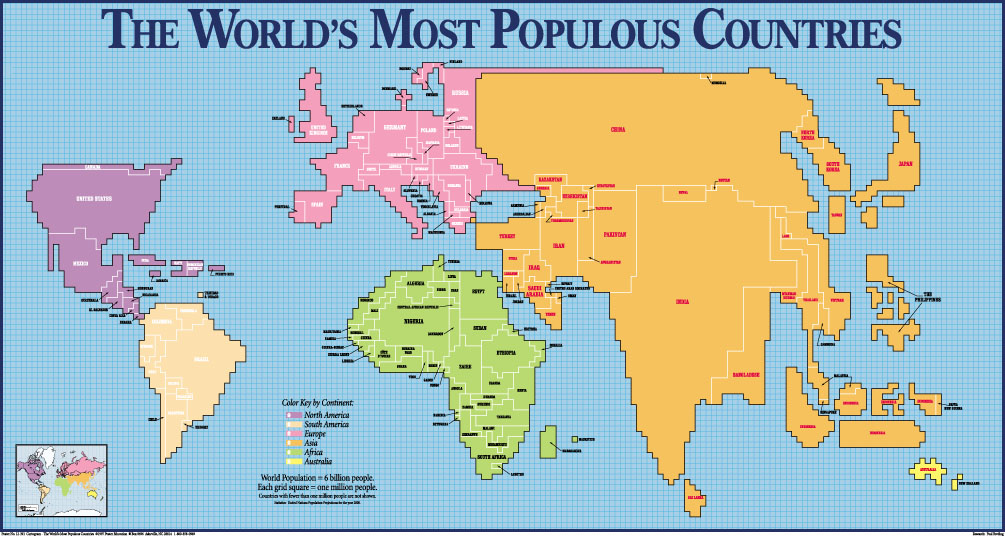 Here's the link for a better view.

 Before I'd ask for this, I'd suggest checking some of the used sites. I got a book I'd asked for last year, and haven't read it yet. It sounded soooo good in the reviews. Also got Memoirs of a Geisha one year, and haven't read that either (although I did take it to an airport once). But yesterday's review in the WSJ was very positive for Mozart: The Early Years, 1756-1781 by Stanley Sadie. The author has since died, so it will be a short series.
 All the relatives are receiving a copy of Cottage; America's favorite home inside and out by M. Caren Connolly and Louis Wasserman, published by Taunton, 2005, because one of my husband's cottage designs at Lakeside, OH is featured in the book. The other featured cottages are good too, of course. The Wassermans have done several books and they are all outstanding.


 Posts
All Comments
Posts
All Comments


