Friday, December 30, 2005

1961 Remember stories and theater on radio?

Today I followed a link at Jay Kegley’s blog to a free radio site, LibriVox, which provides totally free audiobooks from the public domain. Volunteers record chapters of books in the public domain, and then LibriVox releases the audio files back onto the net (podcast and catalog). Their objective is to make all books in the public domain available, for free, in audio format on the internet.

From that site I clicked through several other free audio sites, including old radio theater. "Bookworm" showcases writers of fiction and poetry. Podiobooks.com will feature your book if you are an author--a good way for you to get an audience. FreeAudio.org was featuring The Law by Frederic Bastiat. “The Law is one of the most important books ever written on the uses and abuses of law. While short, The Law has proven itself time and time again to be life changing to those who read it.” I’d never heard of it, but am finding it very interesting. This site seems to feature titles important to liberty and freedom, and includes Frederick Douglass’ autobiography.

You can spend hours mining these sites for novels, short stories, poetry and essays.

1960 Before and After the Clean-up

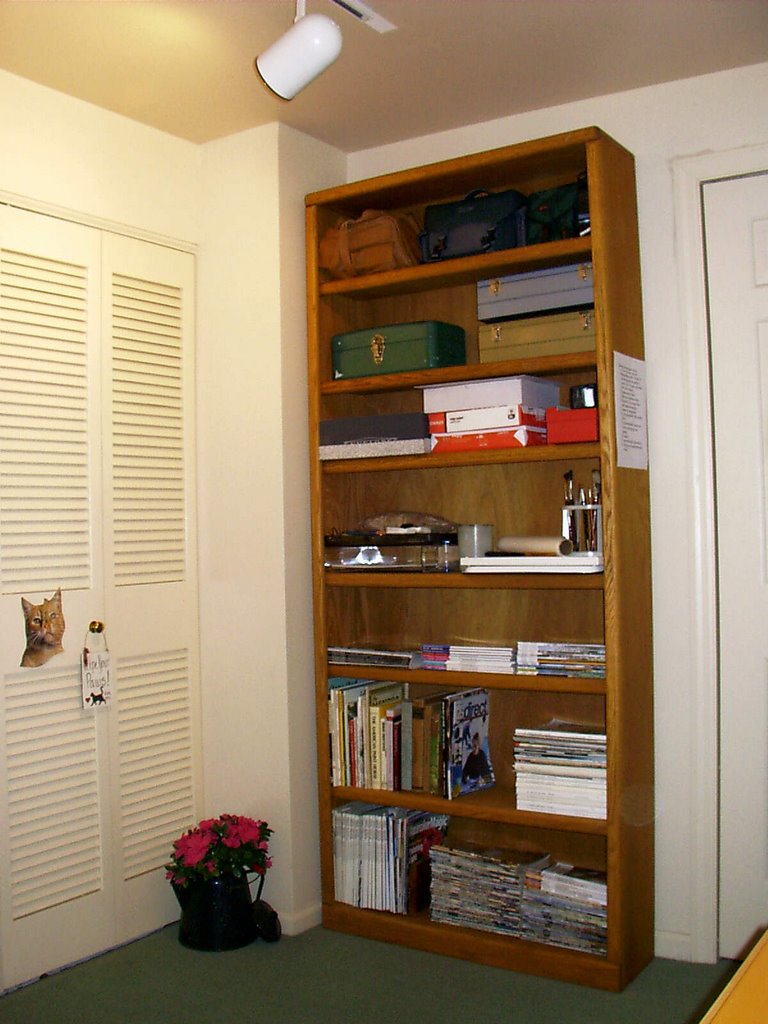
It may be difficult for you to see the difference in these photos, but let me assure you, except for one small tray (filled with rolled pennies, WWJD bracelet, buttons from shirts no longer worn, a high school ID photo, and pens that don't work) which my husband wouldn't give up, these shelves are now functionally organized.

Before the great clean out


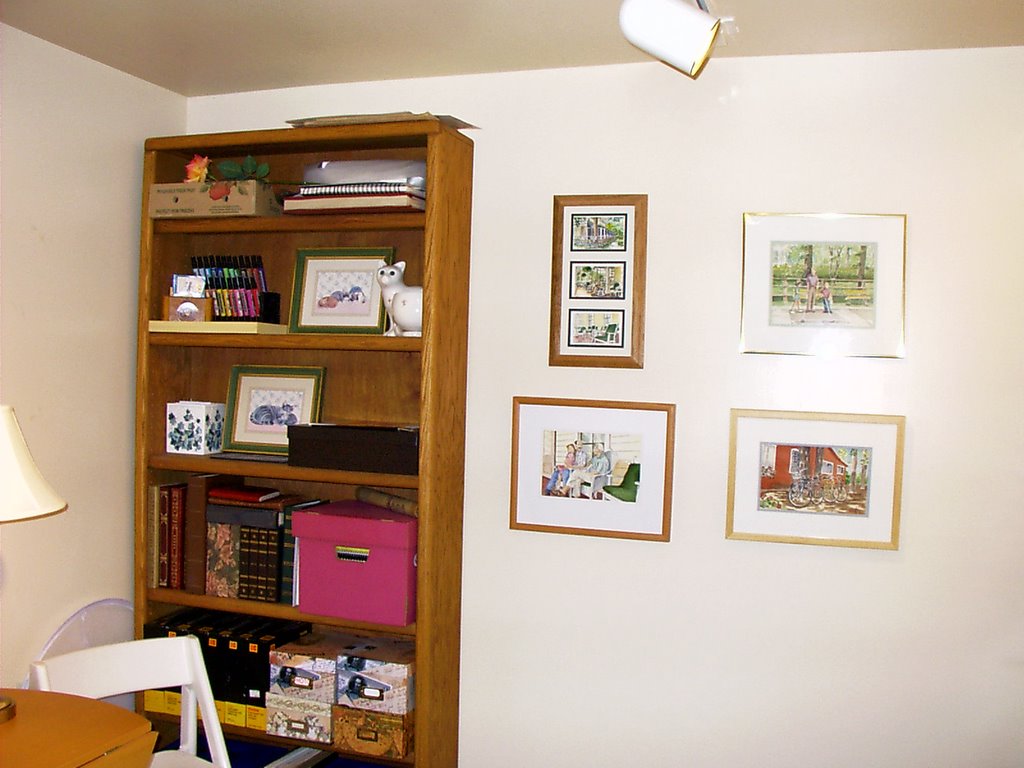
After the reorganization


See the mat board in plastic peeking from behind the shelf? It is now resting comfortably in a flat file, which took days to purge. All the books from the bottom shelf (if we could learn to paint by reading books, we'd be making a fortune, but have instead spent one on books) have been moved into the art studio to shelves that were liberated of old notebooks stuffed with specs that were out of date. Then 15 years of American Artist were moved and are neatly shelved by year and month instead of jabber jibber. See all those cameras? They used to be all over the place, sometimes in a case, sometimes not. Now they have friends to keep themselves company. See those little plastic film containers building pyramids like cheerleaders? In the trash--we had about 50. See the box on top of the shelf. It contained slides which have all joined their slide friends in another cabinet behind those louver doors (the kitty litter is also behind those doors and that artificial floral arrangement is to pretend you can't smell it).

Now on the other side of the room is the larger 36" shelf we swapped with our son, and a few items, like those photo boxes were moved there. This shelving unit contains a lot of reference material--magazine photos, Christmas cards, sketches, etc. Also, loaded carousels for painting reference--probably every barn in northern Illinois is in there. The paintings on the wall are mine--all of Lakeside, OH. A mirror would have been nice, but after getting rid of so much stuff, I didn't want to start buying again.


Well, what do you think?


1959 Year-end assessments of the economy

Those of us concerned about the poor will be delighted to read all the year end assessments of the economy. If you were Kedwards people who believed all the sour economic news floated by the DNC during the election of 2004 please know nothing helps the poor more than a good economy--although it does hurt Democrats if they aren‘t in charge because then people aren't beholden to them.

Now that we’re retired on pensions and moving to the bottom quintile again, where we were in our early 20’s, I’m very happy with the thriving economy and am puzzled that liberals who claim to care so much are so unhappy. And it is a mystery to me why the cities with the highest poverty rates keep returning local Democrats to office to run things. You can fool some of the people all of the time, I suppose.

“Remember the 2004 debate over the "jobless recovery" and "outsourcing"? Here's the reality: The great American jobs machine has averaged a net increase of nearly 200,000 new jobs a month this year. Some 4.5 million more Americans are working today than in May of 2003, before the Bush investment tax cuts. The employment expansion in financial services, software design, medical technology and many other growth industries dwarfs the smaller job losses in the domestic auto industry.

Critics of the U.S economic model charge that income gains for workers still have not caught up with the losses from the 2000-2001 high-tech collapse. Now they have. The Treasury Department reported last week that "real hourly wages are up 1.1% versus the previous business cycle peak in early 2001." Workers are now earning more per hour in real terms than they did at the height of the 1990s expansion.” Rodney Dangerfield Revisited in today’s WSJ

Kiplinger’s Personal Finance, Jan. 2006 reports a very positive picture: "As we begin the 50th month of economic growth this new year, not too much has changed. You can expect 3% growth in 2006 to follow the 3.6% of 2005 -- an excellent showing considering the massive hurricanes, record oil prices and relentless Federal Reserve Board interest-rate hikes. . . The U.S. will create two million new jobs in 2006, on top of 1.8 million in 2005, enough to hold the unemployment rate to 5%. With jobs plentiful, employers will add nearly 4% to paychecks. . . Corporate America's balance sheets and profit margins are the strongest they've been since the 1960s, with only a few industries, such as airlines and U.S. automakers, in trouble."


1958 Mere Magazines

In today's Wall Street Journal Dr. Thomas P. Stossel of Harvard Medical School takes on the hypocrisy of some of the top medical and science journals. Recently, some high profile U.S. journals like JAMA, NEJM, and Science have been caught with their data down, publishing articles from India, China and Korea ranging from cloning to stem cell research to nutrition after heart attacks that would never meet FDA scrutiny in the USA because of the limited clinical trials and bad data. His gripe with these journals' editors is that they quick to criticize the pharmaceuticals (i.e. big business that took the risks) but seem to be blind to the power trail in academe or their own flubs.

"Many [academics] would run over their grandmothers to claim priority for a discovery, impose their pet theory on the field, obtain a research grant, win an award or garner a promotion. . . We exercise our ambitions by publishing research papers in journals."

And he concludes: "If reporters understood that journals are magazines, not Holy Scripture. . ." Oh I love that.

I can't find a free link to Dr. Stossel's article, but here's one he wrote for Forbes with similar information and different details called "Free the Scienctists."


1957 Book Club selection for January

This coming month's selection is "Beyond the River" by Ann Hagedorn. The subtitle: the untold story of the heroes of the underground railroad. The action takes place in Ripley, Ohio, across the river from Kentucky--a free state and a slave state. I'm not far into the book, but the writing is good and draws the reader into the story immediately with setting the scene and building the characters. However, when I read about this era, which according to Hagedorn begins in the 18th century with people who were against slavery and believed they were born to change the world, I can't help think of our current battle between the pro-life and pro-choice forces. What is a life and what is its value. There are many paragraphs that with a few word changes could describe our politics today, where every court nominee depends on what was said about abortion 20 years ago in some clerking memo.

"As news of the Missouri Compromise reached Carlisle, Kentucky, where [John] Rankin lived, and nearby Concord, where he preached, Rankin felt the pulse of his community quicken. He sensed the anger in the hearts of slave owners and the frustration among antislavery advocates when he stood at the pulpit seeking to prove that slavery was as great a crime against the laws of God as murder, and arguing that every slaveholder must free his slaves to adhere to the teachings of the Scriptures..."

Also, I'll need to check my Family Tree database. John Rankin was born in East Tennessee in 1793, and that's where my family's ancestors settled after service in the Revolution (Scots-Irish who hated the British), and I think I remember some Rankins in the family.

Thursday, December 29, 2005

1956 Bush book critics

Over the holidays, the President is reading "When Trumpets Call, Theodore Roosevelt After The White House," by Patricia O'Toole, and "Imperial Grunt, The American Military On The Ground," by Robert Kaplan. A talk show hostess like Oprah can recommend anything and the MSM falls all over her. But every time it is reported in the news that the President is reading a particular title, some literary snob jumps in and makes snide remarks about his choices, his ability to read, his grades in college, or his conclusions.

The president enjoys reading biography, history, military science and economics, and Literary Saloon reacts predictably--doesn't think he can read two books, and doesn't believe he is an avid reader. She/He probably believed Kerry's opinion about the worst economy since the Depression. If you hate Bush, you'll believe--or not believe--anything. This summer when he was reading "The Great Influenza: The Epic Story of the Deadliest Plague in History," "Salt: A World History" and "Alexander II: The Last Great Tsar" journalists and critics were "reading" all sorts of strange things into his choices. Oh yes, and they criticize him for not watching their newscasts. Reads and doesn't watch TV. Sounds smart to me.

But at least "Saloon," the blog of Complete Review, knows what it is: "The Complete Review makes no claims whatsoever to any form of objectivity in its reviews and opinions. We acknowledge that the biases and personal views of the editors colour all aspects of this site." That's refreshing, isn't it?

1955 A wonderful love story

between a brother and sister that will have you laughing and crying at the same time. Read Jake's story about the mysterious Christmas puzzles.

1954 Podcast is Word of the Year

Nathan Bierma who writes "On language" for Chicago Tribune reports:

"The editors of the New Oxford American Dictionary have validated the sudden spread of podcasting by naming "podcast" the Word of the Year for 2005.

"Podcast," defined as "a digital recording of a radio broadcast or similar program, made available on the Internet for downloading to a personal audio player," will be added to the next edition of the New Oxford American Dictionary.

The word originated as a play on the word "broadcast" using the name of Apple's popular handheld digital music player, the iPod."

He goes on to say that the word "pod" isn't from the Greek, as in "podiatrist," but rather, "The word "pod" began as "cod" in Old English, meaning "the husk or outer covering of any fruit or seed." The 'pod' spelling isn't recorded until 1688, according to the Oxford English Dictionary." No one seems to know why the P replaced the C, but apparently numerous English words meaning swollen or protruding start with the letter P, but let's not go there.

1952 The Travesty of Daniel

Insulting, demeaning programming about Christians wouldn't be so bad if there were anything to balance it. Like a show about an actual Christian who wasn't a ghost or an angel. The new NBC show, Book of Daniel, about a dysfunctional Episcopal priest is supposed to "edgy," "challenging" and "courageous." Yea, and I'm Madonna in a reality show about Detroit. The series is written by Jack Kenny, a non-Christian who describes himself as being "in Catholic recovery," and is interested in Buddhist teachings about reincarnation and isn't sure exactly how he defines God and/or Jesus. "I don't necessarily know that all the myth surrounding him (Jesus) is true," he said.

All you can do is turn it off--not just the show, but the whole channel--or write to the advertisers and let them know you will vote for this show with your non-dollars. Complaining to NBC will probably just give it more publicity. You know how the liberals love to whine about censorship.

1951 Just about packed up

We decided to rearrange and repack and give-away, and I've written about that ordeal here and here. AmVets are supposed to come tomorrow to pick it all up, and we've taken everything to the garage, hoping we don't have to move that car today. And I use the royal "we" here because everything was too heavy for me to carry.

I think there is over $10,000 of drapes in the pile--however, used drapes have no value especially if they've been created for specific windows. And there are size 37 sport coats and suits, an almost new pair of black loafers that hurt my feet, bright fuschia Capri pants size 8 with an even wilder top (what was I thinking?), winter sweaters, Hawaiian shirts, a 20 cup coffee maker, about 50 8-track tapes, pictures in frames, a double bedspread with matching pillow shams, twin bed skirts, two director's chairs, b & w TV, microwave, books, toys, a number of cookie tins nesting, notebooks and paper and pencils, portable typewriter, a tall chair for a drawing table, and other stuff I've already forgotten. Three 40 gallon trash bags of shredded documents went out with the trash pick-up this morning.
Some things were rescued and redistributed--like jewelry from the 70s and 80s to a niece who can reuse the beads in her art, and itty bitty figurines and toys for a friend who makes dioramas. We pulled out a framed photo of the Columbus skyline at the last minute deciding we could reuse the frame.

This is going to feel good when my muscles stop hurting.


1950 Hostile aggressive drivers

are also hostile and aggressive in other areas of their lives and are also more likely to drink and drive, according to a report I heard this morning on drivers from 18-45. I guess we knew that intuitively, didn't we? So when you hear the squealing tires, the horn blaring, and you get the finger, just imagine what his wife and kids are putting up with.

1949 Love cats, and the occasional dog

This is a thought from the writer Anne Lamott, in "Mothers who think," July 22, 1999, www.salon.com.

"If you hang around sober alcoholics long enough, you will hear at least a few of them pronounce that God's will for them is to be happy, joyous and free. I personally believe that this is a bit of a stretch, or at any rate, a very American conviction. My priest friend Tom Weston says that God's will for each of us is to have a life. "And it is up to us to go and get one. Find some work, some love, some play. Taste things. Be of service. Feed the hungry and clean the beaches and clothe the naked and work for justice. Love God, love your neighbor. Help build a world where it is safe to be a child, and where it is safe to grow old. And love cats, and the occasional dog." I think this pretty much says it."

Wednesday, December 28, 2005

1948 Are there two of you under one roof?

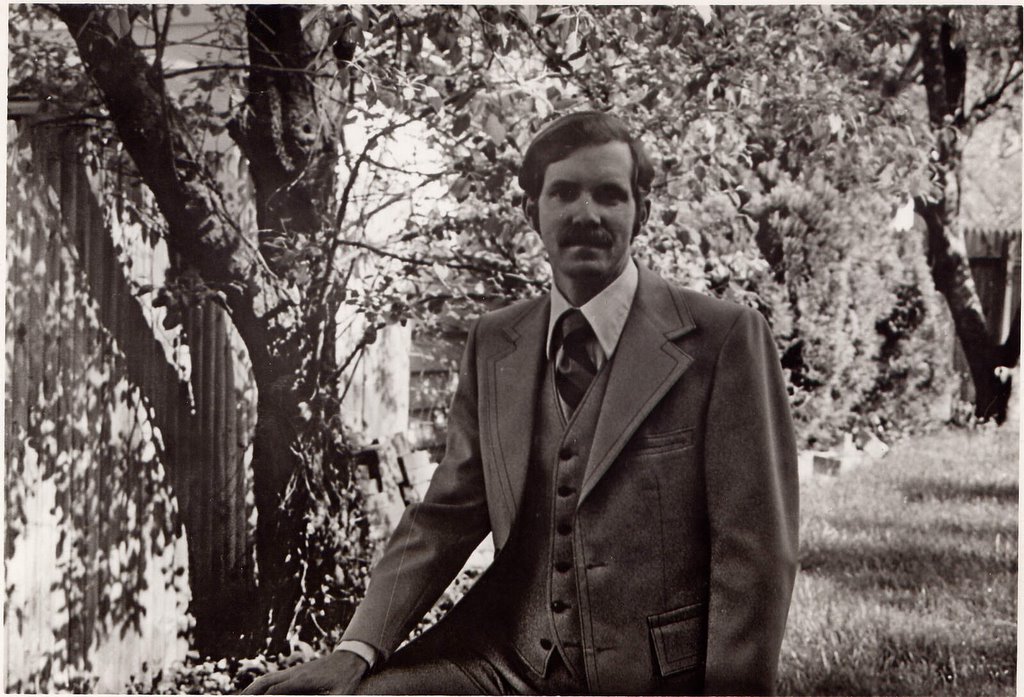
For over a week, we have been discarding, rearranging and repacking our files, books, art work, church records and memorabilia. All so I can move my drawing table and art space into the family room/husband's office which has nice north light. If you have two musicians, or two artists, or two doctors in your house, you will understand the problem. We are two organizers trying to share space. My husband is more tidy, but I'm the better organizer. I can think alphabetically, chronologically or by keyword. But all three mushed together drives me crazy. After he was hitting the home stretch yesterday (I'm not even close), I took a peek. I looked inside a box labeled, "Hawaii and stuff." I found some papers from church workshops of 30 years ago, never looked at after the event; some black and white photos of my husband when he had hair and polyester suits; a 1994 NCARB memo; a 17 year old letter; and some items from our 1985 trip to Hawaii.

When I looked at the boxes and boxes of old financial records, I discovered not only did we have all the cancelled checks, but all the invoices, bills, and statements too. He was too discouraged by my displeasure to even think about another reorganization, so I went to Staples and bought a small paper shredder, and am going through about 15 years worth of bills, etc. I have no idea where the first 30 years are--but apparently I've done this before. I decided to shred them because of all the account numbers. They don't mean anything to me, but with the ever growing number of databases on the internet tracking us, I just didn't want them floating around the garbage dump, or where ever these will finally be buried or incinerated.

Earlier in the month I'd planned to hire my friend Bev to reorganize us, but now see the folly of that idea. We got ourselves into this, and no professional organizer (or marriage counselor) will get us out. But Bev, there is still the garage! It is very tidy, but I can't find anything in it because he organized it.

Here's the polyester suit. I also found the bill for the removal of the two apple trees that show in this photo which happened about 20 years later.

Tuesday, December 27, 2005

1947 Women can’t take this anymore!

NOW and the Feminist Majority have launched Enraged and Engaged as part of Freedom Winter '06 to stop the confirmation of “extremist” Samuel Alito to the U.S. Supreme Court. So watch out for some funny stuff because I’ve read through their news items with all the alarmist words, but can find not one single specific thing they can point to--just the usual “call your Senator, send e-mails, send us money, lots of money” rant, rave and hoop-la.


1946 The Road to Kelo is paved with wheat

"Beginning with its 1938 term, the Court actively promoted broad national authority over economic and social affairs, at the expense of state power. The justices relied on novel and expansive interpretations of the spending and taxing power, the general welfare clause, and, above all, congressional power over interstate commerce. The high point (or low, depending on your perspective) occurred in Wickard v. Filburn (1942), where the Court decided that even wheat grown by a farmer for his own consumption was nevertheless in interstate commerce and therefore subject to federal control. After Wickard, it was hard to see how any activity, no matter how small or remote from national interest, could escape potential federal regulation. The idea that the federal government was a government of limited powers gradually disappeared, with the approbation of the federal judiciary."

As we move toward the Alito hearings, this is an interesting summary of the 2005 Supreme Court and how we got here. "John Roberts will be an improvement, but one vote is still only one vote—which is why the battle over the next vacancy will be so bloody."

Monday, December 26, 2005

1945 A mother's poem for her sons at war

One of the boxes I pushed around today was genealogy, and I found a poem written by my grandmother in 1945. The hand writing was my aunt Marian's because my grandmother was blind. She had three sons in the service during WWII. I've been seeing a lot of service people sending holiday greetings, so here's to all of you who wait for them to come home. You're not alone.

As I sit alone,
thinking back over time,
I recall pleasant memories
that once were mine.

When I rocked two little boys,
One in each arm,
and tucked them in bed
without fear of harm.

A few years later
the third son was there
to occupy his place
in the old rocking chair.

Little did I think then
that the day would come when
they would all be scattered afar
to serve in this awful war.

Poor John fights desperately
to see Germany collapse,
while Howard guards our shores
from those terrible Japs.

Joe Russell will fight on
Till the battle is won,
and the last Japanese
is brought to his knees.

To myself, and all mothers I say,
be patient, and brave,
and never cease to pray
until the boys come home to stay.

1944 A visit from the puppy

Our cat hissed and ran up to the landing. Meanwhile, the little 4 month old Chihuahua carefully stepped out of her carrier, sniffed and barked. She's adorable. Lots of personality.

1943 Student story is a hoax

A U Mass student reported that agents from the Department of Homeland Security had visited him at home simply because he had tried to borrow Mao Tse-Tung's "Little Red Book" for a history seminar on totalitarian goverments.

"The story, first reported in last Saturday's New Bedford Standard-Times, was picked up by other news organizations, prompted diatribes on left-wing and right-wing blogs, and even turned up in an op-ed piece written by Senator Edward M. Kennedy in the Globe.

But yesterday, the student confessed that he had made it up after being confronted by the professor who had repeated the story to a Standard-Times reporter."

Story here. HT Conservator

Even Ted Kennedy was taken in and commented on it in his column blaming the Bush administration's intrusion on civil liberties. Laura Capps, a Kennedy spokeswoman, said even if the student's story was a lie, it did not detract from Kennedy's broader point that the Bush administration has gone too far in engaging in surveillance. My, that has a familiar ring to it doesn't it--sort of like the forged documents and Dan Rather. The truth doesn't matter--only the assertion that it could be true.

1942 Digging deep, piling high

Repacking boxes is just no fun. My back hurts and I think I pulled a muscle. I'll sit and write for a few moments--a blogrest. I keep finding things I'd forgotten about, but once I find them, I think I should reread them--especially if I wrote it. With lunch today I read an article by Utley (Francis Lee): "The one hundred and three names of Noah’s wife," Speculum 16, 1941, pp. 426–52. I'd printed it out from JSTOR in 1999, read it, filed it with unrelated stuff, and found it today.

Then I came across 8 pages (there was more but can't find it) I wrote in 1990 after attending a program on libraries and literacy. It was in preparation for the 1991 White House Conference on libraries and literacy. In 1990 I was still a left of center liberal and a Democrat, but I was obviously puzzled that librarians, with all they had to do, were taking on the responsibility for literacy, which clearly is a job that has been assigned to the schools. Reading through it, I see not much has changed--except computers and internet access. Now librarians teach the public computer literacy.

"Librarians have created every imaginable network, coalition, association, and service organization to lure people into their libraries, but they haven't been able to keep libraries in the schools, not even with all the dues we pay. We can't even get a librarian appointed as the Librarian of Congress."


"On October 1 (1990) the Wall Street Journal reported on the drop in literacy among school age children--even those whose mothers had spent hours reading to them as pre-schoolers. Children are too busy to read because of all their outside activities, no one converses with them, and they have developed two minute attention spans through TV and videos, concluded the article. So what is my public library offering this week? Four different programs using movies, three for pre-schoolers and one for elementary age, and three different craft programs for Halloween. Librarians didn't know how to lick the competition for children's time and attention, so they joined the opposition."


"One of my concerns as an academic librarian is not that my students are illiterate, in the sense they can't read, but they don't seem to be book literate. I use our Closed Reserve material heavily for answering reference questions. For example, I pull off a book on feline medicine to answer a question on anesthesia and hand it to the student. She eagerly begins leafing through it. I gently stop her. "Here, let me show you how to use this. Here is the index; look up the surgical technique or the name of the anesthetic. Here is the table of contents; it will show you how the book is arranged. See these little numbers? They will refer you to more things you can read at the end of every chapter." And I am surprised each and every time I hear myself explaining to a college graduate how a book is put together."


". . .libraries will be killed off too if they don't put the brakes on seeing themselves as the social change agent for the nation, believing: they can correct what the churches did wrong; they can teach what the schools didn't; they can prevent what the social workers missed; and stop what the government couldn't. . . Librarians will do more good in the long run if they leave Mapplethorp to the cultural arts commissions and instead see to it that a child can check out material on photography to become the best photographer she can be."


I was leaving the fold and didn't even know it!


1991 White House Conference on Library and Information Services

1941 Mrs. Felker's Sunday Coffee Cake

Friday night we went out to eat with Joyce and Bill and then we stopped here for dessert. Joyce presented us with a lovely wrapped loaf coffee cake which was nice. However, when I opened it Christmas morning and had a taste, I was pretty sure I recognized Mrs. Felker's coffee cake from the drug store in Mt. Morris, IL. Both the Felker's and Zickuhr's Drug Stores had lunch counters managed by the wives of the pharmacists. They were the after school hangouts for the high school kids and the Monday morning quarterbacks. They were wonderful pieces of Americana, now gone. I worked at Zickuhr's in high school and during college breaks, and I think one of my sisters worked at Felker's.

I put together a family cookbook in 1993 for a family reunion ten years after the death of my grandparents who had been married 71 years when they died in 1983. Each member of the family was asked to submit a recipe with a brief comment. Some contributed more than one, some not at all, but my sister-in-law submitted "Mrs. Felker's Sunday Coffee Cake" because she had worked there at one time in the 1960s and knew how popular it was. I've only made it once, for a wedding breakfast, and it truly is the most delicious coffee cakes east of the Mississippi. I'll ask Joyce the next time I see her, but I'm pretty sure this is it.

Sift together:
2 cups sifted cake flour
1/4 tsp. salt
1 1/2 tsp. baking powder
Cream well:
1 1/2 cup sugar
1 1/2 sticks of butter
Add, beating well:
2 eggs
1 tsp. vanilla
Mix in by hand:
1 small carton of sour cream
Set aside:
1/2 cup chopped pecans
Topping mix:
6 Tbsp. sugar
1 tsp. cinnamon
1/2 tsp. unsweetened cocoa
2 1/2 tsp. butter

Add the dry ingredients to the creamed mixture. Grease and flour an angel food pan. Spoon in half of the batter. Sprinkle with 1/2 of the topping mix plus 1/4 cup of chopped pecans. Spoon on remaining of batter and the rest of the topping mix, plus 1/4 cup of pecans. Bake at 350 degrees for 55-60 minutes.

This coffee cake was a regular feature at the lunch counter on Sunday mornings at Felker's Pharmacy in Mt. Morris, IL before it was removed.