Wednesday, June 28, 2006


2629 Foodways vs. cuisine
Sigh. There is no American cuisine. Donna Gabaccia has one of the more interesting essays in "Companion to American Immigration" (2006), writing about the diversity of American food (p.443-470). I thought food exchanges were for dieters--but it turns out it is what immigrants do as they trade spaghetti, yams, spices, and pork for what they are used to. I think she is a bit conflicted, however. Next to one of the librarian writers I occasionally read [Hi Walt!], she has more parenthetical qualifiers than corn kernels on a cob at a 4th of July picnic. She has written extensively on this topic, so perhaps one of her other works (which she cites) allows her more leeway.I've only read about 5 of these essays, skipping to the topics that most interest me, but it's noticeable that if your family did get here before 1850, you are part of the problem. I suspect this is the trend in any textbook prepared by today's scholars. And even if they came during the "mass immigration" of the late 19th and early 20th, if they went from poverty to being fabulously successful, college educated who launched businesses or became CEOs, you are also part of the problem. Mainly because the very subtle undercurrent in this title is that nothing good can come of being a mainstream, native born American.
And pity me and mine! Descriptions for us, our food tastes, our habits that may be rooted in Britain or northern Europe, are noted as 1) culinary nationalism, 2) "Glory, God and Gold," 3) "aping the life of the gentry," 4) "moral rectitude," 5) "established patrinomies" 6) Protestant, 7) mass-produced, 8) white bread, and "religious hostility to alcohol."
Remember the 19th century saloon we learned about in American history class that took the food out of the mouths of children and gave rise to the Hull Houses of the cities? Not to worry. It's all been cleaned up. Now it is just delightful ethnic diversity of foodways. "For the Irish, drinking their own darker brews and whiskies in the equivalent of old world public housesmay have provided a sense of communalism as much as a shared meal of potatoes, porridge, or cabbage."
Well, isn't that a classy spin for falling-down-drunk laborers whose pay never made it home!
Tuesday, June 27, 2006
2628 Financing Terrorism
It seems the Bush Administration wasn't the first to notice how important money is to terrorists. Other countries figured it out too.U.S. Congress. Senate Committee on Foreign Relations. Anti-Terrorism Conventions. 2001.
Sudocs classification number: Y 1. 1/ 6: 107-2
http://purl.access.gpo.gov/GPO/LPS16776
http://purl.access.gpo.gov/GPO/LPS16777 (permanent redirect)
http://frwebgate.access.gpo.gov/cgibin/
getdoc.cgi?dbname=107_cong_reports&docid=f:er002.107.pdf (PDF
file)
“These two anti-terrorism conventions address two specific aspects of
terrorist conduct: terrorist bombings and the financing of terrorism. Their objective is to require the United States and other States Parties to criminalize such activities and to cooperate with each other in extraditing or prosecuting those suspected of such activities.”
U.S. Congress. House Committee on Financial Services. Financial Anti-
Terrorism Act of 2001: Report together with Dissenting Views. 2001. 121p.
Sudocs classification number: Y 1. 1/ 8: 107-250/ PT.1-
http://purl.access.gpo.gov/GPO/LPS15885
http://purl.access.gpo.gov/GPO/LPS15886 (PDF file)
“To combat the financing of terrorism and other financial crimes.”
U.S. Congress. House Subcommittee on Crime. Implementation of the International Convention for the Suppression of Terrorist Bombings and the International Convention for the Suppression of the Financing of Terrorism. 2001. iii, 57p.
Sudocs classification number: Y 4. J 89/ 1: 107/ 46
The intent and provisions of these two treaties, as well as their usefulness
in combating the kind of global terrorism exhibited in the September 11
attacks."
These were looked at via a nice online bibliography about 9/11, which unfortunately, I neglected to record, but I may have found it via GLIN. These documents, or any discussing the need to stop terrorism at the source (money from donors or drug cartels) are not hard to find via Google, but finding them in a bibliography is a nice shortcut. Librarians love bibliographies, indices and other finding tools.
2626 Summer Reading at the Lake
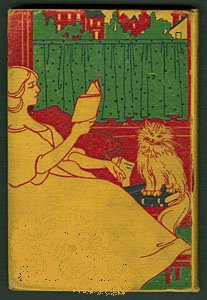 Yes, I'm working my way through "A Companion to American Immigration," which is proving to be much more interesting than the title might suggest. It says a lot about the state of present scholarship on the topic.
 For instance--the list of contributors. It is heavily weighted not only with Asian surnames, but also specialists and historians on Asian immigration. In fact, I didn't find any ethnic names for Cuba, Mexico or South America, although there are two Spaniards from the University Autonoma of Barcelona. It strikes me that if it is awkward or slippery to compare the culture of Mexican illegals with that of 18th century British, it probably doesn't make a lot of sense to use the 19th century Chinese railway workers either.
Chapter 21 on food is interesting, not only for the history of food exchanges, but the obligatory use of inflammatory language which populates "survey and studies" scholarship. When European ethic groups in the U.S. are mentioned, the verb of choice is "invade," but when Plains Indians do it to each other's territory, it is a "raid."
And you can almost hear the authoress sigh when she recounts how our fore mothers raised, processed and preserved much of their own monotonous food. I just love it when academics who have probably never broken up a clod of prairie or snapped a bean, can get so sentimental about the back breaking work women used to do over an open fireplace or cook stove.
2625 About those 500 WMD
Ho hum seemed to be the press' response. Here's an interesting observation at Evangelical Outpost by Joe Carter. Sort of what I'd thought even back in 2003. If they'd been found then, the anti-war people would have moved on to something else."Opposition to the war has nothing to do with the lack of WMDs. It never did. We could find a nuclear bomb in Uday Hussein’s old apartment and John Kerry would still be gearing up for Winter Soldier II. Unless you dropped your moral compass off the side of a swift boat in Cambodia, it’s easy to see that the world is safer because we secured the one WMD that truly mattered: Saddam Hussein.
More important than the weapons that were found (or that have yet to be found) are the ones that will never be created by Saddam’s regime. Many Americans, however, still suffer from the delusion that the only way that Saddam could have been a significant threat was for him to have possessed stockpiles of WMDs."
Monday, June 26, 2006
2624 And you thought I was kidding about librarians
who want to destroy the United States? They're not about sensible shoes, reading pc books to children or providing unbalanced info. Here. It's a mixture of eastern mysticism and communist activism. So I guess they'll be mellow.2623 The Gates Buffet Second Team
Malaria eradicated? Sure, just bring back DDT and stop millions from dying right now. Sometimes environmentalists just care too much, they care people right into a terrible death and early grave.No one has died from exposure to DDT. But millions die every year in the third world from malaria which could be virtually eradicated by DDT spraying of standing water. Until Americans were duped by Rachel Carson's misinformation, good progress was being made against this terrible disease. Since 1972 when the EPA banned its use, millions have died needlessly. This "do-gooder" impulse we Americans have has killed more Africans than the infamous slave trade of the 17th and 18th centuries.
Malaria
warren buffet
Gates Foundation
Charities
2622 Actually, I was folding the laundry
Ex-Liberal probably thinks I spent a lot of time reading one entry of his blog, but the dryer buzzer went off and I went to the basement to gather in the laundry. When I returned, however, he was still worth reading:"When liberals like [Keith] Olbermann use the First Amendment to undermine our efforts in Iraq, it hits our troops like a roadside bomb. Real patriots can disagree and argue, but they don’t call their Commander-in-Chief a criminal, or the war we are fighting immoral – which is probably why Olbermann’s self-doubt prompted him to lash out. . . "
He also has a good explanation for the difference between liberal and conservative humor.
"Liberal humor relies mostly on anti-Bush haiku and the progressive envelope of sex, drugs, bodily functions, and fart jokes. This is what they call, “Adult Content.” One might argue that Garrison Keillor doesn’t use those devices, but lefties would also describe his audience as mostly “right-wing Christian conservatives.” Garrison won’t degrade his content to “Adult Entertainment” because, 1) he respects his audience and, 2) George Carlin has already cornered the market for prurient theophobic dementia. Like Bill Clinton, liberals love George, but most wouldn’t trust their children or livestock alone with him.
Conservative humor relies on fact-based tragicomedy where conservatives expose the pink underbelly of liberal banality. For example, conservatives laugh at the fact-based anecdotes from the Darwin Awards because hearing about stupid people doing dumb things is very funny. Liberals use the same site to find new friends, new voters, or for instructional purposes. Seinfeld succeeded because liberals thought he was really cool, yada yada, and conservatives enjoyed the addled characters."
Read the Ex-Liberal in Hollywood here.
2621 Bills without borders
Morning Coffee wakes us up with a story from the Dallas Morning News about a plan for Dallas County to bill Mexico and other countries for the medical care of its indigent illegals who reside, work and swamp our social services in the United States. Of course, it won't work, but you've got to make a statement.Morning Coffee is a part of the Coalition against Illegal Immigration. If you're interested in joining, either as a regular, or a supporter, look at the FAQ.
Speaking of coffee, I've redesigned my coffee blog, Coffee Spills.
Monday Memories
Have I ever told you about the cottages we used to rent?This week we're at Lakeside, OH, where our family began vacationing in 1974. We've rented some nice and not so nice cottages, and bought our own place in 1988 (see this Monday Memory for that story).







If you'd like to join in on Monday Memories, leave a comment and I'll link back to you.
1. Friday's Child, 2. Libragirl, has no MM today, 3. Reverberate58, 4. Renee 5. Pixie, 6. Lazy Daisy, 7. CrazieQueen, 8. Chelle
Lakeside, Ohio
2620 Monday at Lake Erie
Gray and overcast. Met a guy at the coffee shop planning to go on a fishing charter today, but watching the skies. My coffee shop reading today.Can I predict it or what? The announced "exit strategy" is being claimed as a success by Democrats. I knew it! I overheard it on TV--didn't catch who was saying it, but I'm sure it will be a theme. A check of Google brought up all sorts of "exit strategies" and "cut and run" stories from 2005 and 2004, including one quote by John Kerry from 2004, where he said the President shouldn't "cut and run."
"I fear that in the run-up to the 2004 election, the administration is considering what is tantamount to a cut-and-run strategy. Their sudden embrace of accelerated Iraqification and American troop withdrawal dates, without adequate stability, is an invitation to failure. The hard work of rebuilding Iraq must not be dictated by the schedule of the next American election." (From James Taranto's column in WSJ Friday June 23, 2006 via Council on Foreign Relations) Everytime the Dems think they've got Bush figured out, they miss by a mile. So now the drumbeat to investigate the 2004 election results. Why not start with 1960 (JFK) and work forward?
I see Kos followers are called Kossacks and he Kosputin. Not sure which side is charging what. But every link helps him I'm sure, as he is the darling of the MSM. BlueStar Beth is running some great banners about the MSM, and especially the NYT and its jihad against our troops. Stop by and take a look.
Sunday, June 25, 2006
Breakfast at The Abigail

The Abigail is two cottages held together with grapevines. My husband loves to eat breakfast here after church.

Here we are on the porch waiting for eggs and pancakes.
Lakeside, Ohio
Cliff notes version of Inconvenient truth

Amy sent me to this parody, but I sort of liked this one. The eye liner graph did it, I think. And the astute analysis.
2617 The Halls of Ivy need weeding
Remember the old song, Halls of Ivy? I'm not sure of its origins, but it was the theme song for a radio drama from 1949-1952 starring Ronald Coleman (and briefly on TV). It takes place in the fictitious Ivy College."Oh we love The Halls Of Ivy, that surround us here today
And we will not forget, though we be far far away
To the hallowed Halls of Ivy
Every voice will bid farewell
And shimmer off in twilight like the old vesper bell."
I can get weepy just humming it. It was a marvelous and rather intellectual show for which I think you can get tapes or downloads. However, the phrase "halls of ivy" refers to the old traditional, ivy covered buildings of a prestigious university. College isn't what it used to be, is it?
Every culture, race, ethnicity, nation, tribe, family structure and language is wonderful, complex, rich in meaning and worthy of respect in the hallowed halls of ivy (academe)--except ours in the United States of America. I'm working my way through "Companion to American Immigration," (Ueda, 2006) and although well-written and readable, this is the message I'm getting in the essays I've read so far.
You can listen to Halls of Ivy at Internet Archive.
2616 The New England Primer
was a textbook used by students from 1690 into the 19th century. It followed the tradition of combining the study ofthe alphabet with Bible reading. Emphasis was placed on fear of sin, God’s punishment and the fact that all people would have to face death.
A- In ADAM’S Fall We sinned all.
B- Heaven to find; The BIBLE Mind.
C- Christ crucify’d For sinners dy’d.
D- The Deluge drown’d The Earth around.
E- ELIJAH hid By Ravens fed.
F- The judgment made FELIX afraid.
G- As runs the Glass, Our Life doth pass.
H- My Book and Heart Must never part.
J- JOB feels the Rod,-- Yet blesses GOD.
K- Proud Korah’s troop Was swallowed up
L- LOT fled to Zoar Saw fiery Shower On Sodom pour.
M- MOSES was he Who Israel’s Host Led thro’ the Sea
N-NOAH did view The old world & new.
O-Young OBADIAS, DAVID, JOSIAS, All were pious
P-PETER deny’d His Lord and cry’d
Q- Queen ESTHER sues And saves the Jews.
R-Young pious RUTH, Left all the Truth.
S- Young SAM’L dear, The Lord did fear.
T- Young TIMOTHY Learnt sin to fly.
V- VASHTI for Pride Was set aside.
W- Whales in the Sea, God’s Voice obey.
X- XERXES did die, And so must I.
Y- While youth do chear Death may be near.
Z- ZACCHEUS he Did climb the Tree Our Lord to see.
Hat tip to cousin Gayle who sent this along in her weekly newsletter.
Saturday, June 24, 2006
2615 We're off
 If I get a connection, I'll blog. If not, well, you know the routine. I'll have to hang out at a library or coffee shop and write very brief posts. Northern Ohio has been hit by some big rains in the last few days. I heard a swimmers' warning for Lake Erie on the radio this morning. Apparently some sewer treatment facilities for shoreline cities got overwhelmed.
Catch 'ya later. Don't be a stranger.
Friday, June 23, 2006
2613 My summer reading
Probably the only way I'll get this read is if we have a long week of rain at the lake. They are getting drowned right now in northern Ohio, but I'm hoping it clears up before we get there.Anyway, "A companion to American immigration" edited by Reed Ueda (2006) is going in my book bag. In reviews of other things he's written, Ueda is described as an Asian American hostile to the idea that the U.S. was ever a nation of Europeans, and is a proponent of open borders. He's called the "worst of the lot" in a compilation of about 10 years ago on immigration, "Migration Past, Migration, Future." Baby boomer academic with tenure (my guess). In the introduction, Ueda says the essays bridge disciplinary and chronological divides; he says nothing that they might bridge ideological or political divides. That's the hard part, especially for scholars. And compilations are pay back time for your own network.
Introduction Reed Ueda (Tufts University)
Part I: Policy and Politics
1. A Nation of Immigrants and a Gatekeeping Nation: American Immigration Law and Policy, Erika Lee (University of Minnesota)
2. Naturalization and Nationality, Irene Bloemraad (University of California, Berkeley) and Reed Ueda (Tufts University)
3. Immigration and Ethnic Politics, James J. Connolly (Ball State University)
4. Immigrant Transnationals and U. S. Foreign Relations, Xiao-huang Yin (Occidental College) and Peter H. Koehn (The University of Montana, Missoula)
5. Bodies from Abroad: Immigration, Health, and Disease, Alan M. Kraut (American University)
6. The Politics of Immigration and the Rise of the Migration State: Comparative and Historical Perspectives, James F. Hollifield (Southern Methodist University)
Part II: Ethnicity, Race, and Nation
7. Ethnic and Racial Identity, Marilyn Halter (Boston University)
8. Nativism and Prejudice against Immigrants, Tyler Anbinder (George Washington University)
9. Assimilation and American National Identity, Michael R. Olneck (University of Wisconsin-Madison)
10. Internationalization and Transnationalization, David Gerber (University of Buffalo)
11. Immigration and Race Relations, Jeffrey Melnick (Babson College)
Part III: Population and Society
12. Demography and American Immigration, Michael S. Teitelbaum (Alfred P. Sloan Foundation)
13. Gender and Immigration, Suzanne M. Sinke (Florida State University)
14. Immigrant Residential and Mobility Patterns, Barry R. Chiswick (University of Illinois at Chicago) and Paul W. Miller (University of Western Australia)
15. Immigration Flows, Guillermina Jasso (New York University) and Mark Rosenzweig (Harvard University)
16. Marriage Patterns in Historical Perspective: Gender and Ethnicity
Robert McCaa (University of Minnesota), Albert Esteve (University Autonoma of Barcelona), and Clara Cortina (Universtity Autonoma of Barcelona)
Part IV: Economy and Society
17. Immigrant Social Mobility and the Historian, Kenneth A. Scherzer (Middle Tennessee State University)
18. Labor and Immigration History: First Principles, Leon Fink (University of Illinois at Chicago)
19. Immigration in the Economy: Development and Enterprise, Nian-sheng Huang (California State University Channel Islands)
20. Immigrants in the American Housing Market, Barry R. Chiswick (University of Illinois at Chicago) and Paul W. Miller (University of Western Australia)
Part V: Culture and Community
21. Immigration and American Diversity: Food for Thought, Donna R. Gabaccia (University of Minnesota)
22. Immigration and Language, Nancy C. Carnevale (Montclair State University)
23. Immigration and Education in the United States, Paula S. Fass (University of California at Berkeley)
24. Religion and Ethnicity, John McClymer (Assumption College)
25. Mutual Aid Societies and Fraternal Orders, Daniel Soyer (Fordham University)
Index
If I find anything interesting, I'll mention it on my blog, Illegals Now.
Disclaimer: My ancestors arrived here (Pennsylvania) in the 1730s. Swiss-German and Scots-Irish. Someone left me a comment a few months ago saying therefore I was not descended from immigrants. I just growed.
Update: I'm in Chapter One and so far, no surprises.
Intractable health care crisis
How many times do we see some version of this statement or hear it on the news? But frequently it is embedded in a story about an innovative (and often privately funded and small) program modelled on a good business plan.This week the WSJ featured a story about a program in Cincinnati to reverse its terrible infant mortality rates--one of the highest in the nation. But "Every Child Succeeds" program, started by Procter and Gamble people using a strong business model, has reduced infant deaths from 13 per 1,000 to 2.8 per 1,000.
"Preliminary findings demonstrate that ECS has been extremely effective. Ninety-eight percent of mothers in the ECS program have a medical home. 93% of ECS infants function at developmentally normal levels. Of mothers with smoking histories, 79% quit or drastically reduce tobacco use during pregnancy. Of the 29% of mother who enter ECS with clinically significant levels of depression, half are no longer depressed after nine months in the program. Observational data suggest that the ECS injury prevention component significantly reduces hazards to the child. Over 97% of mothers state that they are satisfied with the service received. ECS prenatal referrals have increased from 40% when the program began to almost 60% at the present time. An infant mortality rate for ECS families of 2.8 per 1,000 births, less than one-third of the Hamilton County infant mortality rate." (from ECS website)
Even with the incredible success of a program that flies in the face of the usual government procedures and has saved babies' lives, the writer includes snarky remarks like "in recent years as Washington as lost its taste for expensive and large scale poverty programs boutique projects have sprung up to help fill the void reducing their dependence on a state that's increasingly unwilling to shoulder the burden." Apparently the "culture" of slowness in the cooperating agencies and their reluctance to gather data, caused some problems even in a successful small program like ECS.
So on the one hand, we've got large scale, inefficient, unsuccessful programs with lofty goals to eliminate poverty which result in dead babies, but it's such a shame that the funding isn't increasing?
Then yesterday WSJ reported on a program to reduce ER visits by the poor by using in-home visits by nurses, and how a small struggling Harlem hospital has increased its income and reduced government pay-outs both by collaborating with Mount Sinai to gain access to specialties its patients needed. This keeps the hospital in a neighborhood that needs it, and serves the people better.
Intractable my foot.
2611 Lowering standards
Not that I'd ever planned to stay at the Ritz-Carlton, but apparently they are lowering their greeting standards. It will now be acceptable to say "Sure," or "No problem," or "Hi" instead of "Certainly" or "My pleasure," or "Good Morning."I do get tired of "no problem" as a throw away response to my "Thank you" for good service when I'm a customer or client. Where did that come from? I don't recall hearing it before the late 80s. I think it is supposed to sound friendly, but it almost sounds as though you shouldn't even bother to thank them. For annoying speech habits, I put it right up there with lifting the last word of a sentence so it sounds like a tentative question instead of a statement.
Story from the WSJ, 6-23-06, B1.
2610 Notice who is to blame here
that foreigners and immigrants, many illegals, don't speak enough English to receive proper health care (at tax payers expense). The story at Medscape.com starts out with the anecdotal, obligatory story of "monolingual" [i.e. Spanish speaking only] parents bringing a 10 mo. old to the clinic, getting a perscription and then misreading the English instructions given at the pharmacy, and making the child really ill. The limited Spanish of the clinic's staff was apparently better than the "limited Enlish proficiency" (LEP) of the parents, but it is the people who are in the helping role who are to blame for not knowing this family's primary language. And even if the pharmacy staff had spoken fluent Spanish, the parents could still have misread the instructions--quite possibly their Spanish would be a bit more colloquial than someone who learned it in college."Almost 50 million Americans speak a primary language other than English at home, and 22.3 million have limited English proficiency (LEP), defined as a self-rated English-speaking ability of less than "very well."(1) The last decade witnessed a 47% increase in the number of Americans speaking a non-English language at home and a 53% increase in the number of LEP Americans.(2,3) Between 1980 and 2000, both of these populations more than doubled, whereas the overall US population increased only 25%.(2) Unfortunately, nearly half of LEP patients needing medical interpreters do not get them (4), and only 23% of hospitals provide training for staff on working with interpreters.(5) Americans' foreign language skills are dismal: less than half of US high school students are enrolled in foreign language courses.(6)
In the case description, we are told that neither bilingual staff nor interpreters were available for this clinic visit. Having access to trained medical interpreters or bilingual providers facilitates optimal communication, patient satisfaction, and outcomes and reduces interpretation errors for LEP patients and their families.(7) In addition, a Title VI guidance memorandum issued by the Department of Health and Human Services (DHHS) Office of Civil Rights states that the denial or delay of medical care for LEP patients due to language barriers constitutes a form of discrimination and requires recipients of Medicaid or Medicare to provide adequate language assistance to LEP patients.(8) This case underscores the importance of having appropriate language services available for LEP patients and their families, particularly in settings with high volumes of LEP patients."
Is Medscape by citing Title VI suggesting that hospitals, pharmacies, clinics and ER staff know Creole and French and Swahili and Portuguese, or just Spanish? Or is it OK to "discriminate" against a Brazilian or a Haitian? "Bilingual" means two. Just which two?
When does the immigrant take some responsibility? One year? Five years? About 15 years ago I invited a Cuban family for dinner--the parents who had lived in Florida for over 20 years were visiting in Columbus and spoke not even rudimentary English. They spoke through their son-in-law, who had learned English as an adult and was a Lutheran Pastor. Outside of Miami, they really weren't safe unless with a relative.
Another example: as part of "diversity training" the library staff in the 90s attended a workshop at the university taught by a Puerto Rican who was on the staff and living in Columbus, Ohio (yes, they are U.S. citizens by birth). His English was so poor I was embarrassed for him. His part of the event was a total waste of our time nor did his personal example win any friends for the cause of diversity.
Subscribe to:
Posts (Atom)


 Posts
Posts


