 Monday Memories Did I ever tell you about
How my Grandparents lived in the 1920s?My grandparents, living on a farm in Ogle County, Illinois, in the 1920s (many years before I was born), were far better prepared to deal with any disaster that involved interruption of basic services by a blizzard, tornado or terrorist attack than I am. They were not technology-dependent, they didn't see themselves as victims, and some of their children didn't even know they were poor.
My grandparents were tenants on a farm that didn't have running water or electricity. They used corn cobs in the kitchen cook stove and coal or oil in a space heater for the main room. All water for cooking, cleaning and bathing was drawn from a cistern. They owned an automobile which had an engine most men and boys of that era knew how to repair. Illinois did not yet license drivers, so even children drove cars if they were tall enough. They had a crystal radio and kerosene lamps. Their draft horse was available for bad weather days when the unpaved roads were impassable. A small gasoline motor powered some simple machinery, like the washing machine, and clothes were hung outside to dry. Outdoor privies weren't pleasant, but they did the job--smelly in the summer and chilly in the winter and the Sears Roebuck catalog could be used for light reading or toilet paper.
My grandmother always canned enough beans, corn and tomatoes from the large garden to get the family through the winter months; root crops like carrots, onions, turnips and potatoes were stored in the cellar; the few dairy cows supplied the family with milk, cream and butter, and the extra milk and male calves were a cash crop to buy items not raised on the farm like sugar and flour; hogs were butchered with the help of neighbors to make sausage, bacon, hams, chops and lard; cows were not butchered, so they didn't eat beef; the chickens laid eggs, and the tough, older hens later were served over biscuits.
Although they raised nine children, my grandparents never sent anyone to the doctor or hospital. None of the children were vaccinated and antibiotics hadn't been invented yet. When a new baby arrived, the older children went to the neighbors to spend the night and the doctor came to Grandma. All of the children worked at jobs appropriate for their ages--taking care of babies, setting the table, drawing water, cleaning the house, washing dishes, weeding the garden, swatting flies (no screens), feeding cattle, chopping wood, mucking stalls, or helping younger children by being their mother's eyes (my grandmother was blind). No need for Grandma to be a soccer mom--the children were too busy being essential to the family. That probably took care of self esteem worries too. My father was the oldest and he didn’t remember any toys, not even a bike or a baseball bat. However, there were always other children around to play with--siblings, cousins and neighbors--so Grandma didn't need a calendar to track their social activities.
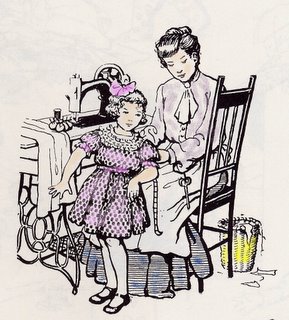
When the children needed clothes, aunts and cousins would drop by to help with the sewing using a foot pedal sewing machine, catching up on the family news and gossip. There wasn't much variety at meal time, but the gravy could be watered down if the dinner table included a less fortunate visitor, as it often did. Not too far down the road was the little Pine Creek Church of the Brethren the children attended with their mother and they were educated in a one room school.
My grandparents, who died in 1983, loved every 20th century advancement that made their life easier--perhaps appreciated them more than the grandchildren and great-grandchildren (there are over 100 of us). Grandma, who nursed all her babies, thought women were crazy not to bottle feed if they could. They were "early adapters" in some areas and owned a car and a radio long before many of their neighbors. About 10 years after leaving the farm, they built a Lustron home, the ultimate in modernity in 1950 with radiant heat and built-in appliances and furniture. You would never have been able to convince them that life was better “in the old days.”
Links to Other Readers and Monday Memories1.
Bonita in Montana, 2.
Joan who loves English and is learning Spanish, 3.
D. who is getting a new template soon, 4.
Ladybug, 5.
Veronika transplanted to the midwest,
6.
Katherine with the lovely smile, 7.
Jeremy, 8.
Nancy, 9.
Dawn, 10.
Beckie riding her bike, 11.
Rowan and her baby, 12.
MamaKelly and her baby, 13.
Shelli and her Prince, 14.
(If you participate, leave your link in the comments and I'll post it here)
Click here for the Monday Memories code
Trackbacks, pings, and comment links are accepted and encouraged!
View More Monday Memories Participants
Post in the comments if you want to be on the MM blogroll!


 Posts
Posts


