David Meyers writes at Facebook: “I have no issue with demonstrations. They are an important component in keeping our country from straying off course. But I am interested in what the demonstrators will do after they have called attention to “the problem.” Will any of them actually seek to become part of the solution?
For 30 years, I worked in corrections—both adult and juvenile. I know that the challenges we faced are similar to those faced by police departments. It’s a tough and dangerous job. And the pay is seldom commensurate to the risk. As a result, it is not always possible to hire the caliber of staff you want and need.
I personally spent thousands of hours trying to weed out the bad employees. All of them were represented by unions. I am not saying that unions are a bad thing. As I learned in graduate school, “Any organization that has a union deserves it.” And by that measure, corrections certainly does. However, that means that due process has to be followed in disciplining a bad employee—even those who have committed felonies on the job.
Not only does management find this frustrating, but many good employees as well. As I wrote in my first book on Ohio’s prison system, “Some of the finest people I have known were working in some of the most thankless jobs imaginable.” I was glad we had them, but we always could have used more. A lot more.
It’s the same with police departments, too. In fact, I have never belonged to any large group of people that didn’t have some miscreants. But in most cases, they aren’t tasked with life and death decisions. They don’t have to deal with violence on a near daily basis. It takes a special type of person to do that. Unfortunately, not all people who are attracted to this type of work want to make things better.
Watching the demonstrations, the confrontations, and the wanton vandalism and looting play out on television, I am concerned that it will drive away exactly the type of people we need to be peace officers and attract those we don’t."
David Meyers is the author of many books that reflect his interest in music, Ohio history, crime, and black history.
Showing posts with label David Meyers. Show all posts
Showing posts with label David Meyers. Show all posts
Wednesday, June 03, 2020


Sunday, May 03, 2020
Who are the essential workers? Congress or Walmart, guest blogger David Meyers
"This strikes me as funny-sad.
In this time of national crisis, who are the essential workers? The House of Representatives or Walmart employees? Since the reps are staying home, it must be the Walmart workers. But are they staying home because they feel it's not worth risking their health or they just don't have anything of value to contribute?
On the flipside, do they consider Walmart workers expendable whereas they are not?
Every time I have gone into a grocery store, I have thanked each worker I have encountered for being there for us. I do the same when I cross paths with anyone who is still out there working--the mail carrier, the UPS driver, the police officer. (That's about all I have encountered, but they are many others out there that deserve thanks, particularly health care workers.)
After this is all behind us, the reps will probably want to vote themselves a raise for their extraordinary efforts on behalf of the country--i.e. sheltering in place and printing money.
In the meantime, most of the workers I have spoken with have been extraordinarily helpful and courteous. And they are all just hoping they don't come down with Covid."
David is a retired state employee and local author specializing in history and music.
Monday, April 27, 2020
Covid19 stats for Ohio
April 26 COVID-19 snapshot:
Data provided by ODH as of 2 p.m. April 26
Confirmed cases in Ohio: 15,360
Number hospitalized in Ohio: 3,178
Number of confirmed deaths in Ohio: 687
Number of cases in Franklin County: 1,942
And about 28,000 deaths a year from cardiovascular problems.
David Meyers comments:
There is a lot of half-baked science being touted right now. I say half-baked because it’s being put out for public consumption before it is ready. Even in the absence of a major health crisis, it is not uncommon to make claims that turn out to be wrong. The Nobel Prize in medicine was awarded to Johannes Fibiger in 1926 for the discovering that a roundworm caused cancer in rats. Only it didn’t. It was an honest mistake.
Good science usually takes time. It should be devoid of politics and independent of outside influences, i.e. money and fame. But good science takes money. That’s the dilemma researchers find themselves. Right now, there are real scientists—someone said about ninety teams—working hard to diagnose and solve a problem in a few months that would normally take years. They are no doubt feeling pressure to skip steps. The test groups are often small and the controls are possibly lacking. Some scientists are bypassing peer review because that takes time. Others seems to be motivated by a need to draw attention to themselves.
In the meantime, our economy is taking a shellacking. Only time will tell if it was worth it, although many people have already made up their mines.
I decided to take a look at the CDC website to see if I could learn anything more from it that we were being told. The first thing that struck me is that the CDC is lumping Covid-19 together with influenza and pneumonia.** Apparently, anybody who dies of influenza or pneumonia is per se a Covid casualty, now. The death rate for this group is (according to the most recent data) 18.6 people per 100,000 and declining. It had been over 21 just a couple of weeks earlier. I don’t know what it is, now. But on a yearly basis I would expect it to decline.
I wanted to put this in perspective. Unfortunately, the most recent data for the leading causes of death in the United States is as of 2018. They are:
655,381 heart disease [163.6 per 100,000]
599,274 cancer [149.1 per 100,000]
167,127 accidents/unintentional injuries [48.0 per 100,000]
159,486 chronic lower respiratory diseases [39.7 per 100,000]
147,810 cerebrovascular [37.1 per 100,000]
122,019 Alzheimer disease [30.5 per 100,000]
84,946 diabetes [21.4 per 100,000]
** 59,120 influenza and pneumonia [14.9 per 100,000]
51,386 kidney disease [12.9 per 100,000]
48,344 suicide [14.2 per 100,000]
As you can see, the typical rate for influenza and pneumonia is 12.9 per 100,000. It will be interesting to see what it will be at the end of 2020, but we probably won’t know that until 2022.
Data provided by ODH as of 2 p.m. April 26
Confirmed cases in Ohio: 15,360
Number hospitalized in Ohio: 3,178
Number of confirmed deaths in Ohio: 687
Number of cases in Franklin County: 1,942
And about 28,000 deaths a year from cardiovascular problems.
David Meyers comments:
There is a lot of half-baked science being touted right now. I say half-baked because it’s being put out for public consumption before it is ready. Even in the absence of a major health crisis, it is not uncommon to make claims that turn out to be wrong. The Nobel Prize in medicine was awarded to Johannes Fibiger in 1926 for the discovering that a roundworm caused cancer in rats. Only it didn’t. It was an honest mistake.
Good science usually takes time. It should be devoid of politics and independent of outside influences, i.e. money and fame. But good science takes money. That’s the dilemma researchers find themselves. Right now, there are real scientists—someone said about ninety teams—working hard to diagnose and solve a problem in a few months that would normally take years. They are no doubt feeling pressure to skip steps. The test groups are often small and the controls are possibly lacking. Some scientists are bypassing peer review because that takes time. Others seems to be motivated by a need to draw attention to themselves.
In the meantime, our economy is taking a shellacking. Only time will tell if it was worth it, although many people have already made up their mines.
I decided to take a look at the CDC website to see if I could learn anything more from it that we were being told. The first thing that struck me is that the CDC is lumping Covid-19 together with influenza and pneumonia.** Apparently, anybody who dies of influenza or pneumonia is per se a Covid casualty, now. The death rate for this group is (according to the most recent data) 18.6 people per 100,000 and declining. It had been over 21 just a couple of weeks earlier. I don’t know what it is, now. But on a yearly basis I would expect it to decline.
I wanted to put this in perspective. Unfortunately, the most recent data for the leading causes of death in the United States is as of 2018. They are:
655,381 heart disease [163.6 per 100,000]
599,274 cancer [149.1 per 100,000]
167,127 accidents/unintentional injuries [48.0 per 100,000]
159,486 chronic lower respiratory diseases [39.7 per 100,000]
147,810 cerebrovascular [37.1 per 100,000]
122,019 Alzheimer disease [30.5 per 100,000]
84,946 diabetes [21.4 per 100,000]
** 59,120 influenza and pneumonia [14.9 per 100,000]
51,386 kidney disease [12.9 per 100,000]
48,344 suicide [14.2 per 100,000]
As you can see, the typical rate for influenza and pneumonia is 12.9 per 100,000. It will be interesting to see what it will be at the end of 2020, but we probably won’t know that until 2022.
Monday, October 29, 2018
Thinking about organized crime and Khashoggi
When the news came out about the death, torture and mutilation of Jamal Khashoggi, the NYT Muslim reporter killed by his own countrymen, our media were horrified because he was one of their own. The story was even used to club Trump--but then everything is. Obviously, he'd done something to offend his "tribe" or "family."
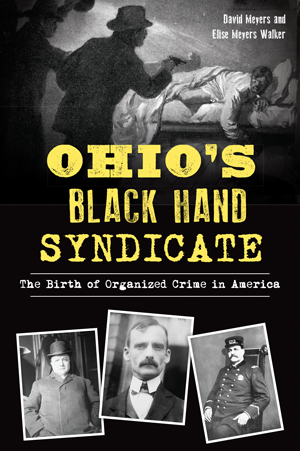
I was reading "Ohio's Black Hand Syndicate; the Birth of Organized Crime in America" by David Meyers and his daughter Elise Meyers Walker at the time. (It happened in Ohio.) The Appendix contains the By-laws of the organization. Article 1: "The person who tries to reveal the secrets of this society will be punished with death." The articles go on to describe what other offences will be covered by Article 1 and includes offending someone, or harming another branch of the group or family. And the articles include using a knife to mark the offender, and stabbing. In fact, having one's body marked with a knife or being stabbed is also the punishment if a member has received an insult but didn't report it! And a member can be marked with a knife, stabbed, or branded if he fails to use the knife on someone else when ordered (perhaps the Saudis had the same rule?).
This crime syndicate was born in a fruit store in Marion, Ohio, and terrorized immigrant communities. All this was late 19th and early 20th century organized. Evil is global and not confined to one ethnic, religious or national group.
Thursday, February 18, 2010
A great music blog
Music isn't one of my hobbies or strengths, but I still enjoy reading David Meyers' blog about the local Columbus music scene. Columbus is a musical crossroads (also the title of one of his books), and David is a meticulous researcher and entertaining storyteller. His recent reminiscences about Earl Wild formerly of Columbus and Ohio State who died January 23 at age 94, and Pat Wilson and her autobiography Yesterday's Mashed Potatoes which you can look through on Google, are a great read.
Subscribe to:
Posts (Atom)


 Posts
Posts


