The topic covers three faith traditions--Puritan/Congregational, Methodist and Lutheran. I say tradition rather than denominations because there have been many divisions. These divisions and traditions developed during a time of great cultural changes in the arts, technology, and politics over three centuries.
There are many biographies available on the internet, so I've linked to only one site, but after reading several, they don't all agree. And I've added a link to a recording.
Isaac Watts (1674-1748) Nonconformist (non-Anglican), dissenter, English
Known as the "Father of English hymnody," Isaac Watts wrote approximately 600 hymns. He showed literary genius even as a boy. He learned Latin at four, Greek at nine, French at ten, and Hebrew at thirteen. His parents were "Dissenters." That is, they were not Anglicans, which was a treasonous offense in those days. Frustrated with the heartless psalm singing of his time, young Watts sometimes criticized the singing at his church. A dissenter among dissenters, I'd say. Listening to his concerns one day, Watts' father challenged him, "Well then, young man, why don't you give us something better to sing?" He rose to the challenge by writing his first hymn. It was well received by his congregation, and for the next two years, Watts wrote a new hymn for every Sunday. He is known for Christianizing the Psalms.
Isaac Watts - The Center For Church Music, Songs and Hymns
https://youtu.be/iYYXWxDzEmM?si=piM_5tB7KAda78-f O God our help in ages past, paraphrase of Psalm 90, a good hymn for the New Year
https://www.youtube.com/watch?v=JMK9QHaoqpo podcast about Isaac Watts
At The Cross: Isaac Watts, The Father of Hymns
Charles Wesley (1707-1788) Church of England, Methodist, Missionary to Georgia, English
"Charles Wesley wrote over 6500 hymns [some sources say 8,000], which would be writing at least two hymns a week, every week for 50 years, from his conversion in 1738 to his death in 1788. His hymns came out of what he saw as important occasions. His own life inspired hymns: his conversion, his marriage, things he had seen, the death of his friends. Public events inspired hymns: the earthquake panic, rumors of an invasion from France, the defeat of Prince Charles Edward at Culloden, the Gordon riots. He wrote hymns for all the festivals of the Christian faith.
Wesley’s hymns can be generally classified as hymns of Christian experience, invitation hymns, sanctification hymns, funeral hymns, and hymns on the love of God. In his hymns, he referenced all but 4 of the books of the Bible. He used more than 45 different meters. It has been said that Wesley’s hymns clothed Christ in flesh and blood and gave converts a belief that they could easily grasp, embrace with personal faith, and if necessary, even die for."
Charles Wesley - The Center For Church Music, Songs and Hymns (excerpt)
Why Wesley Still Dominates Our Hymnbook - Christianity Today Really good article, but it is 17 pages long
https://youtu.be/9Bwn0k0k8xI?si=pbrUv266Izp907kr "Hark, the Herald Angels Sing," Charles Wesley
Catherine Winkworth (1827-1878) studied with Unitarians, English, best known as translator of 17th century German hymns
"Winkworth was a prolific translator of German hymns She became interested in translating these hymns when Chevelier Bunsen, the German ambassador to England presented her with a copy of Andachtsbuch. This devotional book showed her the treasures in German hymnody. She published two series of Lyra Germanica, in 1855 and 1858. The first had 103 translations from Bunsen's Versuch eines allgemeinen Gesang und Gebetbuchs (1833). The second had 121 more translations from the same book. She also published the Chorale Book for England (1863), which contained some earlier translations with their proper chorale tunes, and Christian Singers of Germany, (1869) biographies of German hymn writers."
Catherine Winkworth - The Center For Church Music, Songs and Hymns
https://www.umcdiscipleship.org/resources/history-of-hymns-now-thank-we-all-our-god Now thank we all our God, Martin Rinkart
Showing posts with label Methodists. Show all posts
Showing posts with label Methodists. Show all posts
Wednesday, October 07, 2026


Thursday, December 23, 2021
The Huron Carol--with gifts of fox and beaver pelt
I came across this hymn in a collection of Christmas carols during my morning meditation today. Better known in Canada, but I'd not heard it before. It's quite charming. No matter the language or ethnicity, all can know the baby Jesus in their own culture. The explanation is from the UMC Hymn history website. Discipleship Ministries | History of Hymns: “'Twas in the Moon of… (umcdiscipleship.org) Take time to look at why Mennonites don't think it's good enough to be in their hymnal.
Jean de Brébeuf (1593-1649) was born in the Normandy region of France. He entered the Society of Jesus in 1617 and arrived in Quebec in 1625. Overcoming many obstacles, he spent the first long winter in a wigwam and set out in spring by canoe to Lake Huron, where he was left to minister alone after a fellow priest was recalled.
His early efforts in evangelism were unsuccessful. Life was also complicated because the English and French were at war over this region, with the territory changing hands twice. He was forced to return to France in 1629, and then returned when the French again gained the upper hand in 1633. He set out again for the Huron region with a fellow priest, and lived and worked among the Indians for 16 years.
Brébeuf suffered hardships unimaginable to most present-day missionaries. In 1642, he was caught up in a war between the Iroquois and Huron tribes. Two fellow missionaries had been captured and killed. Brébeuf was sent to the region to attempt further contact with the Huron people. Though the Iroquois had made peace with the French, they continued to fight the Huron tribe.
Between 1644 and 1647, Brébeuf’s ministry among the Huron people saw thousands baptized and following the way of the black-robed priests. But the war with the Iroquois intensified. Being French, he could have escaped, but chose to remain with the Huron people. Brébeuf was captured by the Iroquois on March 16, 1649.
The original Huron carol was written around 1643. Over 150 years later in 1794, Father de Villeneuve, also a Jesuit missionary, wrote down the words to “Jesous Ahatonhia” as he heard them. Paul Picard, an Indian notary, translated them into French and they first appeared in written form in Ernest Myrand’s Noel Anciens de la Nouvelle France (1899).
Hugh McKellar, a leading Canadian hymnologist and authority on indigenous song, says that Brébeuf “does not present Christ’s birth as an event which happened far away and long ago, nor does he linger on its details; what matters for him is the immediacy of the Incarnation and the difference it can make in the lives not just of the Huron, but of believers in any culture.”
Collaborator Jesse Edgar Middleton (1872-1960) was a reporter for the Montreal Herald and later The Mail and Empire in Toronto. His interest in Ontario history led him to the story of Jean de Brébeuf.
Carlton Young, editor of the UM Hymnal, notes that “Middleton’s poem extends beyond the original French [translation] and tells the story of Jesus’ birth into Huron everyday life and its retelling in their folk symbols, such as ‘rabbit skin’ for ‘swaddling clothes’ and ‘gifts of fox and beaver pelt’ for the Magi’s present.” Middleton’s version maintains the Algonquian name for God, Gitchi Manitou.
Middleton’s poem was set to a traditional French tune (“Une Jeune Pucelle”) and appeared on Dec. 22, 1926, in the New Outlook, where it was romanticized as a “charming little Christmas song... [in which] the devoted missionary has adapted the story of the infant Christ to the minds of the Indian children.”
Hugh McKellar calls the carol an “interpretation... not a translation, written to provide English-speaking Canadians with an opportunity to sing the first Christmas carol ever heard in the Province of Ontario.”
The carol comes to us by way of the Canadian Anglican Church’s Hymn Book (1938), edited by the famous 20th-century Canadian composer Healey Willan. Walter Ehret brought the carol to public schools and churches in the U.S. with The International Book of Christmas Carols (1936).
In whatever form we receive the carol, it is an artifact of a missionary who through incomprehensible hardships and danger spread the gospel to the Huron people. Brébeuf’s martyrdom with a fellow Jesuit in 1649, too gruesome to describe here, was recognized by the Catholic Church when he was canonized on June 29, 1930, by Pope Pius XI. The humble Jesuit priest to New France is now the patron saint of Canada."
‘Twas in the moon of wintertime when all the birds had fled"This is probably the earliest Christmas carol composed in North America. “‘Twas in the moon of wintertime” is a collaborative work between a 17th-century French Jesuit missionary to the Huron Indians and a 20th-century Canadian newspaper correspondent in Quebec.
That mighty Gitchi Manitou* sent angel choirs instead;
Before their light the stars grew dim and wondering hunters heard the hymn,
Jesus your King is born, Jesus is born, in excelsis gloria.
Within a lodge of broken bark the tender babe was found;
A ragged robe of rabbit skin enwrapped his beauty round
But as the hunter braves drew nigh the angel song rang loud and high
Jesus your King is born, Jesus is born, in excelsis gloria.
The earliest moon of wintertime is not so round and fair
As was the ring of glory on the helpless infant there.
The chiefs from far before him knelt with gifts of fox and beaver pelt.
Jesus your King is born, Jesus is born, in excelsis gloria.
O children of the forest free, O seed of Manitou
The holy Child of earth and heaven is born today for you.
Come kneel before the radiant boy who brings you beauty peace and joy.
Jesus your King is born, Jesus is born, in excelsis gloria.
*That God of all the earth
Jean de Brébeuf (1593-1649) was born in the Normandy region of France. He entered the Society of Jesus in 1617 and arrived in Quebec in 1625. Overcoming many obstacles, he spent the first long winter in a wigwam and set out in spring by canoe to Lake Huron, where he was left to minister alone after a fellow priest was recalled.
His early efforts in evangelism were unsuccessful. Life was also complicated because the English and French were at war over this region, with the territory changing hands twice. He was forced to return to France in 1629, and then returned when the French again gained the upper hand in 1633. He set out again for the Huron region with a fellow priest, and lived and worked among the Indians for 16 years.
Brébeuf suffered hardships unimaginable to most present-day missionaries. In 1642, he was caught up in a war between the Iroquois and Huron tribes. Two fellow missionaries had been captured and killed. Brébeuf was sent to the region to attempt further contact with the Huron people. Though the Iroquois had made peace with the French, they continued to fight the Huron tribe.
Between 1644 and 1647, Brébeuf’s ministry among the Huron people saw thousands baptized and following the way of the black-robed priests. But the war with the Iroquois intensified. Being French, he could have escaped, but chose to remain with the Huron people. Brébeuf was captured by the Iroquois on March 16, 1649.
The original Huron carol was written around 1643. Over 150 years later in 1794, Father de Villeneuve, also a Jesuit missionary, wrote down the words to “Jesous Ahatonhia” as he heard them. Paul Picard, an Indian notary, translated them into French and they first appeared in written form in Ernest Myrand’s Noel Anciens de la Nouvelle France (1899).
Hugh McKellar, a leading Canadian hymnologist and authority on indigenous song, says that Brébeuf “does not present Christ’s birth as an event which happened far away and long ago, nor does he linger on its details; what matters for him is the immediacy of the Incarnation and the difference it can make in the lives not just of the Huron, but of believers in any culture.”
Collaborator Jesse Edgar Middleton (1872-1960) was a reporter for the Montreal Herald and later The Mail and Empire in Toronto. His interest in Ontario history led him to the story of Jean de Brébeuf.
Carlton Young, editor of the UM Hymnal, notes that “Middleton’s poem extends beyond the original French [translation] and tells the story of Jesus’ birth into Huron everyday life and its retelling in their folk symbols, such as ‘rabbit skin’ for ‘swaddling clothes’ and ‘gifts of fox and beaver pelt’ for the Magi’s present.” Middleton’s version maintains the Algonquian name for God, Gitchi Manitou.
Middleton’s poem was set to a traditional French tune (“Une Jeune Pucelle”) and appeared on Dec. 22, 1926, in the New Outlook, where it was romanticized as a “charming little Christmas song... [in which] the devoted missionary has adapted the story of the infant Christ to the minds of the Indian children.”
Hugh McKellar calls the carol an “interpretation... not a translation, written to provide English-speaking Canadians with an opportunity to sing the first Christmas carol ever heard in the Province of Ontario.”
The carol comes to us by way of the Canadian Anglican Church’s Hymn Book (1938), edited by the famous 20th-century Canadian composer Healey Willan. Walter Ehret brought the carol to public schools and churches in the U.S. with The International Book of Christmas Carols (1936).
In whatever form we receive the carol, it is an artifact of a missionary who through incomprehensible hardships and danger spread the gospel to the Huron people. Brébeuf’s martyrdom with a fellow Jesuit in 1649, too gruesome to describe here, was recognized by the Catholic Church when he was canonized on June 29, 1930, by Pope Pius XI. The humble Jesuit priest to New France is now the patron saint of Canada."
For guitar: The Huron Carol / Twas In The Moon of Wintertime Guitar Tab / Sheet Music + Chords Easy (weebly.com)
YouTube: https://youtu.be/cx0NuuyB6h4
Why the Mennonites did not include it in the newest hymn collection (not pure enough) “’Twas in the moon of wintertime” not included in new Mennonite hymnal | Canadian Mennonite Magazine
A literal translation: The Huron Carol - Iesous Ahatonnia (wyandot.org)
Saturday, November 14, 2020
GARRISON KEILLOR ON "METHODISTS"
We make fun of Methodists for their blandness, their excessive calm, their fear of giving offense, their lack of speed, and also for their secret fondness for macaroni and cheese.
But nobody sings like them. If you were to ask an audience in New York City, a relatively Methodist-less place, to sing along on the chorus of "Michael Row the Boat Ashore," they will look daggers at you as if you had asked them to strip to their underwear. But if you do this among Methodists, they'd smile and row that boat ashore and up on the beach! And down the road!
Many Methodists are bred from childhood to sing in four-part harmony, a talent that comes from sitting on the lap of someone singing alto or tenor or bass and hearing the harmonic intervals by putting your little head against that person's rib cage.
It's natural for Methodists to sing in harmony. They are too modest to be soloists, too worldly to sing in unison. When you're singing in the key of C and you slide into the A7th and D7th chords, all two hundred of you, it's an emotionally fulfilling moment. By joining in harmony, they somehow promise that they will not forsake each other.
I do believe this: People, these Methodists, who love to sing in four-part harmony are the sort of people you can call up when you're in deep distress.
*If you're dying, they will comfort you.
*If you are lonely, they'll talk to you.
*And if you are hungry, they'll give you tuna salad.
*Methodists believe in prayer, but would practically die if asked to pray out loud.
*Methodists like to sing, except when confronted with a new hymn or a hymn with more than four stanzas.
*Methodists believe their pastors will visit them in the hospital, even if they don't notify them that they are there.
*Methodists usually follow the official liturgy and will feel it is their way of suffering for their sins.
*Methodists believe in miracles and even expect miracles, especially during their stewardship visitation programs or when passing the plate.
*Methodists think that the Bible forbids them from crossing the aisle while passing the peace.
*Methodists drink coffee as if it were the Third Sacrament.
*Methodists feel guilty for not staying to clean up after their own wedding reception in the Fellowship Hall.
*Methodists are willing to pay up to one dollar for a meal at the church.
*Methodists still serve Jell-O in the proper liturgical color of the season and think that peas in a tuna casserole adds too much color.
*Methodists believe that it is OK to poke fun at themselves and never take themselves too seriously.
And finally, You know you are a Methodist when:
It's 100 degrees, with 90% humidity, and you still have coffee after the service.
You hear something funny during the sermon and smile as loudly as you can.
Donuts are a line item in the church budget, just like coffee.
When you watch a Star Wars movie and they say, "May the Force be with you," you respond, "and also with you."
And lastly, it takes ten minutes to say good-bye!
Tuesday, September 04, 2018
Historic site for United Methodists
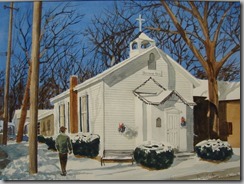
Sunday at 3 p.m. I walked two blocks to a ceremony to unveil a plaque commemorating Lakeside as an official Historic Site of The United Methodist Church (UMC). The final approval came in June, and the plaque will be placed on the original Lakeside Chapel (now a museum). If you're on our Christmas card list, you've seen this building before. The first camp meeting was held September 11, 1872, and the first sermon preached with 20 tents on August 27, 1873. The first two buildings on the 30 acre site were Hotel Lakeside and the Lakeside Chapel built 1874-1875. But there's more to come in this designation. Now we have to become a Heritage Landmark of the UMC and that might take another few years because the meeting is in 2020. The honor will actually be for a cluster of seven buildings, and our archivist prepared a lot of research on the history of the buildings.
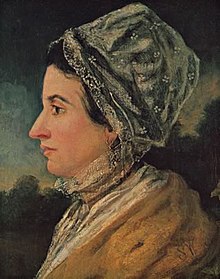
Speaking of Methodists, I've seen some mean, nasty battles on Facebook, even between family members. But nothing beats the Wesley family's political and religious battles of Susanna (mother of John and Charles) and Samuel Wesley back in the 18th century. Both Susanna and Samuel were offspring of dissenters, Christians who refused to conform to the Anglican Church, but they in turn dissented against their own parents and joined the Church of England. But the couple had political differences--he supported King William III and she liked James II. Their political differences were stronger than their shared lives and beliefs (they had 6 living children and 8 deceased) and Samuel eventually changed bedrooms and then moved out. With Queen Anne, they could reconcile and he moved back, but they continued to sleep separately. You know how old political differences divide us. But a fire in July 1702 burned 3/4 of their home and Samuel returned to the marriage bed. On June 17, 1703, little John Wesley was born, and 4 years later Charles Wesley (their 18th child). John and Charles went on to found the Methodist Church, and I've looked at a few web sites (I'm not a Methodist) and can't determine if Susanna ever supported them in this. Independent thinker to the end, she's nevertheless called the Mother of Methodism. (Story source: The One Year Christian History by E. Michael and Sharon Rusten, Tyndale, 2003, Sept. 3, pp. 494-495)
Tuesday, August 07, 2018
Francis Asbury, 1745-1816
On August 7, 1771, Francis Asbury answered John Wesley's call for Methodist preachers to go and evangelize the colonies. In 45 years he covered about 300,000 miles on horseback and crossed the Appalachian mountains more than 60 times; he ordained more than 4,000 Methodist ministers and preached more than 16,000 sermons.
Monday, August 06, 2018
Camp meetings, August 6
Today is the birthday/anniversary of the organized camp meetings and revivals that turned America back to Christianity, August 6, 1801, called the Cane Ridge Revival in Bourbon County, Kentucky, ca. 20 miles west of Lexington.
https://www.christianitytoday.com/history/issues/issue-45/revival-at-cane-ridge.html
Lakeside Chautauqua began as a Methodist camp meeting in August, 1873. "On Aug. 27, 1873, Reverend Henry O. Sheldon, the first presiding elder of the East Toledo Methodist Episcopal district, preached the first sermon of the Lakeside camp meeting from a basic preacher stand surrounded by twenty canvas tents". There will be a marker placed on September 2.
https://www.lakesideohio.com/calendar/event/12895
https://www.christianitytoday.com/history/issues/issue-45/revival-at-cane-ridge.html
Lakeside Chautauqua began as a Methodist camp meeting in August, 1873. "On Aug. 27, 1873, Reverend Henry O. Sheldon, the first presiding elder of the East Toledo Methodist Episcopal district, preached the first sermon of the Lakeside camp meeting from a basic preacher stand surrounded by twenty canvas tents". There will be a marker placed on September 2.
https://www.lakesideohio.com/calendar/event/12895
Monday, June 05, 2017
Monday Memories--The Methodists are Coming, June 1995
The Methodists were coming to Lakeside for their Annual Conference in June 1995--thousands descend--first West Ohio and then East Ohio, or the other way around. One used to be German speaking the other English, but I don't remember which is which. It is the only time we rented, and it meant Spring cleaning and putting all our personal effects away. I must have gone up and down the basement steps 50 times (would have been smarter to just go to the laundromat) with bedding, blankets, rugs, and towels. The house is tiny, but the basement is even smaller, and the steps are at a terribly steep pitch. And spiders love it there, so I also swept and debugged the basement. The plastic cover on the deck furniture looked scummy, so I washed that in the machine with Clorox, then the deck looked sort of greenish in spots so I scrubbed it with a Clorox solution. Bob spent the day mowing, clipping, weeding and washing windows. The closets and drawers were stripped and their contents go into the cedar chest. Phoebe and Mark had a few items stashed under beds, so those were removed to a box on the front porch. Two shelves in the linen closet were emptied for the guests, and the medicine cabinet cleaned out. Cupboards were emptied so the Methodists have room for food, and somehow, it is just a good time to make a clean sweep of things, which meant 4 bags of trash. How we accumulated so much in a house we don't live in, I don't know. We finished about 6 p.m. and cleaned up and walked down to the Patio Restaurant for dinner, because I'd had to clean out the refrigerator, too.
The cottage was Grand Central Station that June day in 1995. I decided I should get hot, sweaty and dirty more often, because company shows up. Mike and Donna Conrad had purchased a lovely wooden bench at Wal-Mart and couldn't get it in their car, so I drove Mike there in our van to pick up the bench. Bob had to measure a cottage for which he's doing construction documents, and two unhappy clients showed up (not unhappy with him but with the contractor). And a contractor stopped by. Then Mike showed up with a plate of cookies from Donna, and a another neighbor brought over a kitty litter container she thought we'd like. Her husband, who is an auctioneer, had picked up a bunch of them.
So I've decided what I need in Columbus is a visit from some Methodists! Once a month, say the 15th, I'll declare it "The Methodists are Coming" day, and I'll do one area a month. Five areas upstairs, and seven areas downstairs. I haven't seen my kitchen counter since Phoebe and Mark's wedding, so in honor of the Methodists, I'll probably start in the kitchen. Today I washed 175,000 margarine tubs. I could swear they reproduce. I didn't start buying soft margarine until after the kids were gone, but those babies sure do accumulate!
On Memorial Day Week-end, Mark's parents had stopped by at Lakeside, so we had 8 for dinner. We created a "children's table" on the deck and Phoebe and Mark and Phil and Tiffany sat out there, and Paul and Marylyn and we sat in the kitchen. Marylyn is going to a workshop for choir directors the last week in June, so they had driven over from Cleveland to look for a cottage to rent.
(Notes from a letter to my parents in June 1995)
The cottage was Grand Central Station that June day in 1995. I decided I should get hot, sweaty and dirty more often, because company shows up. Mike and Donna Conrad had purchased a lovely wooden bench at Wal-Mart and couldn't get it in their car, so I drove Mike there in our van to pick up the bench. Bob had to measure a cottage for which he's doing construction documents, and two unhappy clients showed up (not unhappy with him but with the contractor). And a contractor stopped by. Then Mike showed up with a plate of cookies from Donna, and a another neighbor brought over a kitty litter container she thought we'd like. Her husband, who is an auctioneer, had picked up a bunch of them.
So I've decided what I need in Columbus is a visit from some Methodists! Once a month, say the 15th, I'll declare it "The Methodists are Coming" day, and I'll do one area a month. Five areas upstairs, and seven areas downstairs. I haven't seen my kitchen counter since Phoebe and Mark's wedding, so in honor of the Methodists, I'll probably start in the kitchen. Today I washed 175,000 margarine tubs. I could swear they reproduce. I didn't start buying soft margarine until after the kids were gone, but those babies sure do accumulate!
On Memorial Day Week-end, Mark's parents had stopped by at Lakeside, so we had 8 for dinner. We created a "children's table" on the deck and Phoebe and Mark and Phil and Tiffany sat out there, and Paul and Marylyn and we sat in the kitchen. Marylyn is going to a workshop for choir directors the last week in June, so they had driven over from Cleveland to look for a cottage to rent.
(Notes from a letter to my parents in June 1995)
Monday, May 23, 2016
Methodists being torn apart by the LGBT agenda
"And among the forces tearing at those bonds during 11 days of meetings at the Oregon Convention Center in Portland, Ore., were arguments over the ordination of LGBT United Methodists and whether to allow clergy to perform same-sex marriages — which are now legal in America and accepted by a growing share of its citizens.
“It’s mind-boggling, and it baffles the Christian leader from Africa — I speak for all of Africa — it baffles the mind of the Christian leader from Africa, who ascribes to the whole Bible as his or her primary authority for faith and practice, to see and to hear that cultural Christianity can take the place of the Bible. United Methodists in America and other parts of the world are far going away from Scripture and giving in to cultural Christianity,” [Rev. Jerry ] Kulah said."
http://religionnews.com/2016/05/20/african-methodists-worry-about-the-church-that-brought-them-christianity/
“It’s mind-boggling, and it baffles the Christian leader from Africa — I speak for all of Africa — it baffles the mind of the Christian leader from Africa, who ascribes to the whole Bible as his or her primary authority for faith and practice, to see and to hear that cultural Christianity can take the place of the Bible. United Methodists in America and other parts of the world are far going away from Scripture and giving in to cultural Christianity,” [Rev. Jerry ] Kulah said."
http://religionnews.com/2016/05/20/african-methodists-worry-about-the-church-that-brought-them-christianity/
Friday, April 30, 2010
Albany NY Methodists help resettle Africans
There's an "amazing grace" Methodist church in Albany, NY called Emmaus--it has taken in and resettled many refugees including survivors of a 2004 massacre in a United Nations refugee camp called Gatumba, which lies in Burundi near the border with Congo.
Here's a blogger that writes news for the Banyamulenge immigrants, and he has recently returned from helping the Haitians after the earthquake. It is our immigrants who keep us strong and in touch with our roots. My ancestors came here in the 17th and 18th centuries, but the story is always the same--a better life and freedom.
JOURNAL MINEMBWE/ MINEMBWE FREE PRESS
- "After decades of ethnic oppression, the Banyamulenge, third-generation Christians, identify strongly with the tribulations of Old Testament Jews. In their gospel songs, the survivors seek solace from the violence at Gatumba, which echoed the Rwandan genocide of the 1990s, and still threatens those they left behind.
Albany might seem an unlikely place for resettlement of refugees like Christine Nyabatware, a widow with five small children, and Butoto Ndbarishe, 13, whose twin sister was killed at his side during the massacre, along with his father, a pastor, and two brothers. But since the first family arrived here in March, coatless and stunned to find what appeared to be a cold desert of leafless trees, the city has become a beacon to other Gatumba survivors around the country. . . “The Americans show us love,” said Mr. Mandevu after a potluck meal in the basement of the church, where a congregation that includes members from Pakistan, Iran and the Philippines traded hugs. “People are so nice. Here no one can throw stones on you."
Here's a blogger that writes news for the Banyamulenge immigrants, and he has recently returned from helping the Haitians after the earthquake. It is our immigrants who keep us strong and in touch with our roots. My ancestors came here in the 17th and 18th centuries, but the story is always the same--a better life and freedom.
JOURNAL MINEMBWE/ MINEMBWE FREE PRESS
Friday, June 06, 2008
The Methodists are Coming to Lakeside!
As they have for over 100 years. Two different Ohio groups will be meeting at Lakeside during the next two weeks--thousands of Methodists. Just imagine! I hope they have a wonderful session. Praising the Lord, greeting old friends, and not getting too frisky with the Gospel.
Saturday, May 24, 2008
Liberals are so predictable
No one allowed in their clubhouse without a pass.- A Maine public relations firm has been tapped to assist a grassroots effort aimed at stopping George W. Bush's presidential library, museum and think tank from being built at Southern Methodist University in Dallas.
The Rev. Andrew Weaver, an SMU graduate from New York, says P&S Associates of Maine LLC has been hired to design ads and to coordinate the effort.
Subscribe to:
Posts (Atom)


 Posts
Posts


