Thursday, December 15, 2005

1899 Unintended Consequences, pt. 3, taxes

Found at Chicago Boyz

With wages frozen by government edict during WWII, employers begin offering non-taxable health insurance to attract and retain scarce employees. The next sixty-odd years will feature numerous proposed government solutions to this unintended secondary effect of the original government solution.

Automobile companies in the 1980s improve the anti-theft features of their products. As cars become more difficult to hot-wire, thieves increasingly turn to carjacking. The US Department of Justice begins keeping survey statistics for this crime in 1987.

CAFÉ (Corporate Average Fuel Economy) fuel economy requirements in the 1990s cause carmakers to build smaller, lighter vehicles. Consumers react to the space shortage and crash dangers by buying SUV's.

From the Gristmill (environmental)

. . . a 10 percent improvement in fuel economy reduces fuel consumption by 6 to 8 percent (a good thing), but also increases driving by 2 to 4 percent. The increase in driving increases congestion, parking costs, noise pollution, and traffic accidents. Plus, making driving cheaper fosters sprawl, while an increase in vehicle traffic makes walking and biking more dangerous and less convenient. Assigning a rough dollar value to these competing effects, it looks as though an increase in fuel economy standards is actually a net economic loss for society, because the costs of increased driving outweigh the benefits of fuel and pollution savings.

Q and O Blog (conservation)

“As gas prices continue to top $2 a gallon, all those drivers of fuel-efficient cars may not have reason to gloat for much longer. Oregon is worried that too many Honda Insights and Toyota Priuses hitting the roads will rob it of the cash it expects out of its 24-cent-a-gallon tax. So the Beaver State is studying ways to ensure that "hybrid" car owners pay their "fair share" of taxes for the miles they drive. That means allowing the taxman to catch up to hybrid owners just as often as he catches up to gas guzzling SUV drivers. And if Oregon goes ahead, it won't be long before other states follow.”

GAO Report, 04-641

High cigarette taxes contribute to smuggling which results in lost tax revenues, but more important illegal cigarette trafficking worldwide is a multibillion dollar a year crime phenomenon, according to ATF, with some cigarette smugglers having ties to terrorist groups.

1898 Three a day

According to Forbes, from the start of 2001 through September 2005, Congress made 1971 changes to the U.S. Tax Code--roughly three for each day it was in session. But the ONE thing they needed to do, they haven't--change the Alternative Minimum Tax so that 15 million citizens don't get bumped into a higher tax bracket.

"Senate Majority Leader Bill Frist, R-Tenn., said Tuesday that Congress has run out of time this year to act on legislation that would save millions of taxpayers from the grasp of the alternative minimum tax in 2006.

The tax was created decades ago to prevent the wealthiest citizens from sheltering most of their income from the Internal Revenue Service. But because inflation has driven wages higher through the years, it increasingly threatens more taxpayers considered to be middle-class, with incomes of between $50,000 and $75,000."

The AMT was created in 1969 to assure that millionaires paid their fair share. Trying to soak the rich is not a good tax plan--the next rung up the ladder might be where you land and someone below will decide you are the rich guy. While only 19,000 people owed the AMT in 1970, over 3 million are paying it now, according to the IRS. It requires that you figure your taxes twice and pay the higher amount. You can be penalized for paying state and local taxes or deductions for your children. Instead of catching people with large investments, it's grabbing those with large families. It should be scrapped.

Who's minding the store? Certainly not the Republicans who control Congress. The economy is booming and will falter if the tax cuts instituted by Bush are allowed to die. Tax reform and Social Security reform are being bumped off the agenda by headline grabbing Democrats and their torture issues. So much better to torture Americans with high taxes. They were wrong last year about "worst economy in 70 years" and couldn't win votes with that. They are wrong about Iraq which today is proving to be on its way to a democracy. So they've tried a new schtick. We've got gulags sprinkled around and we're torturing people.

This will come back to bite you, young Democrats and young Republicans. Your baby boomer parents may pass on to their reward before they ever get a chance to pass anything on to you thanks to Congress' inaction (maybe its revenge of the Republicans?). The capital gains cut expires in January 2009 and by 2011 you may be in a bracket to enjoy a return to the 40% bracket. Or you may get married and get the marriage penalty reinstated, which will return in 2010.

1897 Congratulations, Iraqis

Another great turnout to vote, showing the terrorists who have invaded your country, the world, and the Howard Deans and Dick Durbins in our own disgraceful, run-for-cover Democratic Party that you're willing and able to have a democracy.

I'm watching some inspiring footage on Fox. The coverage on other channels is poor and somewhat less enthusiastic, which seems to be focusing on Sunni turnout last January and on the violence of the insurgency. CNN is unbelieveably negative ignoring completely the real story. The Democrats have tried so hard to have this fail, and will continue to diminish their accomplishments I'm sure. This must be a crushing blow.

And to the American people--they've shown us great courage and determination to vote. Our voting turn out is paltry by comparison. Maybe for 2008 we should invite some Iraqis here to beat the drum for democracy.

1896 The Closer will be back on TNT

We've enjoyed that show and seen ads that it will be back December 27.

Speaking of closers, what happened to Robin McGraw's outfit on the White House Christmas show on TNT last night? Usually she is dressed attractively and modestly for a middle-aged woman. Sort of looked like the closer broke. I don't know what it was--looked like a velvet halter top with her popping out the top and middle. It was really awful. It was a great show, however.

Country band Rascal Flatts was wonderful with a medley featuring ``The Little Drummer Boy,'' ``Go Tell It on the Mountain'' and ``Santa Claus is Coming to Town.'' R&B star Ciara performed The Jackson 5's ``Give Love on Christmas Day''; ``American Idol'' winner Carrie Underwood sang the Wham! hit ``Last Christmas''; and The Click Five ran through Chuck Berry's ``Run Rudolph Run.'' Gospel star CeCe Winans and jazz singer Jane Monheit rounded out the show. (She looked fabulous in her long gown, although I'd never seen her before.)

1895 Health benefits of chewing gum

In this morning's paper I read that chewing gum after colon resection speeds recovery, apparently because it is a "sham feeding" and mimics eating. The digestive juices aid the healing. Just think: now hospitals can add $200 to your bill for a pack of gum! Colon Cancer Today

So I went on line to see what other health benefits gum chewing might have. I found benefits from breath freshener to medication dispenser. I know it is a stress reliever and it can burn a few calories. However, looking like a cow chewing a cud is not attractive, so it would be my advice if you are over 21, to keep this habit at home.

Then this item: "Researchers are finding more and more benefits in chewing gum (sorry, Mom). Beside the mindless relaxation it can provide, it may also help to reduce dental plaque and the bacterial damage that can lead to cavities. One gum in particular—mastic gum, which has been used as both a chewing gum and a food in Mediterranean cultures for many centuries—appears to give particularly good results." Life enhancement

Memoir alert. When I was a little girl, maybe 7 or 8, I was outside the bank building in Forreston, which had some columns with ledges large enough for sitting. I was with another little girl--don't remember her name--but the family was quite poor. We were watching a parade. She found some gum stuck to the column, pulled it off and popped it in her mouth with the biggest grin. I've never forgotten how yucky I thought it was or how delighted she was.

"[Chewing gum is a], confection consisting usually of chicle, flavorings, and corn syrup and sugar (or artificial sweeteners). Prehistoric people are believed to have chewed resins. Spruce resin was chewed as a thirst quencher by Native Americans, from whom pioneers adopted the custom. Refined paraffin was later used and then chicle, which was probably first imported into the United States through Mexico. A chicle gum was patented in 1869 by William and Semple. In the present-day manufacture of chewing gum blocks of chicle are ground, melted, and cleared in a whirling vat, and then the flavorings (e.g., fruits, licorice, mints) and other ingredients are added. The gum is rolled through sheeting machinery and chopped into sticks or into candy-coated pellets. Insoluble plastics may be mixed with or substituted for the chicle. The United States is the major producer, exporter, and consumer, of chewing gum. Columbia University Press via Answers.com"

1894 When life doesn't imitate art

Michelle Williams claims, "Just being 'Mom' is enough." Wrong. All the studies show that marriage to the baby's father is the critical element in a child's well being. Doesn't matter how rich or educated you are or how many photographers follow you around, or whether you can hire a nanny or if you breast feed to boost baby's immunity.

At the boxoffice, she starred as a wife and met her baby's father. On the home front, she gets no prize from me for mother of the year. Of course, it also matters how many young women she might be influencing to follow her example.


1893 Holiday weight gain

That's an expression where it is accurate to use the word "holiday" instead of "Christmas," at least in my house and on my hips. Beginning with the last week of October (Halloween and cooler weather), through two November birthdays, Thanksgiving, various seasonal invites and dinners, Christmas and then New Years, it is easy to add the conventional six pounds and only lose two each year. So this year, I'm "watching out" and "telling why" in journaling with an e-mail buddy who also needs to lose weight. It's my usual ELMM plan--Eat less move more--with an occasional Slim Fast if a party falls within 12 hours.

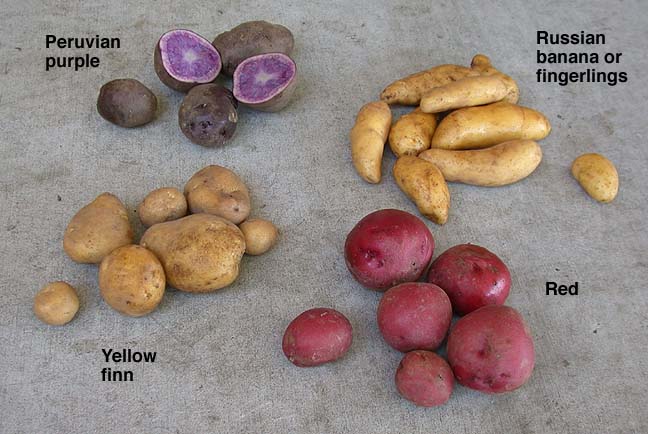
Last night I made the most wonderful scalloped potatoes, and had two helpings. I realize a lot of people avoid potatoes when watching calories--and I often do. But potatoes are a wonderful, miraculous gift from God. I used Half 'n Half and cheddar cheese--but it is a delicious, wholesome dish made with low fat milk. I just happened to have those ingredients.

Somewhere when I was working as an agricultural bibliographer (fancy name for a librarian) I read that when combined with milk it is a near perfect food (it lacks calcium). Potatoes are high in vitamin C, have no cholesterol, are fat-free, have many vitamins and minerals and are cheap and easy to store. It's the gravy, sour cream and sides that give it a bad name for weight watchers. The introduction of the potato to Ireland in the 17th century caused a huge population growth among the peasants because it so improved their nutrition.

"The potato, a name derived from the native American Indian word "batata", was first cultivated by the Inca Indians in Peru over 4,000 years ago. The mountainous terrain of the Andes, fluctuating temperatures, poor soil conditions and elevations over 10,000 feet proved to be the ideal settings for the Symara Indians to develop over two hundred varieties of potatoes. The potato is a member of the nightshade family (Solanaceae) along with peppers, eggplant and tomatoes. The growth and quality of potatoes is greatly influenced by cool temperatures, moisture, light, soil content and nutrients. Ideal conditions for best yields are daytime average temperatures around 70 degrees F and cool night temperatures as these affect the accumulation of carbohydrates and dry matters in the tubers.

In 1536, Spanish Conquistadors conquered Peru, became aware of the potato and carried them back to Spain. In 1586, the potato was introduced in Britain by Sir Francis Drake. In 1770, a French pharmacist named Antoine Parmentier, saw the potato as a solution to the recurring famine problem in France and helped King Louis XIV popularize it by creating a feast with only potato dishes. In 1774, Frederick the Great sent free potatoes to the starving peasants after the famine of 1774, but they refused to touch them until soldiers were sent in to persuade them. During his presidency (1801-1809), Thomas Jefferson served "French Fries" in the White House as an introduction in the US. In the mid-19th century, the British introduced potatoes to Nepal and they soon became a staple crop. The potato is now a very common food item worldwide, grown in about 125 countries and all 50 states in the US." Potatoes


Wednesday, December 14, 2005

1892 20th century war deaths

were exceeded by Communist governments killing of their own people--democide.

"Overall, the best estimate of those killed after the Vietnam War by the victorious communists in Vietnam, Laos, and Cambodia is 2,270,000. Now totaling almost twice as many as died in the Vietnam War, this communist killing still continues.

To view this double standard from another perspective, both World Wars cost twenty-four million battle deaths. But from 1918 to 1953, the Soviet government executed, slaughtered, starved, beat or tortured to death, or otherwise killed 39,500,000 of its own people (my best estimate among figures ranging from a minimum of twenty million killed by Stalin to a total over the whole communist period of eighty-three million). For China under Mao Tse-tung, the communist government eliminated, as an average figure between estimates, 45,000,000 Chinese. The number killed for just these two [Communist] nations is about 84,500,000 human beings, or a lethality of 252 percent more than both World Wars together. Yet, have the world community and intellectuals generally shown anything like the same horror, the same outrage, the same out pouring of anti-killing literature, over these Soviet and Chinese megakillings as has been directed at the much less deadly World Wars?" War versus Genocide and Mass Murder

I'm posting this because I've come across some interesting revisionist history, which I'll go into later after I've done a bit more research. But just keep these figures in mind.

1891 Frozen car door tip

When car doors stick to the weather stripping around the doors in this cold weather, you can break a door handle trying to get in, or damage the weather stripping. Jonathan Welsh of WSJ suggests rubbing a bar of soap or wax from a candle on the weatherstripping. He also mentions a commerical product (Armor All) would probably work (didn't sound like he'd actually tried it).

However, I'm just not sure about all this, so I googled the topic. One site on auto detailing said never get car wax on the door frame seals, so I would think candle wax wouldn't be a good idea. Armor All was listed for door locks but I didn't see anything about weather stripping. Plus, remember, ladies, your coats or dresses may have to touch that weatherstrip when entering or exiting.

So my vote would be with the bar of soap. But then I read this:

The Pat Goss site recommends preemptive action with a silicone spray: "Luckily, prevention is painless. Spray the rubber around the doors with silicone, which is readily available in auto parts stores. It’s a good idea to spray silicone on all the weather-stripping surrounding car doors four times every year. Silicone is so slippery it prevents ice that forms on the weather-stripping from sticking to the car’s body. Your doors open easily when your neighbor’s are frozen solid."

We need advice from a Canadian.

1890 Feet binding 21st century

California Closets has an interesting example of torture for the sake of perceived beauty in a current ad showing a young woman in a pastel skirt and sweater standing in her closet with about 22 pair of leg and ankle killer 4" heels, with one pair of flats and one pair of athletic shoes. I saw it in Architectural Digest, and the same photo is on their web page, www.calclosets.com, but showing only about half of the magazine ad. To show off her legs they have her straddling a chair while standing up--I hope it wasn't a long photo shoot.

The only women I see dressed up are at the coffee shop, set for the work day in pants suits or slacks, with fairly sensible shoes. If the heels are higher than 2", the women are 25 or younger. I suppose they might change at work. I wore those torture instruments when I was in my teens and twenties too, but nothing higher than 2 7/8, which I think we called 3". They cause cramping in the calves and arches, sprained ankles, corns and callouses. They contort your torso and probably damage your spine, decreasing efficiency and mobility.

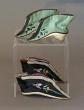
Not unlike the situation that Chinese women endured for the beauty of bound feet. This historical site said it is hard to imagine today, but I don't have any problem at all understanding it. Maybe you'll see the resemblance in these photos.


"Throughout history in all cultures a common ultimate goal is to achieve beauty. Just as all people look different, all people have a different outlook on the question, what is beautiful? For some time in the nineteenth century, in America a definition of beauty included corsets, making women's waists as small as possible. Over time beauty has resulted in a lot of pain and in this instance, resulted in broken ribs and damaged internal organs. Body piercing and tattoos fall under the same category although the consequences are not as severe. Great pain has been suffered for centuries for women to achieve perceived beauty. Probably the most detrimental act was one that approximately one billion women in China have preformed for nearly one thousand years. This act, foot binding, was an attempt to stop the growth of the feet. Foot binding is a bizarre and terrible custom, yet it is hard to understand exactly what foot binding was like with the modern outlook we have today. The reason for women binding their feet went deeper than fashion and reflected the role of women in Chinese society. It was necessary then in China for a woman to have bound feet in order to achieve a good life." Feet binding

1889 So it's not the economy, Stupid?

It's gasoline prices--that's how shallow Americans are, I am grieved to say. Yesterday's paper reported that the President's job approval rating has rebounded from 28% to 43%, depending on which polls you follow (some were lower than others). Apparently, lower gasoline prices have a lot to do with the uptick.

So, who put that gas hog SUV in your garage? Who forced you to buy a bigger house further away from the workplace with cheap mortgage money? Who did you elect to Congress who won't let us drill for oil in Alaska (actually, quite a few Republicans), or build refineries? When will the [wo]man on the street step up and say, "It's my fault."

The economy has never been better. The GDP grew 3.8% in the third quarter, the 10th consecutive quarterly increase of above 3%, which makes this the longest streak of growth since WWII! Unemployment at 5% is lower than the 1970s, 1980s, and 1990s, and you hardly hear anyone mention inflation, unless they are reminiscing about Jimmy Carter's presidency. And would you believe that Bush is rated poorly in the polls for the economy? That's sheer ignorance, or somebody's sniffing gasoline fumes.


Tuesday, December 13, 2005

1888 This President believes

and openingly acknowledges that he is an evangelical, born-again Christian, that we are saved by the grace of God through our faith in Jesus Christ as Savior. He believes in equality of treatment among citizens in taxation and the law. He believes we need to be stewards of the earth. He would protect the interests and security of our nation through military action, but would like to avoid it. He would do everything he could to reduce the desire for abortion. This President is Jimmy Carter, but I think he and George Bush would be in complete agreement on these statements. [Based on Carter's editorial in the USAToday yesterday]

Consistency counts

    in parenting
    in budgeting
    in dieting
    in learning a new skill
    in relationships
    in gas mileage
    in fashion
    in teaching
    in the workplace
    in scheduling
    in worship
    in volunteering
    in training puppies
    in winning awards
    in blogging

Freepers and Pinkos picket outside Walter Reed Hospital

Homespun blogger Tom has a post about the pro Castro Code Pink picketers (about 11) and the pro-troops counter supporters (about 26) demonstrating outside the Walter Reed Army Medical Center in Washington DC. "Wounded veterans of Iraq and Afghanistan are taken out to dinner [by the Free Republic supporters] every Friday night on a luxury bus, and return to the hospital at about 9:30 They reenter the hospital right where the Pinkos hold their protest. We want the troops to see a pro-troop rally, and not just the Pinkos. As it is, the Pinkos have been packing up and going home at 9pm, we suspect so that they won't have to look at the troops on the bus flipping them off, which they have done."

So much for "we support our troops, not the war." I can't imagine the hate and loathing it takes to picket wounded soldiers who defend your right to hold up that sign!

1885 Is it crabs?

That's what comes to my mind as I click through the channels and come across young black rappers grabbing their crotch and dancing around with their legs spread and pelvis lifted. (Should crotch be plural? Groups of grabber-rappers mean more than one crotch, but each grabber only has one.) It apparently has a hostile meaning. Rap groups actually hire "hand gesture" experts to help them look more intimidating, and I'll bet you a cup of coffee they are women. So much for authentic culture. I went to a poetry reading at the public library and a perfectly nice white boy could hardly keep his hands decent while performing.


"Why do white liberals accept the “gangsta” persona as a perfectly legitimate expression of black culture? . . . Hopping around and making violent hand gestures, their long gold chains swaying, pants drooping low and eyes shaded, backed by adoring, barely-clad, pelvis-grinding young black women—with the sound off, the thuggish menace of these performers was unmistakable. The sensibility reverberates across the globe at present, from urban Morocco to the burning suburbs of Paris. [French Muslim rappers use the same moves]

Black parents have decried to me the presence of such trash on BET, but liberal white America, especially its suburban progeny, tends to see black gangsta imagery as culturally authentic—to be respected and understood rather than subjected to the condemnation or mockery it deserves." Read the whole article here: 10 November 2005 Thugs on Parade, City Journal

There's a lot of guilt in liberal white America and it's making a lot of entertainers rich.


1884 War's trauma wears on the children left behind

is the headline in the USAToday (December 13, 2005) with a color photograph. In March 1944 my father enlisted in the U.S. Marines. Things didn't look good either in Europe or the Pacific for the U.S. The same nay-sayers were around that we hear today. I don't remember being resilient or fearful, either one. But I know this. I looked to my mother and other adults like grandparents, aunts (all the uncles were gone to war) and neighbors for clues on how to behave and what to think. How do we know that children are helped by being asked to express their fears publicly about their mothers and fathers in uniform? We didn't draw pictures of airplanes and bombs to send to dad--we drew flowers, blue skies, and houses, with happy children. I'm sure the Marines were teaching him about bombs and guns--we needed to remind him why he'd enlisted.

My mother must have been fearful--I regret that of all the things we talked about over the years, I never thought to ask that. I can't imagine how she made it financially with four small children, let alone emotionally. But looking up at her from the vantage point of a four year old, I saw only confidence, resolve, determination, integrity, honesty and love. She was who she was and she never changed the whole 60 years I knew her.

One day Mike Balluf, whose father was in the Navy, and I were riffling through the trash behind his house (he lived directly behind me). We pulled out a beautiful, dark brown ceramic teapot. We didn't have anything this pretty in our house, so I carried my wonderful find home to show my mother. She turned it over, saw the "Japan" mark (I probably didn't know how to read), and put it in our trash. You don't always have to talk an issue to death for children to learn that war is serious stuff.

Sarah Silverman rude, crude and salacious

I'm just repeating the words of the reviewers who love her--this Jewish comedienne is rude, crude and salacious. I'll never attend her shows or watch her on TV just on the basis of the title of her show: Jesus is Magic. With her fog screen of excuses, which includes all of those from the last 25 years, "It's your right to be offended," and "You can't please everyone" I know where she's going without paying an outrageous price to hear myself insulted. If you think insults of other's race, ethnicity, religion, culture, sexuality and gender are amusing, well, welcome to the 1950s. It was consider a hoot back when I was growing up, and I'd hoped we were past that. But I suppose each generation has to reinvent humor. She's bound to grow up (or is that down?). Although Richard Pryor didn't--setting himself on fire free basing, years of womanizing and developing MS didn't change his style of hanging over the edge of hell.


Monday, December 12, 2005

1882 My Best Questions

I ask a lot of questions on my blogs--it's just my style of writing. Then I answer them, because most of you don't stop long enough. Here's a selection of my best of the best questions from May-June 2005. If you click the question, you can read the whole entry.

What would you call a group of librarians?
Somewhere I've seen a collective noun for a group of librarians congregating. Everything the librarian tells you has previously been worked out in a meeting--even the pauses and punctuation. What would be your vote? (listed some choices like peep, mob, brace, pride, etc.)

What woman would admit to this?
I've often wondered if later in life, while living maybe in San Diego or Houston, a woman would admit to a past of being [the Forreston] Sauerkraut Queen or maybe the Ogle County Pork Queen (another biggie in our farming county)?

Where do I join?
The National Coalition to End Judicial Filibuster. Where do I join? In fact, let's not stop with the judiciary, let's dump the filibuster altogether. Can you think of another organization that uses this? And it is misused by both parties--I'm not pointing fingers at the Democrats, at least not in this paragraph.

Guess the trendy car ads
Guess which ad goes with the car of your dreams. My favorite ad (although not the car), is definitely #9. It’s edgy--like a Laura Bush joke. Answers at the bottom of the page.

Do you save ribbons, bows and paper from Christmas and holidays?
Do you save ribbons, bows and paper from Christmas and holidays? Goodness. I have enough bows to last until 2047! And those cute little gift (reusable) bags--I had no idea I had so many. Birthdays. St. Pat's Day. Valentine's Day. Christmas. All purpose. I'm guessing I found about 25. And the gift boxes. Did I fear if I bought a piece of jewelry, it would come box-free?

Is there ever enough storage?
. . . in Ohio, we have $100,000 basements. At least that's what you're led to believe if you sell a house without one. For 34 years we lived in a lovely neighborhood of more expensive homes because our two-story, colonial house was slab on grade. When we put it on the market in 2001 we were always told how much it could have sold for if only we had a basement. . . We thought we'd left basement woes behind us, but the other night my husband took a phone call from someone interested in buying that house (it has been on the market because the new owners are divorcing). Would you believe the guy wanted to know if he could jack up the house and put a basement under it?

Would you spend $40,000 a year to send your daughter to Smith if you couldn't even figure out the restrooms?
Roger Kimball who wrote about tenured radicals 15 years ago when things were simple (plain vanilla Marxism) suspects, that along with Mark Twain's demise, the death of the counterculture is greatly exaggerated. I agree with his solution. Dump tenure which has become a means to stifle dissent and fresh ideas. Seems to be the only way.

Where do you cut costs?
Economically, it makes absolutely no sense for me to leave the house every morning at 6 a.m. and drive to a coffee shop. If you don't do this, you could exclaim, "But that costs you nearly $600 a year, when making it at home is about five cents a cup." Very true. But I read 2 or 3 newspapers, and see 4 or 5 people I know, chat with various folk, so as a social informational event, it's pretty cheap. Compare that $600 to a golf hobby, and you can see it is really pretty cheap.

What do children in Third World Countries ask for?
Yesterday's question in VBS was something along the lines of "If you could have anything you asked for, what would it be." Apparently, only one little girl (probably watches beauty pageants on TV) thought beyond material needs and did indeed ask for world peace, according to my husband who teaches the class. Most asked for material things, but not a bike or a pony like my generation would have done (we were self-centered too), but a house! One little girl asked for a shopping mall! Now THAT is materialistic. "What do you suppose children in Third World countries ask for," my husband mused.

Which Democrat will drive more people way from the party?
Diarrhea-of-the-mouth Dean or Tokyo-Rose-in-Drag Dick? It's been many a year since I lived in Illinois, but my recollection of those days is that about a third of Chicago was Estonian, Latvian, Lithuanian, Polish, Ukrainian, Belarus, Slovak, Czech, Hungarian or European Jew. About half my classmates at the U. of I. were children of the escapees from Hitler or Stalin. Some had lost their accents, but they never lost their memories of starvation, forced marches, refugee camps, and grandparents, aunts, uncles and cousins they'd never see again. And if their memories ever did dim in the usual frivolity of the teen years of dating, music and partying, you can bet your ass mascot their parents would remind them.


Sunday, December 11, 2005

1881 Unintended Consequences, pt. 2

I ’ve been thinking a lot about unintended consequences after reading about polio epidemics following on the heels of the improved sanitation provided by flush toilets and toilet paper. Most recently, we’ve seen some unintended consequences in connection with Hurricane Katrina from personal and government generosity.

An outpouring of generosity for the gulf coast victims resulted in a corresponding shortage for local charities and foundations in our closer-to-home neighborhoods. I watched the Charity Newsie guys collecting on the streets yesterday, wondering if they were freezing their buns off and getting less.

Jobs are going begging in the hurricane areas as people wait until the FEMA money runs out before looking for work. Businesses can’t reopen with out workers, and residents won’t return home if there is no economy to support the rebuilding efforts.

Mega churches are drawing huge crowds, but destabilizing and blighting older neighborhoods as churches move further out for more land. (Sort of the WalMartization of religion.)

More insulation and tighter buildings in response to higher fuel costs has resulted in more allergies and respiratory problems.

Improved highways, better gas mileage and safer cars resulted in business loss and decay to small town and rural businesses as people drive to distant shopping malls or larger towns.

Improved air conditioning and cheap energy have created building growth in formerly uninhabitable areas, like coastal areas (recently hit by hurricanes), deserts, bringing damage to environment and loss of life in storms.

Health concerns and animal products and the popularity of vegetarianism have created a greater demand for fruit and vegetables resulting in more food poisoning from crops contaminated by animal runoff and greater use of herbicides and pesticides.

Harvesting of rare plants for medical research and homeopathic medicines are contributing to the destruction of rain forests.

The invention of canned milk many years ago made it convenient for women not to breast feed resulting in lowered immunity in infants and toddlers and more women entering the work force. This continues to this day in poor countries where it is watered down.

Summer breaks were created in the school calendar because child labor was needed on the farm in the 19th and early 20th centuries, but schools still let out for the summer months resulting in significant loss of learning even though we outlawed child labor years ago.

Introduction of the potato to Ireland so improved nutrition among the poor that there was a huge increase in the population. Then the blight of that monocrop resulted in the starvation, malnutrition and emigration of millions.

Silent Spring by Rachel Carson was published and good intentioned protests caused American companies stop producing DDT. This resulted in the deaths of millions in third world countries from malaria and huge loss of GNP in malarial countries. "The Malaria epidemic is like loading up seven Boeing 747 airliners each day, then deliberately crashing them into Mt. Kilimanjaro." Dr. Wenceslaus Kilama

In 1996, manufacturers introduced 3,434 new “low-fat” or “nonfat” food products. In 2003, 700 “low-carb” or “no-carb” products hit the market and in 2004, 3,431 such products followed. This has resulted in more obese Americans, apparently from the unintended consequence of people consuming more calories in the search for satiation and flavor.

Green architecture--glazed windows, efficient lighting, reflective roofs, below grade buildings encourage larger homes being built further out due to their efficient use of energy resulting in no savings at all to the consumer and more urban sprawl.

The closing of energy consuming, polluting factories resulted in jobs going overseas to less restrictive areas and the deterioration of workers‘ life style.

Wind farms (aka tax farms or cuisinarts of the air) produce low emissions and cleaner air but very expensive kilowatts and result in the deaths of many birds and the rise of rodent populations. Or as they say, “How many dead birds equal a dead fish equal an oil spill?” They may also produce climate changes locally.

Modern refrigeration changed our diet and made us safer from food poisoning, but contributed to the growth of cities, the rise of large distant feed lots for cattle, the importation of off-season foods and the deterioration of the environment.

Modern air conditioning changed our driving, employment and entertainment. Outdoor landscaping for shade and front porches no longer were essential for comfort changing how we interact with our neighbors.

Bird feeders cause migrating birds to share diseases, change eating habits of local birds causing them to not eat insects, and attract rodents, like skunks. Increased insects and rodents may cause the rise of disease or increased use of pesticides.

Strong recycling codes and laws in the cities have resulted in trash being dumped in the rural areas because you can’t burn it or bury it.

Successful and cheap waste management systems of the early and mid-20th century using landfills and incinerators resulted in a throw away mentality for generations. American households throw out 467.2 pounds per year - not including what goes down the garbage disposal or into compost piles. Annual cost of food waste is more than $43 billion per year, broken down roughly as follows: meat - $14 billion; grains - $10 billion; fruit - $9.6 billion; and vegetables - $9.1 billion. (Biocycle, May 2005)

The Passion of the Christ the movie that earned $370 million at the domestic box office and drew in religious people who had for years complained about movies, did not bring people into the churches nor change what Hollywood offered once they found out what the people liked.

There’s much more--entire articles and books have been written on this topic. These are just the ones that came to my mind. Here’s an article on unintended consequences from the Concise Encyclopedia of Economics. You can also google this topic--unintended consequences + [whatever law, event or movement you think of]. Or just try inserting the word "google" after that plus sign.


Technorati tags:,

1880 Where's Canada

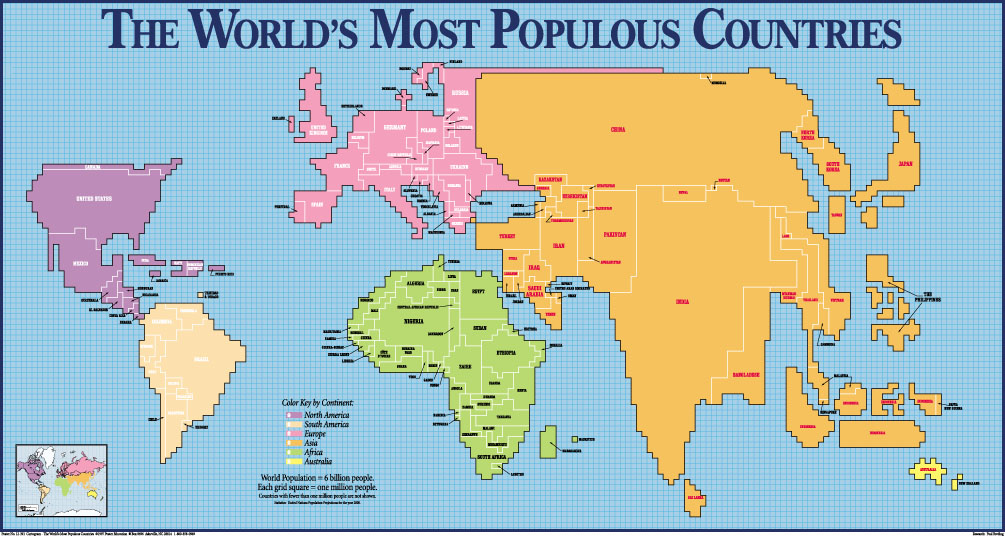
I used to have an up-to-date World Atlas that left out Brazil, so when I saw this the first thing I thought was "Where's Canada?"

Here's the link for a better view.

1879 Hears cheese and smells blogs

My cat is just amazing. She knows when I blog about cats and jumps in my lap. She doesn't come to the kitchen when I warm up coffee or look for the corn chips my husband has hidden, but the minute I reach for the cheese, she appears in the doorway with that, "You called?" look on her face.

1878 Pushed ahead in the queue

I added a new magazine to my hobbylog today, In the Beginning. I should have made it wait its turn--I have about 20 under my office couch patiently waiting to be added. But I'm sort of fond of Meredith Publishing, although not its best know product, Better Homes and Gardens, so I took Real Life Decorating to coffee the other day, and so it jumped ahead in the queue. I'm also trying to help Chuck set up a blog, and I think this one might fly--he knows how to type and he has something to say. It's a plan that often makes a successful blog.

Saturday, December 10, 2005

1877 Just like mother

When my college roommate and I got together in Seattle in 1996 we both said, "You look just like your mother." So we here in the U.S. (and probably Canada, too) look just like old momsy across the pond. If the government tries something and it doesn't work, the solution is to make it even bigger. Melanie Phillips writes about sex education in Britain, and the story is going to sound uncomfortably familiar.

"All the evidence suggests that its sex education policy is a disaster. Britain has the highest rate of under-age teenage pregnancies in Europe. The proportion of 13- to 15-year-olds who are getting pregnant is rising. Sexually transmitted diseases among young people are going through the roof."


So what should be done? Why begin even earlier, of course--with five year olds and compulsory sex education. In education, if it doesn't work, expand the program.

"No sooner will a child have found his or her coat-peg and be measuring up the competition for the climbing frame than some teacher will be rattling off where babies come from. So while many children are not taught to read properly at five — indeed, a disgraceful number can barely read and write when they leave primary school at the age of 11 — they will be given ‘more rounded’ lessons on sex and relationships. Is this not grotesquely inappropriate?"


So the gibberish about relationships and responsibility is just moved down a few years. Oh my. How do you clarify values that haven't even been instilled?

"The increase in sexual promiscuity among children and teenagers is not due to ignorance but to the deliberate destruction of the notion of respectability. Not only are official blind eyes turned to enforcing the legal age of consent, but sex education actually targets under-age children.

Moral guidance is nowhere. Instead, sex education seeks to ‘clarify’ the child’s own values. But children need clear boundaries of behaviour. Treating them as if they have adult values is to abandon and even abuse them."

1876 Why Santa must be a woman

I got a chuckle out of this one. In part:

"Another problem for a he-Santa would be getting there. First of all, there would be no reindeer because they would all be dead, gutted and strapped on to the rear bumper of the sleigh amid wide-eyed, desperate claims that buck season had been extended. Blitzen's rack would already be on the way to the taxidermist. Even if the male Santa DID have reindeer, he'd still have transportation problems because he would inevitably get lost up there in the snow and clouds and then refuse to stop and ask for directions. Add to this the fact that there would be unavoidable delays in the chimney, where the Bob Vila-like Santa would stop to inspect and repoint bricks in the flue. He would also need to check for carbon monoxide fumes in every gas fireplace, and get under every Christmas tree that is crooked to straighten it to a perfectly upright 90-degree angle."

Holiday Junction: I think Santa Claus is a Woman

1875 A multitude of topics

Isn't it strange that after I signed up for Holidailies, which tells me I absolutely must, have to, need to write a blog each day, I dried up. I guess I don't like the thought that it might be work.

I took a lot of notes today, but nothing really appealed. For instance, did you know that guano (bird or bat poop) has 54% protein and only 1% fat, compared to a Big Mac that is 23% protein and 33% fat. I think we do better using it as fertilizer and thus getting those benefits indirectly. Maybe Fear Factor could use this. BioEd I checked a site that sells it for fertilizer, and there is a difference between bat guano and bird guano-- bat guano is high ntrogen and marine sea bird guano is high phosphorus.
Best Quality Available. "Organic Guano Fertilizers add a complexity and fullness to the flavors of any produce."

Also I noticed an item that only 9% of the U.S. public believes the pharmaceutical industry is honest. I wonder what percentage is willing to give up their zocor or prozac, or coumadin, or tamoxifin or any of the other wonder drugs that are making our lives better and fattening our 401K and 403B and pension plans? Bat guano!

Also, the coffee plant Coffea canephora is almost a perfect gene-for-gene match for the tomato plant, Solanum lycopersicum. Coffee bean pizza, anyone? Actually, I'm not too surprised. The human genome sequence is almost 99.9% exactly the same in all people. It's that little .1% where all our differences and diseases occur. God, the designer is also a recycler. If it works, don't mess with it.

I started working on the topic, "unintended consequences," after reading that polio epidemics began because of health improvements in sanitation, like the flush toilet and toilet paper. I'd been noting some as I went along, but then tried the google search, "unintended consequences" + [topic like wind power]. I spent so much time reading the articles, I didn't get my blog finished. Virtually every technological advance and environmental proposal has unintended consequences that change lives. So maybe tomorrow.

For instance, you probably know about the potato famine in Ireland. But before that the introduction of the potato as a family food source made the Irish peasants the best fed in Europe and the population skyrocketed. When the blight killed the potato crop it sent 1.5 million Irish to the other countries, mostly Australia and the USA, and killed another million through starvation. Unintended consequences of introducing better nutrition.

Friday, December 09, 2005

1874 Blogflu Virus

Yes, there is a pandemic of bloggers falling into the culverts of the information highway. Today I clicked on Northern Lutheran, Off Shore Fisherman, and Infinite Library and all are dead. At least, if you said you were taking a break in August and didn't come back, that's a pretty strong message by mid-December, don't you think? Kind of suspicious too, because I think they were all Christians based on my subject arrangement. It's really tricky to lose a blogger. When Lutheran in a Tipi folded her tent, someone scooped up her URL, so when I didn't get her removed in a timely fashion, I was misleading some of my faithful readers. PJ had a great cooking blog and must have choked on something--she reappears once in awhile in my comment box. Of course, she actually earns a living writing. Six figures. Shoe of Librarians Happen truly has been ill (no joke here) and is no longer posting there, but I see her occasionally at LISNews. Babs was on the critical list, missing for a month, but now has her 2 year old posting for her. Ambra is as good as gone. Rosabelle hasn't posted a word since mid-November. And Murray hasn't posted a thing since January in "Brain Drain." I guess it was.

1873 Extreme knitters

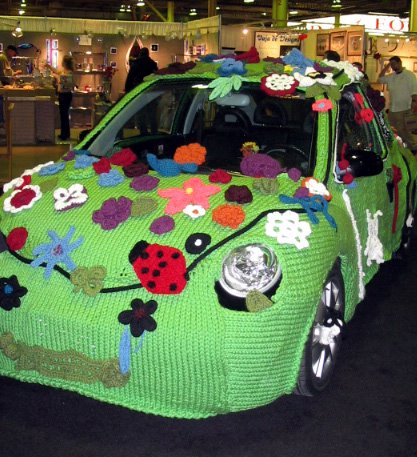
I have no knit projects to show you. I'm still waiting to learn "purl." The closest I've come is raving about Cathy. However, last night I was talking to Ken Becker, a local photographer who exhibits at Winterfair, and he told me about this:


Now this is what I'd call extreme knitting. A cozy for a VW Beetle. Nowadays, there is "extreme" everything. Our church has extreme worship. Sort of resembles this.

1872 Bless Your Feet

I’ve been looking for a reason to post a photo of my baby’s feet. Of course, he’s 37 and his little feet aren’t quite as cute as they used to be, but I liked this picture he took of dangling his feet over Lake Erie. If I'd been there, I would have said, "Now, honey, be careful." Some things just don't change.


But Sprittibee, a home schooling mom, has a really nice series on feet. Did you know there are 320 references to feet in the Bible? I sure didn’t. Click on over and I think you’ll find a good topic.

1871 Can't take my eyes off

a featured painting by Larry Lombardo in the Winter 2006 issue of Watercolor (American Artist) pp. 92-93. I'm not one to read a lot into a painting--I either like it or I don't. Often, I couldn't even tell you why. Sometimes it is the technique, sometimes the color, but Oh, I do love a good story.

Larry Lombardo lives in Pennsylvania, and according to his website, he began painting to keep his sanity while he was a stay at home dad. I read his explanation in the article of the painting titled, "The child has grown, the dream has gone," which is a teen girl in black goth and a older woman in a pastel dress sharing a park bench. He says, "I wanted the painting to show the extreme differences between the generations and the point at which the younger generation becomes the older generation."

That's just way too abstract for me.

Scenario 1: I see a woman about 80, who has lived through the Depression and WWII, perhaps a widow, with some health problems apparent from the painting (maybe some arthritis and vascular problems with her legs), sitting quietly enjoying the sunshine thinking about her life, remembering the good and the bad. Her skin and face are flawless, her hair perfect. At the other end of the bench is a sullen, slouching teen listening to her music, with zippers all over her clothes--a goth or heavy metal look, screaming in her slilent scowl, "I know nothing and I'm mad as hell."

Scenario 2: I see a grandmother and granddaughter, the younger one has turned off her music and is listening attentively to the older woman's advice, which she probably won't take. But it's a step, at least they are talking again. They used to be so close. When the younger woman was about 7 or 8, grandma could do no wrong, and she loved to spend the week-ends with her. But now, grandma is just an old fuddy-duddy like her parents who doesn't like her clothes or her metal-stud-faced boyfriend (he's not in the painting). Grandma's much more at peace than granddaughter--there's nothing she hasn't seen or done. Teen-baby stares at her with that "I can't believe it!" And she won't for oh, maybe another 10 or 15 years.

Lombardo has been a youth pastor, residential counselor, and a psychiatric assistant. He's particularly good, in my opionion, in capturing the expressions of older people. Like the middle-age, pudgy guy eating a do-nut looking at a row of motorcycles. Another good story.

1870 Unintended consequences

Polio has been a topic on this blog and my memory blog with my sister's illness and my cousin's death seared into my childhood memories. So this morning I read through reviews of two new titles on polio, Polio: an American story, and Living with polio: the epidemic and its survivors, both published in 2005. A few entries back I was commenting that people my age don't recall all the food allergies we see today, some of them fatal. So I was surprised to read that probably my grandparents weren't familiar with polio in the late 19th century either. As part of the introduction to the reviews the author writes:


Epidemic poliomyelitis first appeared in the United States a century ago, at a time when America was rapidly evolving from its post-colonial agrarian roots toward industrialization, urbanization, and the ascension of the middle class. Polio, a new "emerging infection," was an unanticipated consequence of the invention of the flush toilet and the adoption of the use of toilet paper. These hygienic advances brought about the control of most diseases transmitted by enteric bacteria, but they paradoxically increased the risk of paralytic disease by delaying poliovirus infection beyond the age at which infants are protected by maternal antibodies acquired by way of the placenta. (John E. Modlin, NEJM, 353;21, 2308-2310)


Technorati tags: , ,

1869 Booking Through Thursday on Friday again

Booking Through Thursday

  • What's on your book/reading wish list?

  • What books are you giving this year?


  • Before I'd ask for this, I'd suggest checking some of the used sites. I got a book I'd asked for last year, and haven't read it yet. It sounded soooo good in the reviews. Also got Memoirs of a Geisha one year, and haven't read that either (although I did take it to an airport once). But yesterday's review in the WSJ was very positive for Mozart: The Early Years, 1756-1781 by Stanley Sadie. The author has since died, so it will be a short series.

    All the relatives are receiving a copy of Cottage; America's favorite home inside and out by M. Caren Connolly and Louis Wasserman, published by Taunton, 2005, because one of my husband's cottage designs at Lakeside, OH is featured in the book. The other featured cottages are good too, of course. The Wassermans have done several books and they are all outstanding.

    Technorati tags: ,

    1868 Signed on for Holidailies

    At Blonde Librarian I noticed she was signed up for the sixth annual Holidailies project. "Holidailies is a free community writing project. All Holidailies 2005 participants promise to update their personal Web sites every day from December 7 to January 6. Portal participants post summaries of their entries, which are aggregated on the front page of Holidailies 2005, newest entries listed first." Well, it was December 8 by the time I heard (read) about it, so I won't get on the first page, but my site is listed with those who don't write a summary. Writing every day must be a problem for some bloggers, so they need an aggregator to push them along.


    Technorati tags: ,

    1867 Winter Wonderland--sort of

    We were supposed to get 4-6 inches last night but it looks like two. The town panics at the hint of snow. I was at my dentist's yesterday and he said he was planning to close Friday (today) because of the coming storm. It looks like more ice and blowing than actual snow. There was talk of school closings, but so far I don't know if that has happened. My husband leads a ladies exercise class and if the local schools close, the class is cancelled.
    We were in Cleveland last week-end and northern Ohio had had about 4 or 5 inches overnight and everything was clean and clear for driving by about 7 a.m. I'm sure they get amused at our wimpy efforts here in mid-state.

    However, we were out driving in it last night, and the Christmas lights and lawn decorations looked fabulous in the snow.

    Technorati tags: ,

    Thursday, December 08, 2005

    1866 Checking out what Technorati says about me

    Recently I added the Technorati search window over at the left. I wasn’t really sure what it would do, but I’ve found it more useful than the blogger search. Wondering what I’d written about economic issues, I tried several topics, poverty (4), income (13), quintile (3), social security (13), economy OR economic (20), finance OR financial (20). Some of these are false hits because if the word appears in the title, it turns up in the “recent posts” feature and fogs up the search a bit. I was pleased to find out I could use a Boolean operator if I capitalized it--I didn’t see any instructions but I know it is recognized that way in some databases. I’m not sure how many operators you can string together. I tried two.

    It was interesting to go back and reread some of the entries. For instance, our high tariffs and quotas were in the news shortly after the tsunami--then seemed to disappear.

    The USA and Europe, in order to protect their own workers, have punishingly high tariffs and quotas for some of these countries affected by the tsunami. After we clean up the ravages of the earthquake driven storm, we'll need to look at what our own policies are doing. I'm sure the message won't be lost on Muslim terrorists. Jan. 11, 2005

    And this item about why Democrats were fighting private investment accounts to save Social Security:

    It is possible that if George W. Bush is successful in creating a larger investor class, a group that goes across all the demographics of female, Hispanic, Black, middle-class, etc., the Democrats will lose their base. The investor class is self-identified as 46% of the total vote in 2004, and their world view tends to be conservative, middle-class, modest, and saving for the kids' college. And if they are Democrats, many of them voted for Bush. March 15, 2005

    And remember last week when that op-ed appeared in the WSJ about how the media just couldn’t print any good news? I commented on that last January:

    At the bottom of the page were tiny charts--eating out, up; federal debt, up; employment, up; satisfaction, up; foreclosures, down; delinquent loans, down.It sure is hard to report on bad news these days. Need to call in John Kerry and Ted Kennedy who managed to put a negative spin on the first free Iraqi election in history for help in composing those make-believe economy stories. John ("let's not over-hype this") Kerry's stock could have soared if he'd just complimented the Iraqis. But he was his usual pompous, my-way-or-the-highway, doomsayer self. January 31, 2005

    Technorati reports my rank is 1,828 with 4612 links from 467 sites. It records 22.6 million blogs.

    1865 The Mega-Church

    Here's a description of a mega church in Minnesota from one of my husband's architectural publications. I suppose it is intended for architects who need to be prepared that it's not your father's church.


    A typical megachurch features:

    - No pews. Instead, there are comfortable movie-theater-style cushioned seats. Stadium seating ensures good views of the stage.

    - No Bibles or hymnals. Parishioners sing hymns by following the words on a large screen.

    - Non-churchy architecture, without steeples. They look like high schools, malls, or convention centers.

    - Few symbols of religion. Stained-glass windows and even crosses are far less prominent.

    - A dizzying array of specialized services, with specialists in geriatrics, teens, addiction, and early childhood.

    - No asking for money during a service - a turnoff for newcomers. There never is "passing the plate."

    - High-energy music, with an in-house rock-style band on a stage ablaze with theatrical lighting.

    - No pulpits. The pastor speaks informally from a simple stand on the stage.

    - A fundamentalist and charismatic worship style, with a politically conservative viewpoint. Archi-tech


    I suppose our church doesn't qualify because we have 3 campuses and 10 services, and our buildings have stained glass and traditional religious symbols. Although one sort of looks like a theater (unfinished) until you see the altar and window. And we pass the plate and the peace, and have no political viewpoint at all. No issue sermons, ever. Lots of rock-the-house music, though. It drives me out of the building because it hurts my ears and sets my atrial fibrillation in motion. That music does appeal to the young people though, who are mostly deaf or on their way. More at my other, other blog.

    Technorati tags: ,

    Wednesday, December 07, 2005

    1864 The politically correct diet

    The other night a group from church got together for dessert after a funeral. I brought my sugar free apple pie and warned everyone it had a peanut oil crust, just in case someone was allergic. Of course, no one our age is, so we talked about that. No one remembered food allergies among our peers when we were children. And most of us knew very few overweight children. None of our children or their friends had allergies to peanuts, and everyone seemed to live on peanut butter sandwiches, although some had had allergies to eggs or milk.

    Are we being too careful about our food? I grew up drinking whole milk, but very few whole grains, solid margarine and occasionally butter, pie crusts made with lard, bacon and eggs, beef, chicken and pork, but almost no fish, home canned fruits and vegetables from the garden plus factory canned, but not a lot of off season fresh items and no frozen foods, lots of potatoes and pasta, real sugar, real peanut butter and real cheese (well, except for Velvetta). We might have had ice cream once a month, and soda pop twice a year, but lots of Kool-aid. I can’t think of anything I ate other than bananas that was imported, unless it was the occasional shredded coconut on a cake.

    We didn’t have vitamin supplements but when we were little we did get cod liver oil drops. I suppose most of my peers were consuming about the same diet, some with less meat and less milk (I would notice when I ate dinner at a friend‘s house that some had much less variety). Our mothers were the first generation to benefit from time saving “convenience” foods like Spam, Jell-o and store bought white bread--which weren‘t exactly powerhouses of nutrition.

    By the time I was in high school I think 2% milk was in the dairy case, Crisco had replaced lard, and “oleo” was colored to look like butter. The only beverage machine in our high school had USDA surplus milk. Going out with friends brought me in contact with more soda, but really I never developed a taste for it or for alcohol. Hot dogs, hamburgers and French fries were available at drive-ins, but were only as “fast” as slow food is today.

    I recently came across a web page about Canola oil and its history. I haven’t researched it, but its track record probably follows what has happened to our diet which now contains more olive oil, soy bean oil, corn oil, peanut oil and canola oil and far less animal fat, but we sure aren’t any healthier for it, are we? In fact, low fat diets are dangerous for growing children. And we’re certainly not thinner!

    There is no Canola plant. Canola oil is rape seed oil. Well, that’s a toughy to market, and it was produced primarily in Canada by Cargill as Low Erucic Acid Rapeseed, or LEAR oil. Canada Oil was renamed Canola which sounded a bit like "can do" and "payola," both positive phrases in marketing lingo. However, the new name did not come into widespread use until the early 1990s. Read The Great Con-ola which points out there are many ridiculous stories circulating about the dangers of canola. But it does show how cleverly new foods are marketed to the health conscious consumer--who will just about swallow anything in the name of “healthy.”

    Technorati tags: ,

    1863 Sleepless nights

    Librarians Against Bush (that's most of them) have many sleepness nights worrying about the Patriot Act. The average ordinary American doesn't walk into a library, but I guess someone thinks the terrorists will and then the Bush folks will come snooping and looking at their records. Well, those librarians ought to go pull the Journal of Biomedical Information (2004;37:179-92) off the shelf and read the article by Malin and Sweeny. There is no anonymity or confidentiality or secure records. It's too late to close the barn door.

    The article concerns your own health information--something most of us guard a little more carefully than our library record. In this study on database security, the authors took publicly available and de-identified hospital-discharge data from Illinois (from 1990-1997) and combined them with Census data and voter-registration data to identify patients with rare genetic diseases. They showed that 33% of patients with cystic fibrosis could be re-identified, as could 50% of patients with Huntington's disease, 70% of patients with Fanconi's anemia, and 100% of patients with Refsum's disease (very rare).

    Although they focused on rare diseases, the avilability of increasing amounts of health information makes everyone rare in some ways, says the New England Journal of Medicine. Earlier they had obtained the health records of a former governor with the use of the most common of data--hospital information about state employees, who were identified only by ZIP Code, sex, and date of birth published by the state's insurance commission. Using a voter-registration list ($20), the author identified 3 persons with the same date of birth and sex as the governor, only one who had the same ZIP.

    Think of the mischief that could be created by identifying people with mental illnesses, drug problems, and sexually transmitted diseases. Now throw into the mix DNA genetic sequence data which you might be asked to agree to share for a research study, and you've just added in your entire family, extended family and others who might not be happy that you've shared.

    NEJM offers some suggestions for policy makers and legislators. I wish them luck.

    Technorati tags: , ,

    1862 Blogs are still a mystery to many

    In the last 5 days I've explained to 5 or 6 people what a blog is, and given them my URL, but I can see the "Huh?" look in their eyes. My sister says that Diane Reams on NPR interviewed a blogger yesterday; today's Wall Street Journal has an article about tech bloggers, who are much less political than the red/blue, pro/anti-life, young/old splits you see on my links. Here's a link to the article.


    "The reality is that while there are now as many tech blogs as stars in the sky, only a tiny fraction of them matter."


    "The easiest way to follow this world is via a useful blog-tracking service called tech.memeorandum.com. The site runs off software written by Gabe Rivera, a former Intel compiler programmer. It sifts through hundreds of technology-oriented blogs to find the hour's hot topics and who is saying what about them. The results are presented concisely in a single place, updated every few minutes. Another site, blogniscient.com, offers a similar service."


    "The major difference between politics blogs and tech blogs is that many of the former still depend on the mainstream media to provide the grist for their mills. The tech blogs, though, have become a world onto themselves, and require no such crutch."

    1861 FASTER ways to kill babies

    Lots of bloggers noted the study last month in the New England Journal of Medicine about first trimester tests for Down's Syndrome (Vol. 353, no. 19, November 10, 2005, pp. 2001-2011). I didn't get a chance to read the article until today, after I'd checked out the issue to read an article on the dangers of sleep apnea. Anyway, the early test is so parents (are they called parents if the blob of tissue isn't a baby?) can look at strategies to "help guide the choice." The word choice appears in the very last sentence of the article--up to that point, nothing is said about what will be done with the information from the tests.

    This article has the most bone-chilling, sanitized medicaleze I've ever read, beginning with the name of the Consortium that performed the study: FASTER stands for First- and Second-Trimester Evaluation of Risk. In short, you can find out earlier (faster) if your baby has Down's. However, there is a greater margin of error--more "false positives" if you rely just on the first trimester test instead of doing it again in the second trimester and comparing results. It is less stressful, I suppose, to kill off a baby before you feel those little ticklish butterfly kisses in your abdomen, but how do you turn off the brain that knows what you are really doing?

    Figure 1 in the study charts the women who participated in this study. A total of "42,367 patients were approached for enrollment." Not pregnant women who might be willing to have an abortion given test results faster, but "patients." Not solicited, but "approached." Not scammed, but "enrolled." Well, 4,178 jumped ship right away--they were either ineligible or they refused. Then another 156 had some other, non-Down's problems, so they were dropped. So, 38,033 got this first trimester screening, with 92 revealing Down's Syndrome, which drops to 87 with the second trimester screening. There's other playing with numbers in the table, and I'm not sure what all went on, but having the two tests "is superior for detecting Down's Syndrome." We're not told if the women chose abortion or life for a less than perfect baby, only that this screening is a powerful tool.

    [You could all just save yourselves a lot of grief, sorrow and death of babies (remember all those false positives) if you'd have your babies before age 35. In the study, 29,834 of the women were younger than 35, and they had 28 fetuses (i.e. babies) with Down's Syndrome; 8,199 of the women were 35 or older and they had 64. Put the career track on hold instead of the mommy-track.]

    And in the small print: Jacob A. Canick, PhD, and Nicholas J. Wald, FRCP, who participated in the study hold U.S. patents for unconjugated estriol as a marker in prenatal screening for Down's syndrome. Mr. Wald holds patents for the screening test using the first and second trimester markers as a single test, and is a director of a company that makes software used to calculate Down's syndrome risk, and is a director of the company which licenses the screening test. Some of the doctors in the study receive lecture fees from various equipment companies used in the study.

    1860 Adoption Hollywood style

    Gone are the good old days of Hollywood adoptions, when the movie stars married, adopted a cute little baby, then divorced and discarded the kid to boarding school and occasional visits and he grew up to write about his life (Michael Reagan son of Ronald Reagan and Jane Wyman); or the movie star had a baby out of wedlock then adopted her (Judy Lewis, daughter of Loretta Young and Clark Gable). Then there was Joan Crawford, who kept adopting children AFTER each divorce. I don't know if the subsequent husbands adopted her adopted-while-single children.

    Now Brad Pitt wants to adopt Angelina Jolie's two adopted-internationally children, but he doesn't love them enough to marry their adoptive Mom, and I suppose we could assume he doesn't love her enough to get married. So he has to go through the expense and hassle of a non-relative, single parent adoption, instead of a step-parent adoption.

    I don't think it's a good idea for a single woman, or men for that matter, to adopt--all studies show children do best with both a mother and a father--and having her boyfriend then adopt the adoptees is really a bad idea. Wasn't it Woody Allen who started that trend, he raised girlfriend Mia Farrow's adopted children and then married one of his non-adopted, Korean step-daughters adopted by Andre Previn? Of course, he didn't actually adopt them all, so I suppose he's in the clear.

    Technorati tags: , , ,

    1859 Women and heart attacks

    Since it is now well known that heart attacks, not breast cancer, is the big killer of women (deaths from cardiovascular diseases in women exceed the total number of deaths caused by the next 16 causes), I was very surprised to come across Dr. Helen's story of her misdiagnosed heart attack. I learned about the risk of young women and heart attacks way back in my car pooling days, when one of the mothers of my kindergarten group who was then in her mid-30s, had a heart attack and needed to rely on the rest of us to fulfill her driving duties. Since my son is now 37, that has been awhile.

    Dr. Helen tells of being an athletic 37 year old in excellent health, and then developing terrifying shortness of breath episodes. In the ER she was given a shot for an allergic reaction while a man with the same symptoms was whisked off for heart tests. After several trips to the ER and being put off as an anxious woman with panic attacks, she finally begged her own internist for tests, and then it was determined that she had suffered from a heart attack and also had a ventricular aneurysm as a result of not resting her heart after the heart attack. Because she'd been told that she had panic disorder, she thought that exercise would be good.

    Hers is a scary story, and you should read it yourself.

    Tuesday, December 06, 2005

    1858 Eggcorn--another fun language site

    Earlier today I mentioned Language Log and the discussion of snowclones. That led me to the site called the Eggcorn Database, which “collects unusual spellings of a particular kind, which have come to be called eggcorns. Typical examples include free reign (instead of free rein) or hone in on (instead of home in on), and many more or less common reshapings of words and expressions.” It takes its name from a misuse of the word acorn--calling it an egg corn.

    I’m not sure this would qualify for the Eggcorn Database, but yesterday here in central Ohio there was a hunter’s death (apparently self-inflicted) and several times the reporter in the field said the authorities were going to get to the bottom-line of this.

    And then there is "butt-crack of dawn" which is apparently seen and discussed in Iowa and other places with a straight face. Isn't English just the most amazing language?

    1857 Is this the artist or the object?

    When I see art like this I think I need to get back to my other interest, art. A sack of flour with cat hair? An aging addict who's become his drug of choice? An artist's who's been dismembered and can't produce? I just don't know. But I think the art world needs me.

    1856 Tasty Snowclones

    Language Log has the most fascinating list of “snowclones” and a history of the word’s evolution. A snowclone is an expression which uses a certain formula (sort of like a clichĂ©, but not exactly) for a shortcut to familiarity. An example of a snowclone, and from which it gets its name, is “If Eskimos have 20 words for snow, then the Illini must have at least that many for losing.” Actually, there is no such thing as an Eskimo language, and in the languages of that part of the world, there are no more words for snow than in English. But it is a phrase that is used anyway, particularly by journalists. Calling it a “snowclone” is relatively recent--maybe 2 or 3 years. Other examples of snowclones are:

    The right X for the right Y: (The right tool for the right job)

    Have X, will travel:

    Every schoolboy knows ----------

    Once an X, always an X.

    Language Log not only provides the list, but develops the story of the earliest known use, such as Thoreau or Dickens or even the Bible. It makes very interesting reading.

    Snowclones are easy to track using Google hits, or "ghits." For instance, enter "every schoolboy knows * " and you get 17,300 ghits. (The asterisk is a truncation symbol and substitutes for the word or phrase you’re looking for.)

    “Nowadays every schoolboy knows that the essential and permanent conflict in life is a conflict between the past and the future, between the accomplished past and the forward effort.” H. G. Wells

    “I knew that the virus was incredibly infectious, and, as every schoolboy knows, epidemics are unpredictable.” Emma Tennant

    ". . . as every schoolboy knows, the Arabs have at various times inhabited parts of Europe, lived along the Mediterranean, been contiguous to European nations and been assimilated culturally and otherwise by them." Arab World Project

    Try this “snowclone” in Google and you will be amazed by what “every schoolboy knows.” It will restore your faith in the public school system.


    Update: I tried "Once a * librarian, always " and found some rather dull examples showing not much fexibility within the career field:

    “Once a * librarian, always a *”

    Once a music librarian, always a music librarian.
    Once a serials librarian, always a serials librarian.
    Once a teacher-librarian, always a teacher-librarian. . .
    Once a children’s librarian, always a children’s librarian. . .
    Once a Public Librarian, Always a Public Librarian . . .
    Sorry, once a reference librarian, always a reference librarian. It is a curse. ... [Air America]
    Once a retired librarian, always a retired librarian I always say.

    Monday, December 05, 2005

    1855 He doesn't like my crow's feet?

    Today I've received a reminder in the mail from my ophthalmologist. (Just a reminder: this is one of the few words in English that have a phth combination of consonants and is frequently misspelled). He says I'm due for an annual appointment. I don't think I've ever gone to him annually, only by referral for bigger problems. And he included in the letter a little surprise. To go along with my entries on aging beauties Donna Mills and Bo Derek, I now add that my ophthalmologist is offering Botox cosmetic injections so I can dramatically reduce the frown lines between my brows. Just a few small injections can relax (paralyze) my facial muscles for up to 4 months. What? There's not enough money in correcting vision?

    1854 Bo Derek says

    the 80s are back, so bring out those flared jeans, low hip huggers, belts and jackets. Gosh, I thought that was late 60s, early 70s. At least it was at my sewing blog when I dug out some old patterns. And I read that the turned up collar is back. When I posted this at Coffee Spills I didn't know that--had probably not adjusted the collar after I took off my scarf. Imagine that today a teen-ager might be asking grandma for her hip huggers.

    Bo Derek testifying in Illinois about horse slaughter in 2004.

    1853 Finally Donna Mills is catching up with me

    Donna Mills and I were at the University of Illinois at the same time. I think she was a freshman when I was a sophomore. Of course, she went on to fame and fortune in TV and a few movies (Misty). I think I first saw her in 1967 on a soap "Love is a Splendored Something" and she played the wimpy, delicate sister Laura. Her sister Iris was the fiesty one.

    Years later when she was famous for being the 70s version of a controling gorgeous woman on Knots Landing, I picked up a tabloid to find out she was about 10 years younger than me. Imagine my shock! Last week I saw an item in USAToday that the "desperate housewives" of 1979--Michele Lee, Joan Van Ark and Donna Mills, "now in their 60s. . ." So our age gap is dwindling. My guess is she is 65. I googled her bio and it gave her birthdate as 1942. Maybe she was a brilliant student who entered college 3 years early.

    Sunday, December 04, 2005

    1852 Why is this news?

    "The U.S. military command in Baghdad acknowledged for the first time yesterday that it has paid Iraqi newspapers to carry positive news about U.S. efforts in Iraq, but officials characterized the payments as part of a legitimate campaign to counter insurgents' misinformation." WaPo

    How else would positive news "leak" to the press--maybe they should have paid U.S. newspapers to carry positive news about Iraq. Is paid good news [i.e. propaganda] worse than killing people?

    To this I have three little words, in a string, of government agencies which openly manipulate information for good public relations, [you can go to their web sites and look for jobs in communications] and our very own news media which either distort or enhance the news to satisfy their owners or readers or advertisers.

    Radio Free Europe RFE
    Voice of America VOA
    Agency for International Development AID (United States)
    Information and Communications Technologies (Canada)

    New York Times
    The Washington Post
    BBC
    ABC
    NBC
    CBS
    CNN
    Fox Broadcasting Company

    And then there's Eason Jordan of CNN who distorted the [bad] news from Iraq, making it less horrible, published it in the U.S. so that he could keep his agency doors open which would continue to distort the news for the U.S. readership.

    Disclosure: I was paid for 3.5 years as a librarian on a grant from the USAID.

    Technorati tags: ,

    Friday, December 02, 2005

    1851 Booking through Thursday on Friday

    Forgot to check the questions yesterday (Dec. 1). The questions and answers are:

    Have you ever read a book in a language other than your native language?
    Do attempts count--or easy learner's books? Russian and Spanish.

    If so, how would you describe your experience?
    Pretty awful, but I learned to appreciate dictionaries.

    Have you ever read a book translated from another language into your native language?
    Yes, often the ones I was supposed to be reading in Russian, like Crime and Punishment and the Cherry Orchard.

    Why or why not?
    They were assigned. Who would read Crime and Punishment and struggle with all those hard Russian patronymics if you didn't have to?

    If so, how would you describe your experience?
    Useful. I graduated and got a great job. . . years later.

    1850 Liar, liar, panties on fire

    Andrew Sullivan should know the power of the bloggers to track down lies, and he's got some whoppers. Sullivan is a gay, Catholic conservative (or was) and when I started blogging in October 2003 and adding favorite links, his blog was one of my first. I dropped him after about a year because he turned against President Bush and the war, both of which he at first supported. What happened? Gay marriage, and his President for whom he'd endured ridicule and scorn (by other gays, I guess) didn't support it. James Taranto at Opinion Journal links to some of Sullivan's pro-war blogs which he is now denying he ever supported. Sullivan is learning "globbing" from John Kerry. Gripe, lie, obfuscate, backpeddle.

    Technorati tags: ,

    Thursday, December 01, 2005

    1849 You may not like it

    but you can't say there is no plan.

    “National Strategy for Victory in Iraq,” November 2005, 38 pages

    "The following document articulates the broad strategy the President set forth in 2003 and provides an update on our progress as well as the challenges remaining."

    "Does America have a good plan for doing this, a strategy for victory in Iraq? Yes we do. And it is important to make it clear to the American people that the plan has not remained stubbornly still but has changed over the years. Mistakes, some of them big, were made after Saddam was removed, and no one who supports the war should hesitate to admit that; but we have learned from those mistakes and, in characteristic American fashion, from what has worked and not worked on the ground. The administration's recent use of the banner "clear, hold and build" accurately describes the strategy as I saw it being implemented last week." Senator Joe Lieberman, A Democrat who gets it.

    Technorati tags: ,

    1848 Like this isn’t funny, but like, can’t these kids, like speak?

    From the Ohio News Now story of a clerk escaping abduction:

    “Earlier in the day, police say he [Steven Corbin] tried to abduct a 16-year-old grocery bagger from a Kroger store.

    "He told me he needed help carrying out his groceries and he had a lot of stuff. And like I was helping him carry you and like he kept on saying like all this weird stuff to me. Like I don't know he was like, 'hey baby come on, let's get it on,'" she says.

    "He's like, kept trying to get me to come to his house. And I'm like no, I can't, like I said I want to get away and he like grabbed my arm like pulling me that way," she says.”

    Like. . .

    1847 If I move to Canada, will I lose weight?

    Canadians apparently aren't as fat as Americans, and their plumpness is much more evenly spread among income groups. Rich Canadians are closer to rich Americans when stepping on the scale, but the rich aren't as fat as the poor in either country. At least I think that's what this chart shows. I'm trying to find the story that goes with it, but keep getting "forbidden" when I chop back the URL.
    Chart source here.

    I've been in four quintiles--there is great income mobility in the United States. You usually start at the bottom, minimum wage or entry level or part time, work your way up, then when you retire, as we have, you drop back down again. These charts are based on income, not wealth. Most people in the "poor" statistics move on up very quickly, and I think only about 10% are poor for 10 years or more. Although I'm not sure it would make any difference, because poverty, like racism, is on a sliding scale in the U.S. If the poor or the "racists" were to disappear tomorrow, we'd immediately have a huge unemployment problem in government programs and foundations, (so I suppose that would create a new group of poor). Whoever is on the bottom, even if they own a house, car, stock, etc., will be "poor." You can't compare the "poor" from the 1970s with those of 2005--they aren't the same people, aren't even children of those poor. The 2nd quintile in 2005 may have been in the fifth quintile in the 1970s.

    But fat--I think that is forever.