Saturday, July 01, 2006

2646 This week at Lakeside


Last Saturday night (June 24) we enjoyed the Hunt Family Fiddlers who performed Celtic, bluegrass, inspirational and popular music, all while step dancing.

Mid-week we had the Chestnut Brass Company (June 28)--I didn't know that old trombones were called "sacbutts" or least that's what it sounded like when they explained the precursor to the trombone (my instrument). They used many historical instruments and had a few funny routines.

Tonight it is the Golden Dragon Acrobats from China. They are from Cangzhou, Hebeiprovince in China.

Tomorrow is the Wooden Boat Show down at the dock.

2645 Do we need a LAMP to attract more students to library science?

Last time I looked, potential librarians were not in the dark. People [just talked to a library staffer last week who was choosing a different field] are deciding NOT to become librarians because of limited job opportunities and poor earning potential. Are we paying to train buggy whip makers and keep library schools afloat? Even "underrepresented populations" should be steered to more lucrative careers.

"Library Access Midwest Program (LAMP)" project, will receive $972,839 from the Federal Government through its 21st Century Librarian Program. Graduate Sschool of Library and Information Science (GSLIS) at the University of Illinois will work with the University of Wisconsin-Madison School of Library and Information Science to develop LAMP, a regional alliance that will attract 20 promising college students to careers in librarianship. Special emphasis will be placed on recruiting students from statistically and historically underrepresented populations. In addition to the direct effect it will have on these 20 students and their contributions to the library field, LAMP is designed to be a replicable model for other regions."

From the GSLIS newsletter, Volume 5, Number 4: July 2006

An illegal immigrant nanny can make $15-20 an hour--I'm not sure a beginning librarian with a master's will get that.

2644 Also reading at the Lake, Suomalaisia Kuvia

a book we received from Martti and Riitta (he's an architect and she's a veterinarian/academic) in 1980, dedicating it to the trip we promised we'd take in 1985 for our 25th wedding anniversary.

Well, we’re coming up on our 46th, and this year we are actually flying across the pond. On the 25th, or for the 25th, in 1985, we went to Hawaii--a fabulous trip I'll never regret. And on the 30th, in 1990 I was in the middle of re-establishing my career--writing, publishing, attending conferences, networking, etc. It was a busy time with limited vacation, plus we bought our second home and needed to sink all discretionary funds on it.

Then in 1995, my husband was establishing his sole practice. He could barely break away from his clients, and his mother was increasingly frail. In 2000 the year my mother died, we returned to Illinois so we could celebrate our 40th anniversary in the church where we were married and with my family. On the 41st, 9/11 happened and it didn’t seem a good time to go anywhere--for some time. Then in the next few years, my husband’s family and father needed us in California, so our trips combined responsibilities and travel. Last year for our 45th, we took a cruise on the Danube--our first to Europe.

So now, finally, we are ready to see Finland, and also take a trip into Russia to visit St. Petersburg. I’m reading the book that the Tulamos gave us in 1980, and am studying (or at least looking at) Russian grammar and conversation from a book published in the 50s when everyone was still "comrade."

Here are some photos of Martti's work.

2643 Also reading at the Lake, Team of Rivals

Actually, I'm listening to Doris Kearns Goodwin's Team of Rivals, the story of how President Lincoln packed his cabinet with some of the most brilliant minds and anti-slavery people of his era. However, the book has over 900 pages, so since I'm only on disk 10, I don't think I'll finish before we leave for Finland. The author is particularly outstanding in fleshing out the main characters with their wives, children, and close associates.

". . . The comparative approach has also yielded an interesting cast of female characters to provide perspective on the Lincolns’ marriage. The fiercely idealistic Frances Seward served as her husband’s social conscience. The beautiful Kate Chase made her father’s quest for the presidency the ruling passion of her life, while the devoted Julia Bathes created a blissful home that gradually enticed her husband away from public ambitions. Like Frances Seward, Mary Lincoln displayed a striking intelligence; like Kate Chase, she possessed what was then considered an unladylike interest in politics. Mary’s detractors have suggested that if she had created a more tranquil domestic life for her family, Lincoln might have been satisfied to remain in Springfield. Yet the idea that he could have been a contented homebody, like Edward Bates, contradicts everything we know of the powerful ambition that drove him from his earliest days.

By widening the lens to include Lincoln’s colleagues and their families, my story benefited from a treasure trove of primary sources that have not generally been sued in Lincoln biographies. The correspondence of the Seward family contains nearly five thousand letters, including an eight-hundred-page diary that Seward’s daughter Fanny kept from her fifteenth year until two weeks before her death at the age of twenty-one."

In my opinion, both the feminists and the male biographers of some of our most famous Americans have ignored or scorned the roles women played in their lives. Mary Lincoln comes out of this looking better than most portrayals, simply by using original sources, rather than Lincoln's enemies as the source. This has been an excellent review of the issues of slavery (which I think strongly resemble many of the immigration issues of the 21st century), and also the power and education levels of women "who also served." Also, Lincoln's nature and bouts with depression make a lot more sense when viewed through the sufferings of some of the other men around him, like Edwin Stanton, who nearly went insane after the death of his wife and daughter. According to his sister, at night he would lay out her bed clothes and walk through the house crying and calling out her name.

"In addition to the voluminous journals in which Salmon Chase recorded the events of four decades, he wrote thousands of personal letters. A revealing section of his daughter Kate’s diary also survives, along with dozens of letters from her husband, William Sprague. The unpublished section of the diary that Bates began in 1846 provides a more intimate glimpse of the man than the published diary that starts in 1859. Letters to his wife, Julia, during his years in Congress expose the warmth beneath his stolid exterior. Stanton’s emotional letters to his family and his sister’s unpublished memoir reveal the devotion and idealism that connected the passionate, hard-driving war secretary to his president. The correspondence of Montgomery Blaire’s sister, Elizabeth Blaire Lee, and her husband, Captain Samuel Phillips Lee, leaves a memorable picture of a daily life in wartime Washington. The diary of Gideon Welles, of course, has long been recognized for its penetrating insights into the workings of the Lincoln administration." From the author’s introduction

In this age of e-mails, text-messaging, and blogs, I do wonder what historians will have to work with when they write about our current crop of 20-somethings who will someday be in the halls of Congres.

Friday, June 30, 2006

2642 Pity the American Canadian

If you studied American History a few decades ago, back when the 17th through early 19th century mattered in our school curricula, you may remember that many citizens of the U.S. emigrated and went to Canada after the Revolution and after the War of 1812 (unlike certain movie stars of the 21st century who have only threatened).

Read about Margaret Wente's sad fate of demanding reparations from herself at my Illegals Now blog. Since the "mass migrations" in this country happened after slavery, I've often wondered if the Czechs and Poles and Russian Jews were going to buy into it.

2641 La Raza hosts Rove

Here's a stunning line up that is one-upmanship for librarians, who only secured Laura Bush to inflame its membership. KKKarl Rove will be speaking to La Raza (i.e., the only race that matters is these guys).

"The National Council of La Raza (NCLR), the largest national Latino civil rights and advocacy organization in the U.S., announced today that former President Bill Clinton, White House Deputy Chief of Staff Karl Rove, and Los Angeles Mayor Antonio Villaraigosa are among the confirmed speakers for the upcoming NCLR Annual Conference which will be held July 8-11 at the Los Angeles Convention Center in Los Angeles, CA.

“We are deeply honored that President Clinton has accepted our invitation to address more than 2,000 community leaders from across the nation, and we are also excited by the wide array of speakers from the worlds of business, labor, government, nonprofits, and politics who will be joining us at this year’s Conference,” stated Janet MurguĂ­a, NCLR President and CEO." But it's just for lunch. News release

2640 The best fashion advice

is right here at Coffee Spills.

2639 Marxism may be dying out in the former USSR

but it is alive and well in the history and sociology departments of American colleges and universities. One of the eye-opening experiences of reading Companion to American Immigration (Blackwell, 2006) is its foundational assumptions based solidly on Marxist thought and scholarship. Not that I was naive about the Marxists in our universities, but reading essay after essay--about food, education, demography, social customs, microeconomics, politics, and law--all rooted in and rooting for Marxism is quite an eye opener as I read along at the Lakeside coffee shop, a vacation spot more like the 1950s than a TV "Happy Days" recreation.

If you've ever wondered what became of the "tenured radicals" who went from sit-ins in the presidents' offices in the Halls of Ivy in the 1970s to populating them, read this book! They are indeed the adopted intellectual grandchildren of the 1930s faculties and labor activists who were pacifists until Germany invaded Russia and then had to go underground when the Gulags were being revealed after WWII. When the Berlin Wall fell, they used chunks of scholarly concrete to rebuild their fables.

I've learned a lot of new words and phrases for us and U.S. reading this book:

marriageways
nuptiality
marital endogamy

draconian reductions in immigration [during the Depression, duh!]
recovery from the Depression "eroded ethnic differences"

boutique farms
foodways
culinary nationalists
women as cultural conservators

aping the life of gentry
Anglo-Saxonism
Germano-Celtic
nativist sentiment
dominant society
host society
core culture

institutionalized nationhood
individualizing destiny
assimilationists
pluralist vision
voluntary pluralism
vocabularies of public life
civic homogenization

language shift
language loss
home language

schools as labor pools for industry
cauldron (instead of "melting pot")
well-socialized labor force
enforced schooling to empower the government

And academic gibberish even worse than library jargon:
gendered dimensions of transnational ties (I have no idea what this is!)
major shareholders of identity
ethno-cultural, creedal, and individualistic pluralistic models
contingent contagionists
immigrant transnationals

Incidentally, if there was a lynching, a killing, a riot, or a law about ethnicity, these are liberally interspersed at every opportunity to demonstrate the shallowness of the minority "dominant Anglo-Saxon culture." The chapter on religion isn't about religion at all--it is about the anti's--anti-Semitism, KuKluxKlan, anti-Catholicism, anti-muslim, etc.

2638 My office nook at the Lakehouse

The cottage is tiny, but I have a small corner, and use the coffee shop as my annex. We need to unplug that phone--we don't have a land line anymore, and I could use the space! Before that I used a pay phone at the hotel. In the 80s, there would be a long line of teen-agers waiting (including my own), but now they all have cell phones.

Friday Family Photo

More about cousins

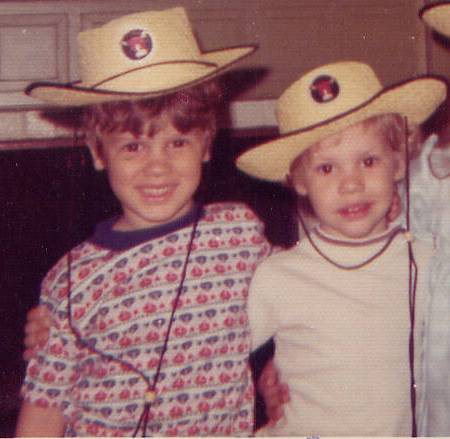
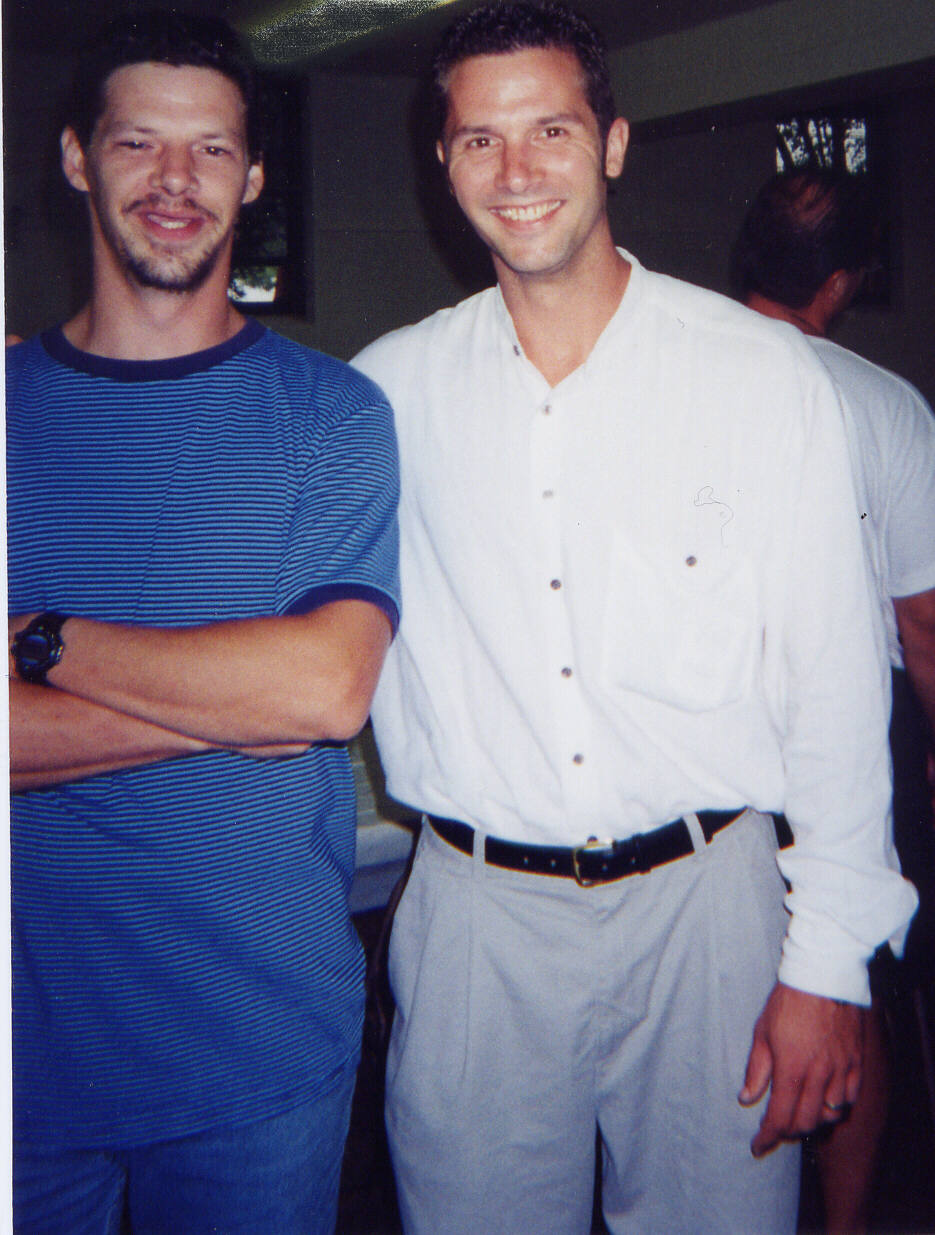
These are photos of my son and his cousin Rich, who are about 8 months difference in age, which when they were children made quite a difference in size, but none at all when they grew up--in fact, I think Rich might be a bit taller. Both were almost white blonde as little guys, and now both are very dark. Rich is on the right in the 1973 photo and the left in the adult photo.

Easter 1973


And in 1999

Thursday, June 29, 2006

2636 Stop the CCR

The CCR is working with and helping to fund the pro bono lawyers' work at Gitmo which is aiding terrorism.

The paragraph below is my rewrite of one the CCR had on its home page demanding Bush's impeachment (to send to your representative). Obviously, they didn't accept my editing--they're not that liberal! They are wetting their pants and their lips over the Supreme Court decision. I'm thinking their logo has a striking resemblance to a more familiar one with a bit of tweaking and flipping.

"The President of the United States should continue the course to save our country. He should continue the necessary surveillance of finances and communications systems to protect U.S. citizens. He should continue to tell the truth to the American public who are being lied to by anarchists and leftists who hate the U.S. to lead them to victory over terrorism. I urge you to join me and a growing number of your fellow bloggers calling for an investigation into activities of the Center for Constitutional Rights."


2635 The Guantanamo Bay Bar Association

Their pro-bono work is aiding the enemy. So how do these prisoners get a case to go up through the courts with some of the best lawyers in the country? Lawyers you and I couldn't afford? Well, we're paying for it--indirectly because they are being paid huge fees by firms we invest in.

Blogged about this in January. I wrote letters. Did you? Deroy Murdock's original article

It's a recruiting tool for these firms:

From Fredrikson & Byron
Fredrikson & Byron has put together a team of lawyers representing one of the Guantanamo detainees, Ahcene Zemiri. We are working to ensure that he has the opportunity to present the facts of his case to a federal court. Our lawyers worked with the Center for Constitutional Research (“CCR”)**, a non-profit organization based in New York, to arrange for our representation.

Although more than 150 Guantanamo detainees are now represented by counsel from across the country, Fredrikson & Byron remains the only law firm in Minnesota that is representing a detainee. Our habeas petition has become the model petition that CCR provides to other counsel planning to file petitions in their own cases. Individuals who have worked on this case include: Matt Boos, Ingrid Culp, Wade Davis, Jim Dorsey, Emily Duke, Lilhja Emery, Dulce Foster, Roxanne Gangl, Michelle Hanson, Sharen Keehr, Faye Knowles, John Lundquist, Nicole Moen, Debra Schneider, Jessica Sherman, Rhona Shwaid, Asmah Tareen, and Heather Thayer.


Sutherland Asbill & Brennan: "Here are a few highlights of our most recent pro bono work:

In January 2005, John Chandler accepted a challenge from the American College of Trial Lawyers to represent alleged "enemy combatants" detained at the U.S. military base in Guantanamo Bay, Cuba. On February 7, 2005, Sutherland filed a petition for habeas corpus and other relief on behalf of five Yemeni detainees. The petition, filed in the U.S. District Court for the District of Columbia, notes how "[e]ach of the Detained Petitioners is being held virtually incommunicado in military custody at Camp Delta...without basis, without charge, without access to counsel and without being afforded any fair process by which they might challenge their designation and detention." Because the U.S. government prevents lawyers from visiting Guantanamo detainees unless they have a pending case, Sutherland brought these cases through the detainees' relatives, who authorized the filings as "Next Friends" of the petitioners. Sutherland lawyers have since submitted security clearance forms that, once approved, will allow them to visit the detainees."


I wonder if these firms will do pro-bono work for Marines or school children who pray at graduation?

**The CCR is the group that has written a book on how to impeach President Bush.

Have I got a deal for you

We just toured a duplex owned by a friend, called the Plymouth House at 315 and 317 Sycamore Avenue in Lakeside, OH. Each side sleeps six, (3 bedrooms, 2 baths) and I've given it my personal inspection, and it is clean, clean, clean and beautifully decorated with eclectics and antiques. The kitchens are new, there's a laundry, AC, wireless, and overhead fans for those days when it's not quite hot, but you'd like a little air moving. A fabulous front porch, which every Lakesider knows is a must have.

You can view the details and photos at Lakeside Association Cottage Rentals.

2633 Baby Peeps

When I was a little girl, I lived two houses from a hatchery in Mt. Morris, IL. We children would just walk inside the brick, one-story building and look at and touch the baby chicks. I think my nose was about level with their itty bitty toes.

I suppose I've spent all these years thinking Mt. Morris was the center of chickenhood and hatcheries. And it is sort of, at least in print. Poultry Tribune and Turkey World are published there--or were the last time I looked. Imagine my surprise when I opened the Black Swamp Trader and Gazette and discovered that it was New Washington, OH. The Dutchtown Hatchery Festival in New Washington will have its 2nd Annual Festival on July 7th and 8th, and if I weren't flying to Finland on the 8th, I'd stop by, just for the sights and smells.

It seems that Michael Uhl invented a 200 egg capacity incubator on his family farm in 1885. He and his brothers went on to design and build a 10,000 egg capacity incubator and thus sparked an entire industry. So apparently "factory farms" aren't an invention of the 20th century. People near Croton, OH will be happy to know that.

He also is responsible for creating a system to ship newborn peeps across the nation, which is still used to this day. The World's Poultry Congress, which happened the year I was born, actually toured little New Washington's hatcheries.

Thursday Thirteen

banner by tnchick


Thirteen things about your blog: 7 that keep me coming back, 3 that make me pause, and 3 that say good-bye.

Hello, I'm glad you're here says a

1) A beautiful template
2) with easy to read color combinations
3) with few or no wiggles and jiggles
4) and few or no ads
5) and no appeals for money, even for a good cause
6) more text than links
7) with interesting, well-thought out ideas.

Got some extra time on your hands says

8) confusing registration procedures, and hidden comment links
9) three squished columns that overlap
10) teeny, tiny little clicks, blips and flips to turn a page.

So long sister, this blog's not for you says

11) a steady stream of profanity
12) discussion of your sex life--even with your spouse
13) music blaring with the volume button hidden, which starts all over when I try to leave a comment.


<1. Margie Mix 2. Margie Mix 3. Kelly 4. Christine 5. Denise 6. Francesca Gray 7. Red 8. Bj 9. Jennifer, Snapshot 10. mommy@home 11. carmen 12. Katrina 13. Louise 14. Darla
15. Chris 16. Tricia 17. Lazy Daisy 18. mar 19. EmilyRoseJewel 20. d.challener 21. Stacy 22. Great Day 23. Trina 24. The Shrone 25. Mrs. Cranky Pants 26. tnchick 27. Reverberate58 28. astrocoz
29. Kailani 30. Ficklechick 31. momcarver 32. Jo 33. Chelle 34. Susan 35. Mysterious Lady 36. Christine 37. PixiePincessMom38. Cindy Swanson 39. Jimmy K.40.
You're next

(If you participate, leave your link in the auto-link and it will post here, but please leave a comment.)

Get the Thursday Thirteen code here!
The purpose of the meme is to get to know everyone who participates. Visiting fellow Thirteeners is encouraged! If you participate, leave the link to your Thirteen in others comments. It’s easy, and fun! Be sure to update your Thirteen with links that are left for you, as well! I will link to everyone who participates and leaves a link to their 13 things.>

Trackbacks, pings, comment links accepted!

Wednesday, June 28, 2006

2631 Why I don't support a flag amendment

This can be handled with local codes or state laws. What I'd like to see is a movement toward decency and common sense on the part of business so people weren't buying towels for the beach that look like flags, or table napkins, or bikinis or jeans. That's the part I find objectionable and which seems to also be protected "speech." We've got hate speech codes and burning codes. Let's use those and get the government back to protecting us from real weirdos.

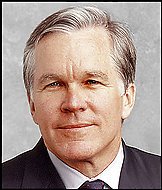
Bill "The Snitch" Keller

You could burn a thousand flags and not do as much damage as Keller at the New York Times has done. Congress was informed of this security measure and he didn't like it, so although no one elected him, he decided to give secrets to the enemies of the United States, secrets that will help stop the flow of money to terrorists. If bloggers are organizing to pressure advertisers who use that rag, where do I sign up?

Rich Lowry "Government by and for the New York Times
Milblogger "Keller contributes to death of soldiers"
Bill Keller "I leave it to the court of public opinion"
Peter King "charges treason"


Minimum wage

Don Surber parses the minimum wage discussion--concluding that neither the Congress nor the 1% of Americans who earn minimum wage deserve an increase. Read it here. Clear, clean, concise, and using the same template that I do. He writes editorials and a weekly column for the Charleston Daily Mail.

2629 Foodways vs. cuisine

Sigh. There is no American cuisine. Donna Gabaccia has one of the more interesting essays in "Companion to American Immigration" (2006), writing about the diversity of American food (p.443-470). I thought food exchanges were for dieters--but it turns out it is what immigrants do as they trade spaghetti, yams, spices, and pork for what they are used to. I think she is a bit conflicted, however. Next to one of the librarian writers I occasionally read [Hi Walt!], she has more parenthetical qualifiers than corn kernels on a cob at a 4th of July picnic. She has written extensively on this topic, so perhaps one of her other works (which she cites) allows her more leeway.

I've only read about 5 of these essays, skipping to the topics that most interest me, but it's noticeable that if your family did get here before 1850, you are part of the problem. I suspect this is the trend in any textbook prepared by today's scholars. And even if they came during the "mass immigration" of the late 19th and early 20th, if they went from poverty to being fabulously successful, college educated who launched businesses or became CEOs, you are also part of the problem. Mainly because the very subtle undercurrent in this title is that nothing good can come of being a mainstream, native born American.

And pity me and mine! Descriptions for us, our food tastes, our habits that may be rooted in Britain or northern Europe, are noted as 1) culinary nationalism, 2) "Glory, God and Gold," 3) "aping the life of the gentry," 4) "moral rectitude," 5) "established patrinomies" 6) Protestant, 7) mass-produced, 8) white bread, and "religious hostility to alcohol."

Remember the 19th century saloon we learned about in American history class that took the food out of the mouths of children and gave rise to the Hull Houses of the cities? Not to worry. It's all been cleaned up. Now it is just delightful ethnic diversity of foodways. "For the Irish, drinking their own darker brews and whiskies in the equivalent of old world public housesmay have provided a sense of communalism as much as a shared meal of potatoes, porridge, or cabbage."

Well, isn't that a classy spin for falling-down-drunk laborers whose pay never made it home!

Tuesday, June 27, 2006

2628 Financing Terrorism

It seems the Bush Administration wasn't the first to notice how important money is to terrorists. Other countries figured it out too.

U.S. Congress. Senate Committee on Foreign Relations. Anti-Terrorism Conventions. 2001.
Sudocs classification number: Y 1. 1/ 6: 107-2
http://purl.access.gpo.gov/GPO/LPS16776
http://purl.access.gpo.gov/GPO/LPS16777 (permanent redirect)
http://frwebgate.access.gpo.gov/cgibin/
getdoc.cgi?dbname=107_cong_reports&docid=f:er002.107.pdf (PDF
file)
“These two anti-terrorism conventions address two specific aspects of
terrorist conduct: terrorist bombings and the financing of terrorism. Their objective is to require the United States and other States Parties to criminalize such activities and to cooperate with each other in extraditing or prosecuting those suspected of such activities.”

U.S. Congress. House Committee on Financial Services. Financial Anti-
Terrorism Act of 2001: Report together with Dissenting Views. 2001. 121p.
Sudocs classification number: Y 1. 1/ 8: 107-250/ PT.1-
http://purl.access.gpo.gov/GPO/LPS15885
http://purl.access.gpo.gov/GPO/LPS15886 (PDF file)
“To combat the financing of terrorism and other financial crimes.”

U.S. Congress. House Subcommittee on Crime. Implementation of the International Convention for the Suppression of Terrorist Bombings and the International Convention for the Suppression of the Financing of Terrorism. 2001. iii, 57p.
Sudocs classification number: Y 4. J 89/ 1: 107/ 46

The intent and provisions of these two treaties, as well as their usefulness
in combating the kind of global terrorism exhibited in the September 11
attacks."

These were looked at via a nice online bibliography about 9/11, which unfortunately, I neglected to record, but I may have found it via GLIN. These documents, or any discussing the need to stop terrorism at the source (money from donors or drug cartels) are not hard to find via Google, but finding them in a bibliography is a nice shortcut. Librarians love bibliographies, indices and other finding tools.

2626 Summer Reading at the Lake

Yes, I'm working my way through "A Companion to American Immigration," which is proving to be much more interesting than the title might suggest. It says a lot about the state of present scholarship on the topic.

For instance--the list of contributors. It is heavily weighted not only with Asian surnames, but also specialists and historians on Asian immigration. In fact, I didn't find any ethnic names for Cuba, Mexico or South America, although there are two Spaniards from the University Autonoma of Barcelona. It strikes me that if it is awkward or slippery to compare the culture of Mexican illegals with that of 18th century British, it probably doesn't make a lot of sense to use the 19th century Chinese railway workers either.

Chapter 21 on food is interesting, not only for the history of food exchanges, but the obligatory use of inflammatory language which populates "survey and studies" scholarship. When European ethic groups in the U.S. are mentioned, the verb of choice is "invade," but when Plains Indians do it to each other's territory, it is a "raid."

And you can almost hear the authoress sigh when she recounts how our fore mothers raised, processed and preserved much of their own monotonous food. I just love it when academics who have probably never broken up a clod of prairie or snapped a bean, can get so sentimental about the back breaking work women used to do over an open fireplace or cook stove.