Meanwhile, my log sheet rolled over to 16,000 miles yesterday. I think I started tracking in January 2015 and I record both walking and cycling.
Showing posts with label dancing. Show all posts
Showing posts with label dancing. Show all posts
Thursday, April 27, 2023
16,000 miles
I learn a lot at the gym. The exercycles are about 2 ft. apart. So, I could overhear the conversation of 2 retirees, maybe 10 years younger than me. So, I learned about the karaoke places and where to go ball room dancing in Columbus, OH. I also learned which local bands (really crazy names) have split or are having problems with venues. One guy had lost 30 lbs, but was having eye problems, so all the directions to the venues he told his friend involved side roads because he doesn't do freeways anymore. There were the usual complaints about safety, so they are both shopping in the daytime. Seems they don't like President Trump personally, but when they ran down the list of policies and programs like immigration and military, they were right smack in the middle of MAGA.
Meanwhile, my log sheet rolled over to 16,000 miles yesterday. I think I started tracking in January 2015 and I record both walking and cycling.
Meanwhile, my log sheet rolled over to 16,000 miles yesterday. I think I started tracking in January 2015 and I record both walking and cycling.


Thursday, March 03, 2016
Social dancing is good protection against Alzheimer's Disease
"The theory proposed by Dr. Verghese and his fellow researchers is that social dance is an activity that activates and takes advantage of our brains' neuroplasticity. That is, according to Dr. Joseph Coyle, a commentator on the study, "The cerebral cortex and hippocampus, which are critical to these activities [greater cognitive reserve and increased complexity of neuronal synapses], are remarkably plastic, and they rewire themselves based upon their use."
When the aging process causes our brain cells to begin to die off, our memory of nouns (like the names of people we know and love) often go first, because there is only one neural pathway connected to that bit of stored information. If that neural connection is lost, so is access to the piece of information it pointed to. It's like taking the same well-worn path through a forest, and one day not being able to find the entrance to that path. In patients suffering from dementia, even if they can physically see their destination, they sometimes can't figure out how to get there, because they've forgotten how to find the path they were accustomed to take.
The key to avoiding this, in the researchers' opinion, is to continually forge new neural pathways. And the way to do this is to constantly challenge the mind and force it to make split-second, rapid-fire decisions. Each of these decisions has the effect of creating greater cognitive reserve and a more complex network of neuronal synapses. In short, the more pathways your brain has to the information stored in it, the more accessible that information becomes, and the less likely you are to forget it.
But again, why dancing?
Dance, especially ballroom dance and other forms that involve cooperation between two partners – one leading and the other following, or both following not just preset steps but having the ability to improvise – causes the very rapid-fire decision-making that forges new neural pathways. The researchers emphasize that not all forms of dancing will accomplish this; for example, types of dance that rely on retracing the same memorized steps will form no new connections in the brain. Improvements to cognitive function occur when we learn something new, something we haven't done before. The dancers in the recent study who showed the most resistance to dementia practiced what is referred to as freestyle social dancing – foxtrot, waltz, swing, tango, and Latin dance.
In the 21-year study, seniors who danced regularly showed more resistance to dementia than those who only danced occasionally; just as with doing crossword puzzles, more is better. Those who "changed partners" more often benefitted more than those who stuck with the same dance partner, possibly because they had to adjust to the new partner and make more split-second decisions to adapt to their different style.
Interestingly enough, women may benefit slightly more than men from social dancing, because they follow their male partner's lead, and thus are constantly having to make rapid-fire decisions. But this piece of information can help the men, too. By becoming more attentive to your partner's style and constantly adjusting your own to insure their comfort and continuity of motion, you can become not only a better dancer, but improve your brain's cognitive abilities as well. Juliette Siegfried
http://www.healthguidance.org/entry/16525/1/The-Best-Means-of-Avoiding-Alzheimers-Is-Dance.html
Based on New England Journal of Medicine journal, June 19, 2003

Tuesday, December 16, 2014
BalletMet Nutcracker—a real delight
We enjoyed the matinee performance of the Nutcracker at the Ohio Theater on Sunday. Our 10 year old Lakeside neighbor who has been in several of Bob's paintings was performing in a small part. The devotion of the parents to exposing their children to this type of culture is admirable--her mother was probably there 8 hours Sunday because another child became ill and she will also do the evening performance. I did the football, baseball, track, cross country, soccer, cheerleader, Campfire, sports lunchroom, Jones musical gigs, UA high school choir--but I never told my kids about dancing lessons. It was fun to stand at the stage door after the performance to wait to see her. Bob gave her a Twinkie—other dancers got bouquets.
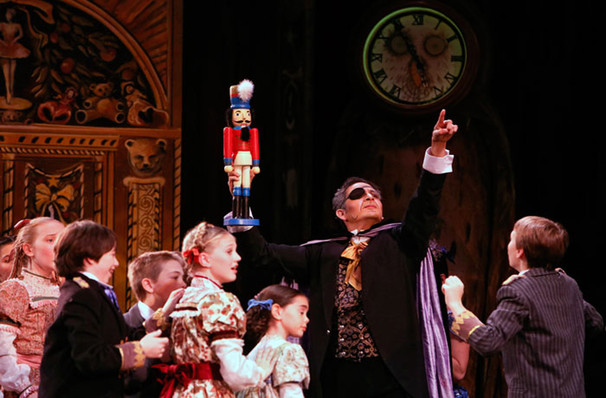
“We open on Christmas Eve, in the Stahlbaum house. There's music and presents and food, and the three Stahlbaum children are beside themselves with joy at the wonder of it all. There's danger on the horizon though, heralded by the arrival at the door of local magician Drosselmeyer. He brings bearing gifts for the children, including a wooden nutcracker. This is just the start of an adventure which will lead our characters into a war between mice and gingerbread men and through the Land of Sweets. “
We were pretty high up for $58/seat—not exactly nosebleed territory, but close. Managing that many stairs was very difficult for me, and on Monday my legs felt like I’d been in a box for 2.5 hours—seats are pretty small.
Putting on my “fashion police” cap, I was so pleased to see that younger women are rejecting their mothers' idea of fashion (sweatshirts and jeans) for nice events in classy theaters. I was just amazed at the well turned out young ladies in dresses! and heels at this event. How refreshing. The "protest march" look was really getting old.

This photo is from the Internet and we think that is Lillian in the front (red hair). She was a “page,” and appeared in the 2nd act.
Sunday, April 24, 2011
Resurrection Sunday Dance in Budapest Hungary, 2010
"look to the sky but not for Airforce One. . ." How true! Hungary, a former Communist country, is the center of revival in Europe. Faith Church started as a house church in 1979--now has 50,000+ members with 250 branches.
This is danced all over the world. Here's a look at a training session in Ashville, NC for 2011 (today's dance). http://www.youtube.com/watch?v=NvfzaSYGkHs and one in Honduras http://www.youtube.com/watch?v=sBBb2XimeJM&NR=1
Tuesday, May 13, 2008
Looks pretty normal to me
Last night my husband called me into the living to see the video that's going around the internet that was shown on and commented about during O'Reilly. I looked at the fuzzy video which seemed to be two kids stretched out on the floor having an epileptic seizure. "Looks pretty normal to me," I said. "Dancing has always been about imitating the movements of sexual intercourse." He was not pleased. He loves to dance. But even the waltz was once considered an outrage by the old timers watching the young people dipping and doing. And the jitterbug? Oh. My. Goodness. And have you ever seen old footage of Soul Train--say about 30-35 years ago. Lawdy, Lawdy Miss Clawdy (1952, 1941). It's hot. And the old Elvis Presley footage on the Ed Sullivan show. Parents and grandparents were screaming--and so were kids, although for different reasons. Nope, I didn't see anything new. Not the kids. Not the outrage. I tried to locate the video to provide a link, but the old computer just
Subscribe to:
Posts (Atom)


 Posts
Posts


