Monday, November 15, 2004

593 Lutheran Churches Columbus Ohio

If you are browsing the internet looking for a Lutheran church in the Columbus metropolitan area, or one serving Upper Arlington, Hilliard, Dublin or North Columbus, you probably won't find the largest, which is Upper Arlington Lutheran Church. So I'm blogging about it today to help you find it.

Upper Arlington Lutheran Church is one congregation with three locations, The Church on Lytham Road, 2300 Lytham Road, Upper Arlington, 43220; The Church at Mill Run, 3500 Mill Run Drive, Hilliard, 43026; and Hilltop Lutheran Church, 12 South Terrace Avenue, Columbus, 43204. This wouldn't be nearly as confusing if we'd originally chosen a spiritual name like Trinity or Lamb of God instead of a city's name, but that's how the New Testament churches did it. Here's an earlier story when we had just two locations.

Upper Arlington Lutheran Church in suburban and west side of Columbus, Ohio, offers a variety of worship styles, five times on Sunday at Mill Run, four times on Sunday at Lytham, and one at Hilltop. There is a wide variety of teachings and Bible study throughout the week, with Sunday morning and Monday evening being the heaviest schedules, with Sunday school and "Outfitters," for deeper study of theology, the Christian life, parenting, etc.

This large Lutheran church in the Columbus, Ohio metropolitan area has a Vacation Bible School that will knock your socks off--something like 2500-3000 kids are enrolled and teachers are drawn from all over the city for what must be a logistical nightmare for the planners, with morning, afternoon and evening sessions. Every adult who works in this program, even those who sell the t-shirts, are checked and screened and have references.

There is a very large nursing home ministry that offers Bible study and communion at local facilities, and offers regular training and support for members of those ministries. I couldn't even begin to count the liaisons between the church and groups like Inter-Varsity, Campus Crusade, and International Friendships. If you can't find a ministry to serve in at UALC, you just haven't looked.

I'll put in a plug here for something that's relatively rare in churches, and that's an established Visual Arts Ministry. UALC has probably the finest gallery space in metropolitan Columbus, and is currently booking shows for 2006. It has an annual Members All Media Art Show (MAMAS) during Advent. But this ministry is miniscule compared to the music ministry which frequently features a full orchestra, and has separate choirs for the different locations. The Christmas choir offerings are usually over sold and are fabulous. We have a new music director this year, formerly at Karl Road Baptist, who looks very promising.

This Columbus area Lutheran church offers unique opportunities for urban ministry through its contacts at Hilltop Lutheran, including a food pantry, clothing store, elementary school mentoring and volunteering, and programming useful for a community not in the suburbs.

Upper Arlington Lutheran Church, a large Columbus area church, has regular print-on-paper publications, The Cornerstone, which primarily focuses on scheduled events, and Crosslinks, a full color, glossy monthly magazine (access through the main web site), with general content articles of interest to visitors and members. [discontinued] Both are available in PDF files.

I'll cross post this at my other blog, Church of the Acronym, and then I'll check Google to see if "Lutheran Church Columbus Ohio" will finally bring up the largest Lutheran church in the city. It's worth a try!

592 Applesauce Pie

Years ago, maybe around Thanksgiving, Phoebe Timberlake and I were strolling through the marble/terrazo halls of the elegant card catalog room at the University of Illinois Library. We had become acquainted in library school--although we had first met when she worked in university personnel and I worked in the Russian language center because our offices were in the same building. Phoebe was telling me about "applesauce pie." It sounded sort of revolting--I'm a big fan of apple pie, and I don't want it overcooked. Today I saw a recipe for it, and thought it looked pretty good. Sort of like a custard. Also since it only needs one crust and I can probably substitute Splenda for the sugar, it will be lower in calories than my usual decadent creations. It was also nice to remember a librarian friend I haven't seen since 1966 (who went on to become quite successful in the serials field).

APPLESAUCE PIE
1 3/4 cup applesauce
2 eggs slightly beaten
1/2 cup sugar
1 Tbl. flour
1 cup milk
1 tea. vanilla
pinch of nutmeg

Combine all ingredients & mix thoroughly. Pour into unbaked pie shell & bake 25-30 minutes at 350 or until filling doesn't giggle when the pan is moved. Serve with sweet whipped cream.

This recipe was submitted to Collectors Newsletter #275 November 2004 by Nancy B., Eatonville, WA. You can read this newsletter online, or subscribe to text only, as I do. I thoroughly enjoy the reader-contributed stories.

I thought I'd add a few super-duper links to the U. of I. Library, but they are ugly and utilitarian, with no need to physically ever visit the campus.

Sunday, November 14, 2004

591 Ten Suggestions to Save the Democratic Party

James K. Glassman has some suggestions for the party which include Michael Moore, Hillary Clinton, George Soros, and P. Diddy. Read all the suggestions here.

590 I'll pass on this offer

USAToday has an offer for a commemorative front page, framed $69.95 or $19.95 unframed. The headline, "Bush calls win 'historic'." Obviously, not the opinion of the paper. Just Bush's words.

I watched their "Politics" page during the campaign. If it had even been 45% Bush, 55% Kerry, I would give the paper credit for trying, for making an effort, to be balanced. But it was more like 30% Bush and 70% Kerry.

We'll never know how many of these framed or unframed front pages they sell. I'm guessing that unlike Bush, it won't be a winner.

Saturday, November 13, 2004

589 Wine Words

People who write for a living have specialties. They find ways to use the English language that would never occur to people outside their own field. The lingo that librarians use in their own publications is obtuse, overblown, obscure, and laced with computereze; not only does it keep outsiders from knowing what we talk about, it keeps other librarians cowed into silence.

But people who write about wine--now they can take the most ordinary words, make them sound terrific, and you still haven't a clue--at least if you're like me and know nothing about wine except that $3.99 a bottle probably isn't going to impress your guests.

In the Wall Street Journal Friday, I think, there was an article about which wines go with what foods. The writer actually subjected her/his family to the same meal several days so they could try different wines and be fair and balanced in their evaluation. My own wine vocabulary would be limited to taste words like acid, tart, sweet, sour and fruity. But, no. That's not how it is done. I wrote down the "wine words" used in this article.

clean
fresh
vibrant
lively
exciting
simple
richer
crisp
enliven
hints of
gravitas
clarity
balance
dramatic
clash

And the phrases, where one word wouldn't do.

not up to the task
clashed with
good counterpoint
didn't intersect
didn't engage
long, lovely finish

Wine vocabulary sounds much better than "mono- and cross-language domain-specific retrieval" or "data mining and knowledge discovery."

588 Do we really need more labels?

I think my regular correspondence is down to two people--a friend from high school and a cousin. Everything else is e-mail. But no one has told the organizations that ask for money and send you gummed address labels as a trade that correspondence is flourishing, but not by land.

Today in the mail I received labels from the University of Illinois. They are going in the drawer with the labels from Easter Seals, UNICEF, Tauck World of Discovery (have no idea, either), our bank, Doctors without Borders, Arthritis Foundation, Lung Association, Christmas seals and two that have had the identity label removed and I don't know the source. We've only lived here two years, don't contribute to any of them except the U. of I., and they've found us anyway. They've started adding little labels you can adhere to your calendars. But even that will have limited usefulness as people go to the hand-held digital calendar devices.

Assuming I live another 25 years, I think I could use up this current supply, if I never move, and if I use them on Christmas envelopes. But I sure don't need any more.

587 Scott Peterson, OJ, and the Rest of the World

When I heard the verdict "guilty" on both counts yesterday, I just sighed. Yes, he's probably guilty, but I didn't think they proved it, although I admit I only skimmed it when it would come on the news. Where is the motivation for a serially unfaithful husband who had never shown any obvious cruelty to anyone who knew him? Circumstantial evidence and wildly flagrant media hype. Our justice system has not served well.

I immediately told my husband, that if Peterson hadn't been drop dead handsome and from a well-off suburban family, with a story to tug at the heart strings (baby Conner, 9 mo. pg sweety wife) to keep the cable channels busy (selling ad time), this would have never been a story. If OJ had killed his black wife instead of his white wife, the washed up football player/quasi entertainer would now be in jail for life instead of playing golf (while he looks for the real murderer) and it might have been on the news one or two nights.

I think it was around the time of the Peterson murder that a poor black man murdered his wife, who'd had numerous restraining orders, here in Columbus. In the daylight. In front of numerous witnesses. Downtown street corner. I believe he got less than a year. Can't imagine what the charge was to make that poor, screaming, terrified woman's life so cheap.

Friday, November 12, 2004

586 Piero Fornasetti plates

As my husband got ready to leave the house for exercise class (with 50 women), he had a stack of magazines with him. He gives them to one of the moms of a high school boy who wants to be an architect some day, and it helps clear the clutter from his office. "I haven't seen that November Home yet," I said. "Nothing in it." "Well, even so, I want to look at it."

So I was leafing through it at lunch (I'm still eating Laura Bush's prize winning, election predicting cookies I baked two weeks ago), and on p. 28 I found an article about Piero Fornasetti porcelain dishes, which apparently appeared on NBC's "The Apprentice 2."

We have two Fornasetti plates given to us by Bill and Alice Adelman in 1965 as house warming gifts in Champaign, IL. To tell the truth, I was a bit put off by the odd face of "Julia" the 19th century woman who appears in various states of dress, hair and body parts. We have the one with a clock through her nose, and the one where her face is the moon (or maybe the sun). At 25, I just wasn't too appreciative. Julia's face moved around to various cabinets, and I think once I even put her into a garage sale. She was just too wild for Columbus, Ohio in the 70s. When we moved here, the plates were put in a lighted, glass door cabinet, and now her haunting face looks out at me every day. After 40 years, she's kind of grown on me.

585 College vs. Cottage of Straw

You've heard of the strawman? Apparently, I own a straw cottage that some educators have tried to huff and puff and blow down, but I didn't notice it until yesterday when it came up on a search.

Here’s what I wrote in February about the dollar value of a college education.

“I thought I would die of a broken heart when BOTH my children decided not to go to college--actually, refused is a better word. I was the third generation in my family to go to college--and I was on the faculty at a fine university. OK, I thought. A few years in the market place and they'll come around. Didn't happen. So we spent the college money on a summer cottage--no kidding--and eventually they'll reap the benefits of that since it has appreciated from $53,000 in 1988 to about $200,000 according to our latest tax assessment.”

But here is what Joanne Jacob’s gleaned out of that paragraph for her education blog and titled the subject line, “College vs. Cottage.”

“Norma's kids skipped college, and the family is richer as a result. The college money went to buy a summer cottage, . . “ Nothing about my dreams, hopes and fears for my children--just a sharpened pencil and a bank book.

In my blog I went on to estimate what the dollar cost of a college education at a state university would be worth in 45 years had I invested it and held for them--far more than the $600,000 life time advantage an education is supposed to provide, and she quotes that.

“Say we had invested $20,000 (the cost in the mid-80s of a state university education) in the stock market for 45 years, until their retirement age. Would they have that $600,000 to cushion their golden years? No, they'd have $1,604,000 using the conservative figure that over time, stock investments level out at about 10% a year, even factoring in the wild ride of the 90s.”

Sixteen people weighed in. Most missing the point (as did the people who e-mailed me directly). I never said I was talking about anything except the dollar value the “experts” apply to a college degree. One reader said, “well college costs more now. It was a state university.” How does that change the formula or argument?

Another said, “if you’ve got a college degree, then you have more to invest.” Obviously, one of the things, in theory, you obtain with college, is the smarts to invest wisely (a huge leap, I know), but I think that is factored into the $600,000 advantage college grads have over high school grads.

Another reader said, “what about all the other things gained by college--appreciation of the arts, flexibility, portability of skills, etc.” even though I’d said at the outset I was not addressing anything but the $600,000 figure that is PROMOTED as one of the primary advantages of a college education.

Someone else said, “why didn’t she put the money in the market instead of a cottage.” Wow. Some people don’t get the point do they?

After reading through all the comments, I realized many of the commenters hadn’t clicked to my blog to read it, and if they did, they didn’t actually really read it or understand it. It is terribly threatening to educators to suggest some of their favorite theories need a second look (and since I was one, and admit I was wrong, I can say that).

Strike two against a college degree. Causes faulty and incomplete reading.

Thursday, November 11, 2004

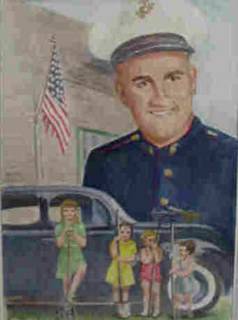
584 In Memory of Dad


While Dad's away at war, we plant our "victory garden." Posted by Hello

583 Armistice Day, November 11, 1918

My parents were small children when the First World War ended in 1918. They didn't know each other, but lived in adjoining counties in Illinois, and their one room rural schools were located just a few miles apart. Both were members of the Church of the Brethren, which had taken the word "German" out of its name just a few years earlier.

Both of them told me the same story about their memories of the end of the war. When I was young, I don't think it ever occurred to me to ask about World War I. WWII seemed the defining war of their generation, since my father was a Marine and my mother had moved with her four little children to be near his military base during the war. For my generation, kitchen clean up after meals when mothers and daughters worked together washing and drying dishes was the time to talk. I think that is when I heard the family stories passed down. Dishwashers and restaurant meals have probably created a huge generational story gap.

However, I didn't hear about WWI memories until sometime in the early 1990s. I had interviewed my father for an oral history to include in a family recipe collection for a reunion of the descendants of his parents who had died in 1983. I had interviewed my mother about her parents' personal library for two articles I wrote. Both recalled in their 80s the first Armistice Day (now called Veterans' Day) even though they were 5 and 6 years old. I imagine they listened in on adult conversations and caught the fear and dread that griped their communities. My mother's father who was 44 was registered for the draft. And although I haven't seen the record, I would assume my father's father, who was a much younger man, did too.

There were no radios or television, and newspapers would have been too slow. So the plan was to ring bells when word came to the nearest town that the armistice had been signed. The church bells would be rung; then each farmer would begin to ring the bells they used on the farm; then the next farmer a few miles further away would hear and begin ringing his bells. Both my parents had exactly the same memory of that first Armistice Day--hearing bells tolling throughout the countryside from all sides. The war was over.

582 Veterans' Day 2004

U.S. Military conflicts

2003-2004 Iraq War
2001-2002 Afghanistan (Al-Qaeda)
1999 Kosovo
1995 Bosnia
1994 Haiti
1990-1991 Persian Gulf
1965 Dominican Republic Intervention
1961-1973 Vietnam War
1950-1953 Korean War
1941-1945 World War II
1917-1918 World War I
1916-1917 Mexican Punitive Expedition (Pancho Villa)
1914 Tampico and Vera Cruz Incidents in Mexico
1900 Boxer Revolt (China)
1899-1902 Philippine Insurrection (Philippine-American War)
1898 Spanish-American War
1861-1865 American Civil War
1857-1858 Utah War
1848-1858 Third Seminole War
1846-1848 Mexican War
1841 Door Rebellion (Rhode Island)
1839 Aroostook War (Canadian lumbermen and American settlers)
1836 Texas War of Independence
1835-1842 Florida War; also known as the Second Seminole War
1831-1832 Black Hawk War
1780s-1890s Indian Wars including
1811 Battle of Tippecanoe;
1846-1868 Navajo Wars in New Mexico and Arizona;
1855-1858 Yakima Washington, Oregon, Idaho;
1866-1890 Sioux and Cheyenne Wars in the Dakotas and Montana;
1870-1886 Apache Wars in Arizona, New Mexico, and Mexico;
1872-1873 Modoc War in California;
1877 Nez Perce Wars in Idaho and Montana in 1877
1817-1819 Seminole War
1812-1815 War of 1812
1801-1805 War with the Barbary Pirates
1794 Whiskey Rebellion (Pennsylvania)
1791-1800 Quasi-war with France (Atlantic Coast and West Indies)
1786-1787 Shays Rebellion (Massachusetts)
1775-1783 Revolutionary War
1774 Lord Dunmore's War (in Virginia, Pennsylvania and Ohio
1771 War of the Regulators (North Carolina)
1763-1764 Pontiac's Rebellion
1754-1763 French and Indian (Seven Years War)
1760-1761 Cherokee Uprising (Carolinas)
1744-1748 King George's War
1739-1742 War of Jenkins' Ear (Georgia and Florida)
1715-1716 Yamasee War (South Carolina and Georgia)
1702-1713 Queen Anne's War (War of the Spanish Succession)
1689-1697 King William's War (War of the League of Augsburg)
1676 Bacon's Rebellion (Virginia)
1675-1676 King Philip's War


Happy 229th Birthday U.S. Marines, November 10.

Wednesday, November 10, 2004

581-b Betsy Stark's Good News

Imagine my surprise when I saw Betsy Stark's smiling face on the evening news reporting about the fabulous economy! Job growth. Consumer confidence way up. Stock market. Economy bustling. What a miraculous turn around in just 9 days. Isn't that incredible. There wasn't a shred of good news--worst economy in 70 years--just a few days ago. Hmmm.

581 Lawrence O'Donnell and my blog

When I checked my site meter the last several days I discovered that searches for Lawrence ODonnell (MSNBC) accounted for about half of all google searches that directed to my blog. That's odd, I thought. I mentioned him on October 23 after he'd gone bonkers over Swiftboat Vets and was screaming "Liar," but had no idea what he'd done recently. Well, apparently he's really gone off the deep end again (or, as usual?) and suggested the blue states secede. So that probably caused all the google searches, which in turn caused a ripple at my web site.

I hope someone has shown him the county maps. The counties would have to secede, not the entire state. Look at Illinois. It would appear that the Chicago suburbs went for Bush, but the St. Louis suburbs (in Illinois) went for Kerry, even thought the metropolitan counties are strongly blue. Bush won 2.51 million sq. miles with 150.9 million population, and Kerry won 511,700 sq. miles with 103.6 million people. And the red counties have all the agricultural land! What will the blue counties eat? And what movies will those of us in the red counties see? Oh dear, we've lost Hollywood. How tragic.

Do the number of hits on a blog matter? For those who sell ads, absolutely. There is an entire cottage industry of bloggers and software that count and evaluate blogs. "The current arbiter of the blogosphere as a whole is the Truth Laid Bear Ecosystem, an index of registered blogs whose evolutionary animal metaphor implies an ecological logic at work. Blogs are ranked by incoming links from other blogs registered in the Ecosystem making this a good analogy for a closed, but ever expanding, ecosystem operating in wider ecologies of the Internet. Blogs are ranked hierarchically from top predator InstaPundit described as a Higher Being down through tiers including Playful Primates, Flappy Birds, Lowly Insects all the way to Insignificant Microbes that subsist without a single incoming link to their name. Despite the animal metaphors the Ecosystem might be thought of as a Great Chain of Being as much as assertion of Linnean relationships. This is not only a description of energy flows but a catalogue of varying social status and influence in the blogosphere." Into the Blogosphere article. It is interesting to check out Bear and search the various blogs you like to read.

When I changed my site meter to not count my own visits to my site, there was a huge drop in the charts at Bear (I was already crawly scum), but there doesn't seem to be any standard for this-- whether you count yourself as a visit. But without my own visits, I get about 70 page hits a day.

Tuesday, November 09, 2004

580 Evaluating the blog evaluators

Today I came across “Into the Blogosphere” which calls itself the “first scholarly collection focused on blog as rhetorical artifact,” saying that blogs represent the power of regular people to use the Internet for publishing. It is hosted on the University of Minnesota Libraries website. I haven’t quite figured out how to use the site, but have noted a few inconsistencies in the plan.
Although one of the beauties of blogging (I have five) is there is no peer review, this particular site says that - - -

“The ethos of blogging is collaborative and values the sharing of ideas; bloggers are not dependent on publishers to get their words out.”

And then goes on to use a peer review process to evaluate blogging.

“Yet, as most scholars recognize, the peer-review process is important. Peer review provides a needed check and balance on information; it helps ensure the quality of research and the connection between individual research and the profession as a whole. . .”

Am I correct in thinking their “peer review” process is to provide the authors cache when promotion and tenure review comes up--intended for those write about blogs as a communication form, and not those who actually write blogs. Anyone know?

Here’s a sample sentence or two pulled out:

“In all likelihood, Weblogs will be incorporated into most major media organizations in some capacity if their popularity remains sufficiently high and user figures increase. However, a true blog revolution remains a future phenomenon at best. For the foreseeable future, Weblogs seem well positioned to continue to do what they do best: to allow a forum for open and autonomous debate about media texts in the discursive space that they provide and to function as a real-time virtual feedback loop fostering an interactive debate about the veracity of media texts.” Weblog Journalism: Between Infiltration and Integration, Jason Gallo, Northwestern University .

Notice the references to “future” --we don’t know “future” if we don’t know the "now" for the article, do we? Was this written in 2002 or 2004, January or December? Makes a difference in my interpretation. I can find dates on the comments (I assume these are the peers), but not the articles themselves.

It would be nice to know date of publication for citing purposes, rather than use the date of research (September 2003) buried in the text for this kind of material:

“Color alterations, changing the base color of a common weblog template, are present in 33.8% of the weblogs (Figure 1). Of those that used templates that had been altered for color, 57.7% (n=30) had female webloggers while 40.4% (n= 21) had male webloggers and one of unknown gender (1.9%).” Common Visual Design Elements of Weblogs, Lois Ann Scheidt and Elijah Wright, Indiana University at Bloomington

579 How to improve elections in the United States

Michael Mayo of the Sun-Sentinel (Broward Co., FL) has some suggestions for improving our elections, and except for #1, I agree with all of them. He wants to dump the Electoral College. I don't agree. I think the Electoral College may be more important today than it was in the 1700s when they didn’t want the populous states to run over the smaller states. With the right candidate, the Democrats can still win in non-metropolitan areas--Bill Clinton proved that. And he was a moderate, a conservative Christian, and a southerner.

2. Tighten registration procedures

3. Demand transparency from electronic machine manufacturers

4. Mandate voter-verified paper trails for every electronic voting system

5. Fix the absentee ballot mess.

6. Make early voting easier.

7. Smooth the Election Day rough edges. (This would vary by state.)

578 Prayer Job Jar

It's getting full. And I'm so poor about doing this consistently. Perhaps a jar on the kitchen table. I think perhaps the first prayer is that God will bring the list to mind. Today's list, in no particular order (I'll leave that to God)

Shoe, a librarian having seizures
My father in law, 91, recovering in a nursing home from small stroke
My sister in law, who takes care of him, recovering from back surgery
My daughter, grieving over the loss of her pet of 18 years
My neighbor, a recent widow, moving to a retirement facility
My good friend Nancy, off to California to greet a new grandchild
My cousin making decisions about a move
Several women struggling with separation, divorce, custody issues
My son, needing to move on after a failed marriage
The ladies I visit in the nursing home
The friend who coordinates all the people visiting the residents in nursing homes
Our pastors struggling to figure out how to serve a multi-campus congregation
Our President as he makes decisions that affect our lives
Safety and protection for our soldiers in Afghanistan and Iraq

Monday, November 08, 2004

577 The jobs lie

One of the biggest lies and collective misinformation during the recent campaign were about the economy, specifically jobs. I thought I'd go crazy every time I heard the mantra about the worst economy in 70 years.

The current down cycle for jobs began in July 2000. A stimulus package was proposed but not supported by President Clinton. By the time Bush took office in January 2001, 217,000 jobs had already been lost and by the time his economic plan became law in June 2001, job loss was around 600,000. His tax cuts didn’t go into effect until August 2001.

Two examples of positive moves by business, using advances made possible by the internet.

Hand written inventory forms no longer necessary. “In the past, when the 100 sales reps of TaylorMade visited the 10,000 golf shops around the U.S., they would spend nearly two hours a day counting the titanium drivers and 9 irons left in inventory before filling out order forms by hand. That all changed in January when TaylorMade doled out handheld devices that sport bar-code readers and Internet connections. Now reps simply point the handheld at the bar code on each club to automatically tally inventory. Then they can focus on helping the retail customer boost sales. Sales-rep productivity is up 25%. And the system helped boost sales this year, allowing TaylorMade to beat rival Callaway as the world's No. 1 golf-club seller.” Business Week. http://businessweek.com/magazine/content/03_47/b3859623.htm

Multiple computer systems that can’t communicate have been replaced. “In the mid-'90s, the appliance maker Whirlpool, after expanding around the globe, was stymied by hundreds of computer systems that couldn't talk with one another. Whirlpool couldn't figure out how many products to make or to hold in inventory. Today, there's far less guesswork at the $11.8 billion company. Nearly every Whirlpool site worldwide is linked by e-business software. This has helped cut inventories from 15% of sales in 1997 to 12% today.” Business Week.
http://businessweek.com/magazine/content/03_47/b3859637.htm

But keep in mind, improved productivity means fewer jobs in one place, and more jobs somewhere else. The company that supplies the paper inventory forms for the salesmen may eventually take a hit as more firms use this system. Fewer staff in the home office are needed to process the information. Shortened sales call time may mean larger sales territories and fewer salespeople. Fewer computer support people may be needed at Whirlpool if there are fewer competing systems that need constant attention. Salespeople and software designers of the older, less effective systems, may be hitting the streets looking for work. Maybe that means fewer people going out for lunch in the business location, less demand for wait staff; maybe those computer support people will live in India instead of Indiana; maybe the improved productivity will hurt the competition and some of its people will suffer.

576 When the you-know-what hit the fan. . .

It warms my heart to read a dedication or an acknowledgement to librarians. Occasionally, a graduate student would mention my help (along with Mom, Dad, and Wife) in a PhD thesis. A romance novelist wrote a thank-you on the title page once for help in researching a feline disease, but that’s not the same as making it into the acknowledgements. A dog show researcher mentioned my help in one of his articles and donated a large sum of money to my library. One woman brought in a huge box of bakery goodies because I helped her father, a retired veterinarian, learn to use the internet. And personal thank you notes were always welcome.

But my favorite acknowledgement was from Richard Horwitz in his book Hog Ties: Pigs, Manure, and Mortality in American Culture (New York: St. Martins Press, 1998), a book based on the "other job" he held part time for fifteen years as a hired hand on a hog/grain/cattle farm in southeast Iowa.

Professor Horwitz and I had an e-mail correspondence across the corn fields and prairies about his research before the days of the web, and typing e-mail was somewhat complicated. I never actually met him in person, despite the fact we had some really important swine researchers at Ohio State.

Still, not every librarian gets her name in a book about pig poop!

575 Bridging our Culture Divide

Poor Jane Smiley. She’s been seriously hung out to dry by Liberal Larry. And he’s the better writer.

I compiled a list of ten people I know who voted Republican and gave them each a call, in which I basically laid out the real heart of the progressive philosophy in simple terms they could understand.

"RACIST BIGOT GAY-BASHING FASCIST MORON!" I screamed into the phone after dialing my first number. "BIGOT FASCIST RIGHT-WING IDIOT HATEMONGER!!!!"

"Why are you screaming at me?" Grandma asked. "This state went to Kerry anyway."

"NO THANKS TO YOU, YOU INTOLERANT EVANGELICAL NAZI WHORE!" I shouted.

"Jeezus!" Grandma gasped.

"STOP FORCING YOUR RELIGION ON ME YOU NAZI BIGOT MORON!" I demanded, and hung up the phone. Jesus indeed!

And so forth, as he outlines how liberals will bring conservatives back into the fold, to bridge the gap, so to speak.