Wednesday, December 13, 2006

3272 This doctor is clueless

Dr. John A. Parrish, Harvard Medical School, writes about his 89 year old mother's death in "An unquiet death," JAMA Vol. 296, No. 21, Dec. 6, 2006. At age 89 his mother was imprisoned in an observation unit of a hospital (no bathroom, no nursing care) for knee swelling and agonizing pain. She had an orthopedic surgeon who was abrupt, superficial and no time to listen to Dr. Parrish's sister, who had become her mother's caregiver in this medical wasteland. Finally, his mother had had enough, and insisted on being taken home "to die." Her mind was absolutely clear when she talked to her daughter by phone. When the daughter arrived, her mother's speech was garbled and she was disoriented. Then in what sounds like a three stooges movie if it weren't so tragic and pathetic, the mother dies, alone and unconscious, in transit after a generous dose of morphine on the way to a non-acute care facility, which sends her back to the emergency ward. Now after her death, the loving caregiver, her daughter, is despondent and has sold her home which she shared with her mother, and can't stop crying.

John Parrish, who apparently never took time off from his busy academic schedule to do anything but check with his sister by phone, should have never written this essay, because he comes out looking not only like a bad doctor covering for other medical personnel, but a whiny, ineffective, uncaring son and brother. Read his list of rhetorical questions--you haven't even read the article, but I'll bet you'll be coming up with some snarky answers for him, as I was.

"With righteous indignation should I investigate and document every decision by every actor in my mother's care?"

"Am I obligated to use my mother's story as a case study?"

"Would my complaints help call the frequently unanswered question of who is in overall charge of a complicated patient hospitalized by a specialist managing an acute episode?"

"Should I feel guilty because I wasn't there?"

"Would my mother's providers have listened to a chaired professor at Harvard Medical School?"

"Would my discussions with her physicians and nurses have resulted in more communication among them?

"If I had been there, would I have participated in decisions about definitive care, assignment to a fully staffed hospital room, and regulation of pain meds?"

"Does my sister now having sobbing and shaking need an apology from a series of busy people?" [I can certainly think of one.]

"Should I focus on the benefits of my mother's prior health care--decades of caring physicians? Mastectomy, pacemaker, etc."

And this he doesn't put in the form of a question, but a statement: "My mother and sister were spared the stressful communications and difficult decisions required for end-of-life care at home. . . a dignified, calm death at home with loved ones is the exception because it requires so much decisiveness, planning and coordination with health care professionals. . .uncomfortable with the goals of dying at home."

I hope he's a better doctor than he was a son, but that final comment that we really can't expect a calm death because the medical profession is too clumsy makes me wonder.

3271 Is trans-fat making you fat?

No. Too many calories and too little exercise is making you fat. If New Yorkers don't reduce their calories will it make any difference if foods have only healthy fat? No. So why the war on trans-fat when it is behavior and not ingredients? Will it cause Americans to eat less? If the war on fat content of prepared foods and snacks a few years back is any indication, it will make us heavier. The tasteless texture of snack food with zero fat and more sugar didn't help anyone, did it? Has a worst textured and more disappointing morsel been created than fat free ice cream?

Trans Fatty Acids accounted for about 2.5 percent of the calorie content of the U.S. diet prior to any changes prompted by the 2006 requirement for the inclusion of trans fat in nutrition labeling. Overconsumption will not be solved by getting this minor amount out of our diet.

Let's globally warm up the bird flu with the trans fatty acids and throw in some spinach and green onions for flavor to keep this scare alive.

Read or download Trans Fatty Acids and Heart Disease

3270 Responses to Kerry and Rangel insults

James Taranto's column (he's on vacation) is carrying responses to John Kerry and Charlie Rangel who both recently insulted the fine men and women in uniform, while hiding behind the cloak of being veterans themselves. I thought this one (pt. 5 of a series) by Stephen deVore was pretty good:

"Because I'm so stoopid, per Jon Carry, I'm probably writing to the wrong Web address to add the tale of my own idiocy to the ranks.

Just like Rangell suggested, I was one of those Midwestern kids too poor to go to college on my parents' dime, so I thought I had to go into the military. And just like Jon Carry said, I ended up in Iraq, or near enough (the Persian Gulf, twice, Kuwait, and Somalia for good measure). I only had a 1460 SAT, which put me in that mental category of "bright enough" to go to Annapolis, but obviously not up to Carry's or Rangell's standards.

After I drove ships and flew planes for the Navy, I got out and went to law school at Columbia (I know, Sen. Carry, it's not Yale, but what do you expect from a stoopid military guy?). To make my wife happy I went over to the Sorbonne and got a French law degree too, although there is no doubt that Jean le Carré must certainly speak la belle langue better than I, as he is well-educated and looks the part too. All I can do is practice law in French, which is about all that us mental category III guys who had to go into the service are able to do.

Today, I work down at one of those big Wall Street law firms, which means that I am heartless to the plight of the poor, being too rich (as contrasted with that man of the people from Massachussetts--hey, he married well!). More proof of both arrogance and sorry-sod sailor's ignorance: I don't know how to windsurf."

Tuesday, December 12, 2006

3269 How Women Work

Nancy Pelosi has selected former Border Patrol agent Silvestre Reyes, D-Texas, whose ignorance on international matters is well known, to lead the House intelligence committee instead of Rep. Jane Harman, D-California, who everyone, even Republicans, says was eminently qualified and the best candidate. Why? She hates her, according to the gossip. That I couldn't say, but I do know this. For a guy in charge, that wouldn't make any difference. He'd want to select someone who'd make him look good. Not so a woman; the relationship is the primary focus. Who cares about Al Qaeda. Who cares about our security. If you've crossed her (not just Pelosi, but any woman) you're in trouble and it will never change.

3268 An Update on Katrina

St. Casserole says there are reasons their place is still a mess--others need the help more.

The latest issue of Preservation (Nov-Dec 2006) has an article on New Orleans in 1867. That year the mayor said, "Our city is in a state of utter hopelessness." During the Civil War its great port had fallen faster and farther than any other city, from nearly unrivaled commercial success to scarcity. One in five of Louisiana soldiers had died in the war; vestiges of slavery were everywhere. The levees were neglected, and Lake Pontchartrain was a natural marsh buffer which would later be drained.

The article has spectacular photos by Theodore Lilienthal, a Frenchman hired to photograph the city to draw investors for rebuilding. The photos were rediscovered in 1994 and the entire portfolio will be published in 2007.

Archaeologist Shannon Lee Dawdy wrote an article for the July/Aug 2006 issue of Archaelogy, "In Katrina's Wake." She says it is a city shaped by disasters. "Every past catastrophe has sparked a growth spurt and launched a new and interesting period in New Orlans' history. The city wouldn't be what it is without disasters, and there have been many. Hurricanes and floods ravaged New Orleans in 1722, 1732, 1831, 1874, 1915 and 1965. Fires decimated the city in 1788 and 1794. Yellow fever and cholera epidemics killed tens of thousands of residents in 1832, 1853, and 1878."

The current efforts at clean up have given her a new perspective on another disaster she had been researching before Katrina from a fire in 1788. On this assignment she spent a lot of time doing neighborhood surveys, photographing sites and talking to residents who had returned to rebuild. She thinks now that many of the items she found in a 1788 trash pit thrown out by the family were the result of the emotional aftermath of the disaster and impatience with the clean up--just what she has seen with the current disaster.

She sees many differences in this disaster from the earlier ones: people just have more stuff; in the past there was no insurance or FEMA; rebuilding is much quicker; most of the population is manually unskilled, unlike earlier generations who would have repaired rather than dump their belongings.

3267 Fiddy thinks Oprah is an Oreo

Mr. 50 cents, an ex-con rapper, will probably not be too thrilled with Barack Obama then, if he doesn't respect Oprah for her accomplishments and being the wealthiest business woman in America. Thinks she caters to white women. Yeah, Fiddy, like there's a huge audience in day-time TV for gangsta rap.

Rapper $.50 told Elle magazine that Oprah isn't black enough, according to Leonard Pitts Jr. in today's Dispatch. She's better known than Hillary, and more influential than Condi. This loser seems to hate successful black women. Maybe because she hasn't dropped a baby for some man of his ilk to abandon?

It will be interesting to see what Fiddy and others say about Barack Obama, who looks white, talks white, walks white, probably doesn't let his kids listen to hip hop or rap music and is supported by white, left-wing money. That's why the MSM loves him--they can close their eyes and not see a black man. He's a vanilla frosted Oreo.

And it wasn't Rush Limbaugh who called the Senator Osama Obama, it was Ted Kennedy. Rush Limbaugh just made fun of Kennedy for stumbling over his name (Kennedy first called him Osama bin Baden, then corrected it to Osama Obama during a speech). The left needs to stand up and take credit when they screw up and not blame it on unelected talk radio hosts.


3266 Comment Problems in Blogger Beta

I've tried to leave comments at some blogspot sites, but if you've switched to beta, it won't let me in--like Janene (Ohio), for instance. I don't know if this is also going the other direction. It didn't seem to be a problem a day or two ago, unless a whole bunch of you have converted this week. I'm still using regular blogger because I have such a huge blog, I'm afraid I'll lose part of it since it has so many bugs.

You can e-mail a response if you can't leave a comment. I'd appreciate it.

3265 Christmas Shopping

If there's anything worse than shopping with toddlers, it's shopping with your husband. My shopping gene has shriveled (I think that happens around the time you stop producing eggs) and my husband never had one. He strolled 10 paces behind me gazing at all the decorations at Tuttle Mall yesterday. I'd stop and let him catch up, then he'd fall back again. He needed new athletic shoes at least a year ago, so we decided to go to the New Balance store. We were shocked to see that the only shoes that weren't coal black, or red and green with neon lights, were about $125. And they had no arches. The young man who waited on us said that was the trend so they sell inserts for arch supports. Huh?

So we left and stopped by Penney's. After three times ignoring him when he said, "Let's go, there's nothing here," I found an 8D that fit him perfectly for about $50. Yes, 8D. We are not big people. We also have problems finding furniture that fits us. I wear an 8.5 AA shoe, a size that is virtually impossible to find except on the internet. And I won't buy something if I haven't tried it on. My theory is Americans' feet are spreading to accomodate their girths, or the fact that they've grown up wearing athletic shoes. Thirty years ago I could try on 4 or 5 pair in my size and make a choice by color or style. A year ago, I was down to one or two--if it was ugly, I bought it anyway. Recently when I've walked through shoe departments scanning the sizes, there were no narrows in any size.

When we got home, he wrapped his present and put it under the Christmas tree. Maybe he can't shop, but he's a darn good wrapper.

Monday, December 11, 2006

Monday Memories

Backed up by my family

Today I'm going to identify what's in this photograph--a lot of family history. Certainly, I'm in it, dressed for my painting workshop in my black cat apron that my sister gave me for Christmas about 8 years ago.


On the bottom two shelves is my premiere issue collection of magazines. About two years ago I put them into subject groups--women's, men's, sports, technology, science, etc., but they are all messed up again. My blog about this hobby, In the Beginning, is only occasionally updated. It feels too much like work, I suspect. The red and green box on the right of the bottom shelf contains a rug hooker [Griffin Rug Machine] with the printed instructions which was my great-grandmother's. I think it would have been high tech for its day since most people probably crocheted scrap rugs in the 1880s. The green is actually tape to keep the red box together. On the left below the corner of the red bag I'm holding is a narrow wooden box of children's blocks, with a woodburn design crafted by my Uncle Leslie when he was a little boy.

On the second shelf are two etched glass jelly jars with glass lids that belonged to my grandmother, and the jug behind them stored some kind of liquid on her parents' farm. It probably came from Adams County, Pennsylvania which is where they grew up. In front of the jug being used as a book end, is an old black iron--probably weighs about 10 lbs and is made of iron, with a removable wooden handle. It was heated on the cook stove and used to press clothes. It was also high tech for its era, because it caused much less damage to the hand of the presser than the "old fashioned" irons made completely of metal.

On the third shelf is a small music box my mother gave me perhaps in the late 1980s. Behind me (you can't see it) is a iron shoe form for a child's shoe--apparently my great grandfather used it either to make shoes for his children or repair them. There is also his rolled up tape measure--he was a carpenter in Rockford when he first came to Illinois in the 1850s and used his wages to buy acreage near Ashton. And there is a metal dough punch with four blades he made for his wife.

On the fourth shelf over my left shoulder is a photo of my parents taken in 1991 about a decade before they died. I think this was for the church directory--there must be millions of photographs like this spread around the homes of America. Over my right shoulder is a thread spool holder with a pin cushion on top, also made by my great grandfather for his wife. It's pretty handy, and I assume some of the thread is over 100 years old. Next to it is a brass trivet I found in 1968 buried in the dirt at our house where our children grew up. I cleaned it up and have used it for a variety of tasks--now it just holds a book. I think it is brass.

And of course, behind me are lots of old books from four generations. They look like they have fancy bindings, but books of my grandparents' era had a lot of chemicals in the paper, and disintegrate easily. Like me, they bought for value, not for quality. I think it is funny that I saved a book from my childhood called "Bruce" about a collie, never imagining someday it would be my name.

The shiney white, blue and green box on the far left of the 5th shelf contained a card catalog of my grandparents' library, assembled by several members of the family when they were closing up their home after their deaths in the 1960s. This list of books, found by me in the late 1980s, launched several publishing projects, including a spin off into agricultural magazines used by farm families in the early 20th century and women who wrote for Ohio farm magazines in the 19th century.

You can barely see the top shelf, but that holds children's books, some old, some from my childhood--mostly horse stores--and some I purchased because I liked the illustrations (from the days when I wanted to write a children's book).


My visitors and those I'll visit this week are:
Anna, Becki, Chelle, Chelle Y., Cozy Reader, Debbie, Friday's Child, Gracey, Irish Church Lady, Janene, Janene in Ohio, Jen, Katia, Lady Bug, Lazy Daisy, Ma, Mrs. Lifecruiser, Melli, Michelle, Paul, Susan, Viamarie,

3263 California is losing population

Cap'n Bob thinks it's more than the cost of housing (what would cost about $350,000 here would be about a million in California). Here's a few of the problems he sees:

California is a state where:

  • income taxes are extremely high
  • sales taxes are extremely high
  • property taxes are extremely high
  • gasoline taxes are extremely high
  • courts are generally soft on criminals
  • immigration laws are not enforced
  • a half-million illegals and supporters clogged the streets of Los Angeles
  • vehicle emissions controls are unreasonably severe
  • congressional districts are gerrymandered to assure Democrats stay in power
  • judges make rulings for political reasons rather than upholding laws
  • unreasonable environmental laws cripple business and industry
  • a jury acquitted OJ Simpson of murder despite compelling evidence he was guilty
  • extreme firearms laws exist that violate citizens’ second amendment rights
  • cities like San Francisco attract and cater to degenerates


3262 Probably filming a commercial

There were at least 10 cars parked at our neighbors on Saturday clogging up the street with people I didn't know running in and out of the garage and front door. Sunday they were back, so after church I just walked over and knocked on the door and ask if something had happened to Mrs. ----. The young lady laughed and said, "Oh we're having a home invasion." She thanked me for checking and said they were filming [I didn't catch what], but they are back today. Vans, trucks, SUVS, and bunches of people. This should be something at least 5 minutes long.

3261 Editor and Publisher

is a magazine you probably don't come across often, but I like to read it (or did), and sometimes find information about a magazine or a writer or publisher to use with by hobbylog. But lately, seems they've gone the way of the MSM, so I wrote to them:

"I could swear that I used to read Editor and Publisher for information about, well, publishing, but now when I scan your stories all I see is Bush administration bashing. Have you changed direction? Did you think that the main stream media, all losing readership, weren't doing enough of that?"

Thank goodness for talk radio, or conservatives would have no voice at all. And they aren't in lock step and are positive and upbeat. How refreshing. Right now I'm listening to News Talk 870 (California).

Sunday, December 10, 2006

3260 The importance of exercise

"When astronauts come back to earth after extended space missions, they sometimes can’t walk or perform other physical activities very well, at first. Because the weightlessness of space makes it possible for astronauts to push and pull objects without effort, their muscles become weak. Back on earth, the same principle applies to the muscles of sedentary older adults: If you don’t use them, you lose them. The good news is that, at any age, almost any older adult — or astronaut — can improve strength through exercise."

The National Institute on Aging has a very nice 86 page guide to exercise you can download from the Internet, titled Exercise; a guide. Maybe you think you're too young to benefit from this, but I doubt it. Or maybe you've been looking for ideas for Mom or Dad or Grandma. It wouldn't hurt a 30 or 40 year old to know some of these tips about stretching and warm ups and good nutrition.

My husband has been in a regular exercise class either as a participant or instructor for over 2 decades. Now he works out with 25 ladies 3 times a week--he's no dummy. I've tried a variety of things, but usually stick to walking if I can find a surface that isn't too hard, and lately have been using some resistance bands. There's no one more resistant to exercise than I.

Saturday, December 09, 2006

3259 Less and fewer

This is probably as lost a cause as diagramming sentences, but at a blog I was reading tonight I saw a phrase that was like fingernails on a blackboard, but I had no idea why. "I think that less and less people have other people in their lives enough." So I just punched it into Google and found a blog called Pedant's Corner, who wrote that you use fewer with countable nouns, and less with noncountable:

"The most important thing to appreciate here is the distinction between countable and non-countable things. This distinction is not always clear, but it usually is. If you consider people, you can always count them. (Even conjoined twins count as two distinct people.) There is always a distinct number of people in any given group. Contrast this with a quantity of water. Water is not a countable thing, even though it is measurable. You could try to confuse this by saying that even water is made of discrete molecules that can be counted, but in practice you don't usually think of water that way: instead, you measure it on a scale like gallons or litres."

Think of many or much: too many (implying few), or too much (implying less).

Seeing the sign at the check-out, "Ten items or less" doesn't help. It's grammatically incorrect, but it's everywhere.

3258 Absolutely

Lake Superior State University, the smallest state school in Michigan, has issued its 2006 list of banished words (and phrases), including "an accident that didn't need to happen" (are there accidents that need to happen?); "first time caller" (who cares?); and "talking points." I have submitted a word for 2007--ABSOLUTELY. I am really sick of hearing this word every time a simple YES would do the job. In fact, sometimes people will say, "Absolutely, absolutely, absolutely," when they agree, pausing and emphasizing along the way. I hear it in ordinary conversation and on TV and radio. It is also said with a very solemn face, as though the speaker were saying something incredibly wise. Anyone else sick of this?

3257 Three reasons I love language

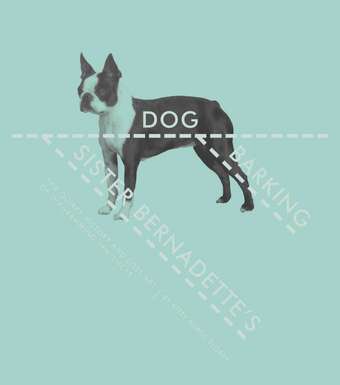
Phonics. Diagramming. Latin. And I learned in that order from age 6 to 16. I really enjoyed the review of Sister Bernadette's Barking Dog by Kitty Burns Florey in today's WSJ. I think I want this for Christmas (someone who reads this blog has been asking for ideas).


I don't know how children are taught to read and write these days in public school. Someone is doing a good job because I've found some amazingly good writers on the internet, and they can't all have been home-schooled or have attended private schools. Perhaps it is self selective--if you hate to write, know you're a poor speller and can't make a sentence sound right--you take up another hobby. Or you type with your thumbs and can only text message.

Were you taught to diagram sentences when you were in school? Were your classes called "language arts," or "communication," or "English?" Were you taught "whole language" or phonics? Did you have instruction in penmanship (cursive) after the early grades?

Friday, December 08, 2006

3256 The monetary returns of a college degree

I've said this for years, but no one wants to believe it. They shift the topic to other values. But dollar for dollar for many students, investing the college fund and just getting a job would pay better over a 40 year career--probably 9-10%. What's interesting about this article is that it shows a public education gives a better return (4.42%) than a private college education (1.9%).

3255 Why he gives away his e-books

Cory Doctorow's first novel, Down and Out in the Magic Kingdom, has been downloaded 700,000 times--it's free on the internet. But he's made a lot of money:

"Most people who download the book don't end up buying it, but they wouldn’t have bought it in any event, so I haven’t lost any sales, I’ve just won an audience. A tiny minority of downloaders treat the free e-book as a substitute for the printed book--those are the lost sales. But a much larger minority treat the e-book as an enticement to buy the printed book. They're gained sales. As long as gained sales outnumber lost sales, I'm ahead of the game. After all, distributing nearly a million copies of my book has cost me nothing."

Full story at Forbes. HT Bibliofuture at LISNews.com

3254 Darfur

"A stunningly diverse range of individuals and organizations are pushing for the United States – and the world – to put a stop to it." Religion Link.

Whoa! Isn't that the drum beat for war we heard in the 90s about Iraq? Evil government. Democide. UN waffling. Torture. Suffering. . . The US needs to DO something.

3253 Garbled, inflated and pretentious

While browsing a thesis database for something else, I came across a master's thesis on public library architecture. I didn't want to download 23 MB to my computer, but I think architecture students and their advisors need more English classes if the abstract is an example of their writing.

"Contemporary society is gifted with the ability to retrieve the world’s wealth of information from anywhere, to anywhere, at any time. However, this ability calls into question the continued relevance of the special places that first rose to prominence for their once-unique ability to provide that information. Despite serving as the heart of many communities, the public library building is faced with questions of its purpose and utility in a networked society. Rather than attempting to combat positive change, the library must instead reform itself around the mission that begat its creation - enhancing the lives and freedom of the common citizen through culture. In this sense, the building will shift -- from simply being a repository of information to serving as an agency for the development of creative skills. Though still housing books, the building is focused on delivering experiential, collaborative learning, organized around the psychological flow of creativity." After Books: Re-Imagining the Role of the Public Library Building Hines, Scott Alan, Master of Architecture, 2006, University of Cincinnati.

I think it says The modern public library building design needs to accomodate both digital and print resources within its traditional role of acquiring, storing, preserving and delivering information. I simply have no idea what "psychological flow of creativity" is, or how you "re-imagine," so I won't touch that. And any student today who thinks a public library was ever just a "repository" within his lifetime, hasn't been in one for awhile.