Showing posts with label Dayton. Show all posts

Wednesday, July 09, 2014

Chalk one up for Pro-Lifers

Bryan posted this blog on his website,  StandTrue.com:

The Stand True Mission Team arrived at the Packard Museum in Dayton about an hour before a Planned Parenthood fundraiser was scheduled to begin. We set out immediately to chalk all the sidewalks leading to the museum with pro-life and Gospel messages.  Within minutes someone from the museum came out to tell us we could not chalk near the driveways or big doors. I informed her she was wrong and invited her to call the Dayton Police.

Two Dayton Police officers showed up shortly after and talked to me for a few minutes and then went in to inform the museum that we were well within our rights.

Two employees from the museum came out and approached me to ask about what we were doing. They were both heartbroken that the event had been booked by the agency for the museum and told us how much they were on our side. It was obvious how devastated they were with the decision to host a Planned Parenthood event there.

One of the museum employees, an older gentleman, asked if I had any pro-life literature. I told him Planned Parenthood would take it away from him and he said “They will NOT stop me from passing this out inside the museum.” I loaded him up with some literature and graphic drop cards, and he went inside.

As the night progressed we set up right at the entrance to the event and showed every single person who paid $75 a ticket what their money went to and pleaded with them to stop supporting child killing. We did not get to do much pleading as fewer than 25 people went into the fully catered event. I am sure Planned Parenthood lost money that night.

image

Saturday, January 04, 2014

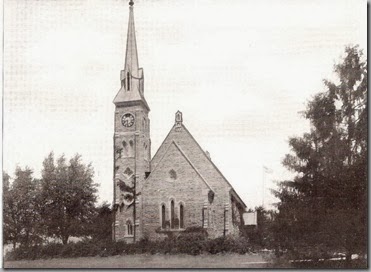
Soldiers Home Protestant Chapel, Dayton, Ohio

Protestant chapel Dayton

I haven’t seen this lovely church in Dayton, Ohio, but I think I’ll put it on my List of Places to See in Ohio (LOPTSIO).  The above photo is scanned from my grandparents’ Souvenir of Soldiers Home. There is no date on the booklet, but I assume it is late 1800s since they were married in 1901. They had a number of relatives in the Dayton area, so perhaps they took in the tourists sites while visiting.

cover soldiers home       soldiers home Dayton

“Contrary to the prevailing notion that the hospital chaplaincy is a program of the past few years. the Dayton institution has had a chaplain since the opening of the home September 9, 1867.

On that date, Chaplain William Earnshaw began his work at the Central Branch of the Asylum for Disabled Volunteer Soldiers of the United States. It is significant that when there were only five employees, one of them should be a chaplain, a religious leader. IN providing the original quarters for officers, a house was built before 1870 for the chaplain. It has housed succeeding chaplains and their families form that day to this, except for two brief periods.

Chaplain Earnshaw was a very energetic man. It was under his direction that the old Civil War soldiers helped quarry the stone from the rugged easter edge of the grounds to build the chapel. The corner stone was laid on November 21, 1868 and the building dedicated October 26, 1870, making it one of the oldest church buildings in this area. At the time of the dedication, Chaplain Earnshaw declared that it was “the first church ever built by the government for the benefit of soldiers”. Certainly, it was the first chapel built for veterans and so is now the oldest in government service.

Captain T. B. Van Horn, a chaplain in the regular army, was commissioned by Secretary of War, Edwin M. Stanton, to lay out the grounds of the new institution. It was no accident that the chapel was built on the highest point of ground of the then reservation. Previous to 1870, Chaplain Earnshaw had used a frame building just to the west as his chapel.

The chapel is a gothic structure, built of several different kinds of stone with a steep slate roof. The orignial pattern of the roof included 14 stars of David, the Jewish symbol now so generally recognized, surrounding a large cross. A cross surmounted each front entrance and another was cut in stone over the rear entrance. This was in the day when few Protestant churches used crosses. Before the steeple was added, the tower was adorned with a large clock. The bell which struck the hours and was tolled for services was made especially for the chapel by the Troy (N.Y.) Foundrys from melted-down Confederate cannon. Later the pointed steeple was built and crowned with an American eagle perched on its nest and holding the tip of the lightning rod in its beak. The outside walls of the chapel were once covered with Virginia Creeper vines, but most of these had to be pulled down for pointing up the stonework in 1947. In 1933, the front wall started to bulge and was taken down, stone by stone and laid up again the same way. Likewise, the large stained-glass window was taken down, section by section, and again placed in the rebuiltwall. The original name of the institution, National Asylum for Disable Volunteer Soldiers, is still engraved in stone above this window, although the name was changed to Home in 1872, just 2 years after the chapel was completed.

The inside of the chapel was unchanged from the original construction, except for installation of an organ, until 1947. At that time, new flooring, new linoleum and new carpeting changed the base, while redecorating, the new electric lights and the new chancel greatly modfied and beautified the the interior. The front platform has been enlarged, the console of the organ moved across the front to the opposite side of the organ and the original pulpit and high-backed chairs sold. An entire new front has been built in, consisting of altar and reredos against the background of rich red velour drapes, gothic-designed oak pulpit and chancel rail, also lectern and its rail, two communion rails and kneeling bench, one on each side of the broad steps to the altar, and an baptismal font of similar design and material. The Pileher organ, installed in 1900, was the first electric organ in the whole Miami Valley.

All this has made the interior as beautiful and worshipful as any church and matching the extraordinary charm and architectural appeal of the exterior.” . . .

“As the official librarian of the post, he solicited books for what he called the General George H. Thomas Library. This was in honor of his old war chief. The next year, 1868, Chaplain Earnshaw was notified of the gift of several hundred books and a hundred rare paintings by Mrs. Mary Lowell Putnam of Massachusetts, sister of the famous poet James Russell Lowell. This donation became the William Lowell Putnam Memorial Library in honor of her son who was killed in his first battle of the war. The Chaplain arranged and catalogued both libraries and made them available for use in the second and third floors of the old Administration Building, at present housing the Supply, domiciliary and Engineering offices of the Center. In 1880 the present library was built, but the two libraries were not merged until 1921 under the present librarian, Miss Helen Carson. Mrs. Putnam and her daughter continued to contribute to the library until 1913. Today [1950], a well-balanced library of old and modern books, totaling some 40,000, is maintained at the center.”

http://www.daytonhistorybooks.com/chapoldslodiers.html

According to the National Park Service, 28 pre-1930 buildings survive including the Putnam Library (Building 120) and the Home Chapel (Building 118).

“Dedicated in 1870, the Soldiers Home Chapel (Building 118) is the oldest building at the Central Branch and the first National Home for Disabled Volunteer Soldiers stand alone chapel. The Gothic Revival chapel features a bell tower that holds the 1876 “Centennial Bell,” which was made in New York from cannons captured from Confederate forces during the Civil War. Both Catholic and Protestant services were held in the chapel until the construction of the Catholic Chapel (Building 119) in 1898. The Catholic Chapel, also built in the Gothic Revival style, is made of yellow brick with buttresses supporting it. The small bell tower has an octagonal spire rising from a square tower. The altar’s centerpiece is by Heinrich Schroeder, a widely known altar/pulpit builder for Catholic Churches.”

http://www.nps.gov/nr/travel/veterans_affairs/Central_Branch.html

http://www.cr.nps.gov/nr/twhp/wwwlps/lessons/115dayton/115facts2.htm

image

According to this article in the New York Times in 1885, Rev. Earnshaw had an accident and died.

Wednesday, November 21, 2012

How bad is too bad to not get your paycheck?

                           Details of Luckie investigation coming, sources say photo

Clayton Luckie, Democrat, Montgomery County, Dist. 39, Ohio,  “was indicted last month on 49 criminal counts accusing him of raiding $130,000 from his campaign account and spending it at places such as casinos, and furniture, jewelry and clothing stores.

Luckie, who declined to comment for this story when reached by phone, has been a no-show at state functions since July 9, when he last attended a bi-monthly meeting of the state controlling board. Since then, Luckie has been paid just over $21,000. He is slated to receive another $11,000 in salary before he leaves office at the end of the year, when his term will expire.

Luckie agreed after July 9 to stop attending controlling board meetings while his attorney negotiated with FBI agents and prosecutors, who unsucessfully sought Luckie’s resignation.”

Luckie’s trial is December 20.  So who is representing the people who elected him?

http://www.daytondailynews.com/news/news/state-regional-govt-politics/indictedstate-repstill-onpayroll/nS6mj/

Friday, April 22, 2011

Conestoga trip to the Air Force Museum, pt. 3

After lunch in the cafeteria we attended the IMAX showing of "Fighter pilot, operation red flag" about the final training of a young pilot, with memories of his grandfather who fought in WWII.


It's so realistic, I had my eyes closed during most of the film. Then we continued our walking tour (without a guide) starting with the Korean War, then the Cold War, then Vietnam and southeast Asia, visiting the space flights and finally a look at our current wars (except Libya). We then gathered in the lobby for the next part of our trip, dinner at the historic Red Brick Tavern on Rt. 40 near London, Ohio.


I think this is a Thunderjet, used in the Korean War, but the light was so poor, I can't see the number. According to Wikipedia, "the Thunderjet became the Air Force's primary strike aircraft during the Korean War, flying 86,408 missions and destroying 60% of all ground targets in the war as well as eight Soviet-built MiG fighters." The better photo is from the museum site.


Symbol of the Cold War--the checkpoint and the Berlin Blockade. There was quite a display of the provisions flown into Berlin.


USAF 517 Grumman HU-16 B Albatross arrived here in July 1973. According to the website, "Grumman designed the versatile Albatross to meet a U.S. Navy requirement for an amphibious utility aircraft which could also operate from snow and ice with skis. During the Korean War, Albatrosses rescued almost 1,000 United Nations personnel from coastal waters and rivers, often behind enemy lines. They also made numerous dramatic and hazardous rescues in Southeast Asia, on occasion taxiing many miles over rough, open water when unable to take off."


I think the Iraq war display was in the Cold War area.

Conestoga trip to the Air Force Museum, pt. 2

There's no way to describe how BIG the museum at Wright Patterson is; but here's an idea--there's an early years of air flight gallery, a WWII gallery (we toured 1934-1945 with a guide for 2 hours), a Korean War gallery; a Southeast Asian war gallery (being renovated); a Cold War gallery; a missile and space gallery; a presidential R&D gallery; middle east wars section (don't know if it's considered a gallery since much of that aircraft hasn't been retired); and various outdoor exhibits. The campus is 17 acres and includes nearly one million square feet of public exhibit space with more than 360 aerospace vehicles and missiles and thousands of historical artifacts on display.

I came away with a new respect for the way wars advance technology in all areas and change entire cultures almost overnight--at least in hind sight. The exhibits have been updated and expanded to bring more focus on people and events as well as the hardware of airplanes, military transport, jets and equipment. Many displays had full size mannequins to illustrate a particular event, like a training accident or Jimmy Doolittle.


It was also stunning to see by walking through these huge hangers that my entire lifetime the U.S. has been at war. When I was younger, I'd say, "When the war is over. . . " and now I know better. I knew that intellectually (I was born as Hitler marched into Poland), and even the era I think of as relatively peaceful was called The Cold War. I know our wars stretch from King Philip's War in the 1600s to Obama's War in Libya in 2011--wars with Indians, Mexicans, Muslims, British, Germans, Russians, Vietnamese--but I wish it weren't so. And if Americans weren't suffering and dying, many Russians and East Europeans and Germans were. Plus, the U.S. has bases all over the world--I think at least 662 in 38 foreign countries either owned or leased--for a total of 4,999 counting our home bases--with advisers, trainers, soldiers, mechanics, spies, librarians, etc. whose lives are constantly at risk.

Thursday, April 21, 2011

Conestoga trip to the Wright Patterson Air Force Museum

On Wednesday, April 21, our Conestoga group (an organization that supports the Ohio Historical Society) toured the National Museum of the United States Airforce at Wright Patterson Air Force base near Dayton, Ohio. Although we'd been driving past the direction signs for 43 years and wondered about it, we'd never been there. It's our loss. This is a fabulous place, and it's free! If you live within a hundred miles, it's an easy trip with good roads, and you won't regret it. Our tour guide, Dan, suggested beginning our morning tour with the mid-1930s to see what military aircraft was before the war and closing with the ending of WWII at lunch, then either taking in an IMAX film or accompanying him with more touring. Those who'd visited several times chose to continue touring with Dan (he was an outstanding guide), but we chose the IMAX.


Our tour began with the Boeing P26-A, the Peashooter, which was the first all metal monoplane, and ended with the plane Bockscar, that dropped the bomb the Fat Man atomic bomb on Nagasaki on Aug. 9, 1945. The lighting was so dim inside the huge building, most of my photos really didn’t turn out well enough to post, but here is the Peashooter from a media photo (outside) and mine. What we saw was a reproduction, but they were used by the U.S. from 1933 to 1938, and then later by the Chinese and the Phillipines. It was really amazing to see how the technology changed so quickly in just 10 years--particularly when we saw the German made V-1 and 2 rockets.


Use of the atomic bomb over Hiroshima and Nagasaki is still questioned by some, but I do believe it saved lives in the long run--particularly of Americans because the U.S. would have lost many more soldiers in an invasion. And I know it’s a controversial idea in these days of dithering about troup strength in old wars while rushing into no-fly zones in new wars with political negotiating only to kick the can down the road, but the point of war is to win (and that means killing people and destroying property and resources). But it probably also saved Japanese lives because incendiary bombs were used on 60 cities between November 1944 and July 1945 in Japan resulting in approximately 800,000 casualties and deaths. The use of the atomic bomb against Hiroshima and Nagasaki actually produced fewer casualties in each case than the 3-day bombing of Tokyo earlier in 1945. Considering how many Japanese gave their lives for 2 tiny islands, Iwo Jima and Okinawa (121,000), American leaders concluded, rightly I think, they would defend their homeland even more fiercely.

Photo from B-29 source

Wednesday, June 03, 2009

How to kill a red state

There are lots of ways a Democratic president can punish a traditionally conservative state.

1) Destroy the coal industry

2) Destroy the auto industry

3) Use their own tax money to relocate an industry that's been here for 125 years.

"Prompting protests from Ohio officials, a Georgia city has asked the federal government for money from the $787 billion stimulus package to help finance the transfer of NCR Corp. from Dayton to Georgia.

Although Columbus, Ga., Mayor Jim Wetherington said he does not know if the federal government will approve his request, he wants stimulus money to help refurbish a 340,000 square foot facility and construct a 100,000 square foot building for NCR to make ATMs." Columbus Dispatch.

So much for keeping "American jobs" at home. Just move them around with their own tax money.

Saturday, August 26, 2006

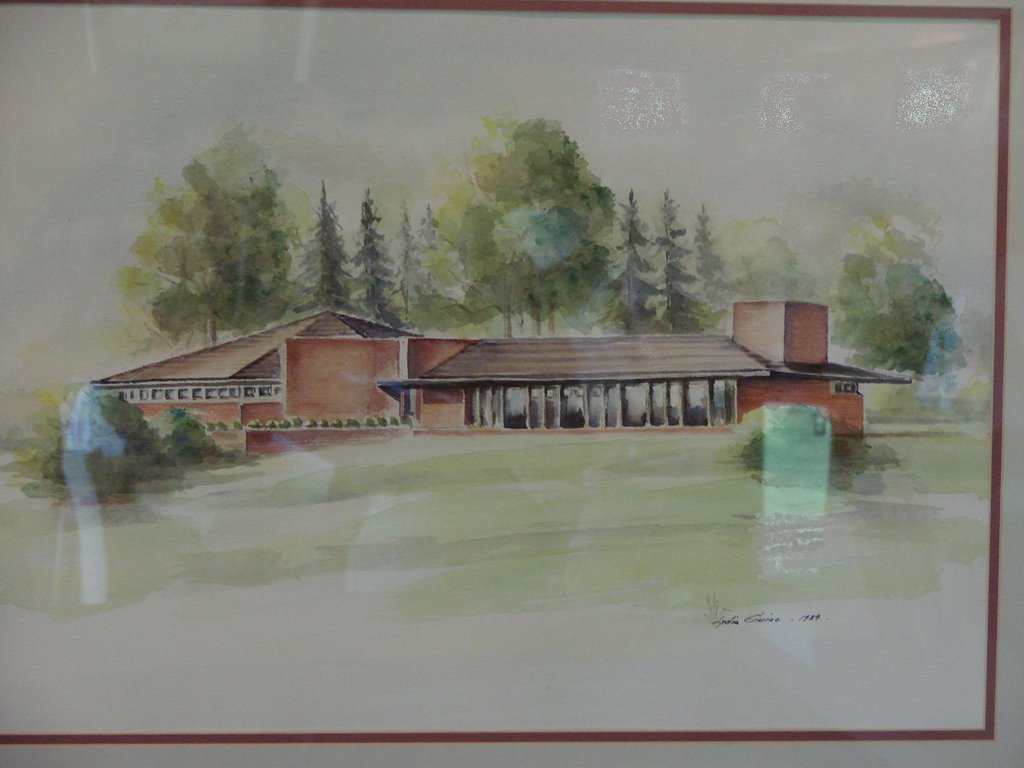
2795 FLW Tour: Dayton Medical Clinic

After Springfield and Sidney on our Frank Lloyd Wright July tour, it was on to Dayton, Oh to visit a FLW medical bulding, which although nearly 50 years old, still works surprisingly well.


In the guide book this is called the Meyers Medical Clinic, but is now the home office of James Apesos, MD, a plastic surgeon.

After Dayton it was a beautiful drive through lush Indiana farmland to Columbus, Indiana. The previous Friday we had been at the Finland summer home of Eliel and Eero Saarinen, and now we were in Columbus, IN where Eliel designed perhaps the first modern American church.

We checked in at our B & B (the former city hall, converted in the mid-1980s) designed by another well-known architect, Charles F. Sparrel, who did many Columbus buildings in the 1800s, and walked to our restaurant. It was a very busy day!

Other entries about this tour here, here, here, and here.