Showing posts with label Civil War. Show all posts

Saturday, April 19, 2025

I asked how long the Civil War in Sudan had been going on--two years

"On the morning of April 15, 2023, residents of Sudan’s capital, Khartoum, faced the shock of fighting breaking out in their city, which rapidly spread to other parts of the country. Two years on, Sudan’s conflict, which pits the Sudanese Armed Forces (SAF) against the Rapid Support Forces (RSF), and a multitude of armed groups and militias allied to these forces, has ravaged the country. The lives of tens of millions have been shattered, while tens of thousands of civilians have died."


Tuesday, June 11, 2024

A Netflix movie may soon tell the Garfield story

Coming soon on Netflix. The story of President James Garfield. But we had the story today in Lakeside from Todd Arrington, of the National Park Service and Site Manager of the James A. Garfield National Historic Site in Mentor, Ohio. I have visited most Presidential sites in Ohio, 2 in Illinois and one in California, I've been to Gettysburg and other historic state and national sites. I've been blogging for 21 years about some of the issues that Garfield focused on--slavery, race, education, nation building, etc.--yet I could count on one hand the number of times he's appeared on my radar of important events. Arrington, who has a PhD in history, did a masterful job of portraying a great man assassinated by a mentally ill person who was disappointed he did not get the job he wanted after he'd voted for Garfield. Well worth the price of admission (there's a gate pass for Lakeside). CLS: Celebrate Ohio: Presidential Museums - Lakeside Ohio

"Had he not been assassinated early in his presidential term in 1881, the history of the late 19th century might read very differently today. If the history of the late 19th century read differently, perhaps the histories of the 20th and early 21st centuries might, too."


Monday, May 29, 2023

Memorial Day, 2023

Today is Memorial Day, the last Monday of May, originally observed on May 30. It began in the South in 1866 to recognize their war dead, and became a national holiday in 1868. We now memorialize all those who died in service to our country, and it has become customary to honor also our friends and family who are deceased. To my knowledge, my family on my mother's side has only one Civil War dead to honor, Jacob J. George, my great grandfather's youngest brother. In a cruel irony, his parents who lived in Adams County, Pennsylvania (Gettysburg is in that county) sent their youngest boy to live in the relatively safe area of Lee County Illinois with his adult brother, a farmer.

Although we can find Jacob's name in the History of Lee County Illinois with the other volunteers from Company G, he and the others (almost 2,500 just from that county) had no idea they'd signed on for bad food, injuries, disease and prison. Lee County was paying $100 bounty, and it probably seemed like a great adventure to him (obviously lied about his age). He enlisted on January 4, 1864 when he was 15 years and one month old.

He's buried in The National Cemetery in Nashville, TN with over 16,000 soldiers, both Union and Confederate, whose names are known, and another 3,500+ unknown. He died in the hospital of acute diarrhea on May 10, 1865, having entered the hospital on April 12. General amnesty was proclaimed by the President on May 29, 1865, and the war ended. Many in this cemetery were transferred from hospital burial grounds. His Discharge papers (death certificate) showed his age as 18. He was 16.

It was about 120 years later that my mother and her sister learned about Jacob through the genealogical research of their cousin, and a few letters were found that he had sent his sister in Iowa describing his ordeal and homesickness. This is my own speculation, but I'm guessing his brother in Illinois, my great-grandfather, never mentioned him to his family. His birth and death dates are not in the family Bible. It's possible that when Mom was a little girl waving her flag at the parade on May 30 when the old Civil War veterans marched by, some may have been from Jacob's regiment.

Saturday, April 30, 2022

The War in Ethiopia has been made worse by our focus on Ukraine

"Footage and news coverage of Russia’s invasion of Ukraine has been all-encompassing. This is partly because widespread social media use in Ukraine and partly because reporters have much greater access to the front lines.

In Ethiopia, both of these are massively restricted. Clips of military strikes in Mariupol fill our TV screens while next to no footage of the atrocities which have taken place in the East African country have surfaced.

Also, while journalists are prevented from showing the world the tragedy being inflicted upon millions of people, humanitarian aid has also been blocked from accessing the affected regions.

The invasion of Ukraine has, unfortunately, only made this issue worse, as global attention on the war has meant that humanitarian aid has been redirected."


Four years ago this April, our church UALC was celebrating with the Oromo Church of Central Ohio its move to a new church building which we helped fund.  The Oromo people are from Ethiopia, and one of their own is the Prime Minister Abiy Ahmed.

Friday, July 10, 2020

“From Christ to Emancipation,” Townhall.com Wednesday, July 8

From Christ to Emancipation, the mob is determined to erase history

Blinded by their rage, the Left targets Christ, Grant, and Lincoln in the name of the revolution

By Bishop Aubrey Shines

We’ve all heard the phrase, “the road to hell is paved with good intentions,” but, as I’ve watched the unrest that continues to play out in our cities, I think it’s safe to say the “activists” who have taken over left the good intentions behind some time ago.

First, they came for only the Confederate statues. Then they came for our Founding Fathers, and now they’re coming after President Lincoln, General Grant, and even our Savior Jesus Christ.

In case you don’t know what I’m referring to, last month Shaun King, who is a prominent voice in the Left’s Woke class, called for the removal of any statues of Christ with European features because, apparently, those too are now a symbol of white supremacy.

As a minister, it pains me to see such an asinine and narrow view of the Messiah. Not only is it shortsighted, but Mr. King is missing the entire point of Christ; what he may or may not have looked like doesn’t matter, but his message about love and reconciliation with others does.

Christ walked the earth 2,000 years ago. None of us can ever know what the Savior actually looked like. Logically, it’s reasonable that different cultures would depict Him in a way they would know. White Europeans aren’t any guiltier for depicting Jesus as a white European in Renaissance art than Africans or Asians are for portraying Him as an African or an Asian in their artwork. Moreover, the Messiah’s message has nothing to do with the pigmentation of one’s skin. In His time on earth, Jesus extended God’s love to both Jews and Gentiles; Samaritans, Romans, it didn’t matter.

Furthermore, what Mr. King suggests is the next step on an already dangerous path. Statues of Christ are found on the grounds of churches, and churches are separate entities from the government (look it up, it’s in the Constitution). This means Mr. King wants his Antifa friends to trespass on private property to destroy other private property. I would be shocked, but these people see themselves as revolutionaries; they live by their own rules, and no amount of reasonable discourse will stop them.

And if statues of Christ that look too white have to come down, how long will it be before statues of Abraham, Moses, or Jacob have to come down if they look too white? Does this mean Michelangelo’s historic sculpture of King David needs to be destroyed because it looks too white? How long will it be before any white statues come down, regardless of whether or not the person in question enforced white supremacy?

I fear that last question is already being answered. We’ve already had a statue of General Grant ripped down. Didn’t he bring an end to the Civil War by forcing Robert E. Lee to surrender? He, if anyone, should have a thousand statues up for every one Confederate statue; Grant ended the war and saved the Union. But because he is a 19th century white man with a beard in a military uniform, he must come down! So say the misguided who ignore their own history.

The statue of Teddy Roosevelt, one of the greatest conservationists in American history, is being removed from in front of the New York Museum of Natural History. The reason? Roosevelt is apparently more prominent than the adjacent statues of a Native American and African American. This must mean Roosevelt only stood for imperialism and the patriarchy, never mind the fact we would not have our national parks were it not for him. Oh, and he was the first president to entertain a black man for dinner in the White House, namely Booker T. Washington.

The mob even wants to attack the legacy of Abraham Lincoln, without whom there would be no Emancipation Proclamation. The Emancipation Memorial, a statue of Lincoln helping a freed slave to his feet, has stood by the White House since 1876. The mob’s excuse for this one is that the statue endorses “white saviorism,” even though the statue was funded by ex-slaves. If they stopped screaming and listened for a moment, maybe the misguided young folks trying to trample President Lincoln’s legacy would realize this.

If Mr. King and his ilk insist on this path of destruction, I ask him to remember that Christ’s message is about forgiveness. He and the Antifa thugs tearing our country apart will always have a chance to be forgiven, even as they try to erase our history. I hope he knows this. I will be praying for him to understand it.

Bishop Aubrey Shines is the founder of Glory to Glory Ministries and chairman of Conservative Clergy of Color.  Bishop Aubrey Shines, is available for comment on this op-ed.

To schedule interviews with Bishop Aubrey Shines of Conservative Clergy of Color, please contact Will Hadden at whadden@sbpublicaffairs.com or call 703.739.5920

Saturday, June 27, 2020

Indoctrination and mind control

As we are all distracted by marches, rioting and tearing down statues of emancipators and liberators, you should track down and object to the brainwashing your children and grandchildren are getting in schools and universities from the organizers and funding groups of BLM and ANTIFA.  Much of this preceded their existence and has been building in influence and power incrementally since the 1980s through diversity and inclusion programming. And now it’s a perfect storm.

I reviewed the indoctrination for Ohio State medical staff and found it appalling. It begins with a statement of fact (not theory, hypothesis or idea) that systemic racism exists and is a health crisis (OSU and Columbus have declared it a health problem which gets more grants from the federal government, the life line for all state universities). The solution is it must be destroyed through various manipulative and compulsory methods, and if you disagree or publish research to the contrary, you are a racist and part of the problem. No disagreement or alternate views allowed.

It essentially, invalidates all programs, changes, research, efforts and good will established or instilled since the 1964 Civil Rights Act, and our remarkable achievements unknown in the history of the world since outlawing slavery in our costliest war in blood and treasure of our history.

It also ignores the actual fact that there are 30-40 million slaves in the 21st century and suggests instead we focus on microaggression and unconscious bias instead of real pain, actual health problems and tragedy of millions, much of it still coming from Africa.

Friday, November 06, 2015

Wednesday, August 19, 2015

In the course of history, Antietam out weighs Gettysburg

We really had an amazing speaker for Lakeside’s Civil War week Tuesday and Wednesday, Dennis Frye,  the chief historian at Harpers Ferry National Historical Park and the author of seven books and scores of articles on a variety of Civil War topics.  He did a  presentation on John Brown on Tuesday that was excellent and then today talked about the Battle of Antietam and why it was more important than Gettysburg.  He said President Lincoln was seen as a complete failure in September 1862 when everyone hated him and the Union was losing on five fronts, the 5th front being in Minnesota against the Indians who had decided to fight the U.S. troops. Even the abolitionists had turned against Lincoln because they believed he should move quickly to free the slaves.

People today complain about the treatment of Obama, but he read excerpts from the press of that day, and really, it was hateful and I don’t think today any newspaper would be allowed to say those things about a president.  The election (House) was coming up in October 1862 and if the Democrats won they would have cut off appropriations for the war and it would have been over—and no “United” States.  There was no election for Senate because in those days the states appointed senators. 

(Background on Harpers Ferry) But the Union troops won the battle of Antietam (24,000 casualties in one day) and that stopped Lee’s march into Pennsylvania, so public opinion of the failed presidency turned around and the Republicans held on to Congress in the election.  It also stopped England and France from stepping in.  Then on Sept. 22 Lincoln took political advantage of this win and issued the Executive Order for the Emancipation Proclamation.

Frye works for the Park Service and lives in Harpers Ferry, West Virginia.  He’s quite dramatic and speaks without notes--I suspect he’s given these presentations many times. He’s easy to find on YouTube.  Early in the Antietam talk he noted that the farm land on which the battle happened was owned by Dunkers, but didn’t really explain the term.  Of course, I knew what that was--German Baptist Brethren, or today’s Church of the Brethren.  However, at the end of his talk he was dramatizing finding some bodies in an archeological dig when that battle field was still in private hands in 1987 (now a national park) with picking up bullets from the chest cavity of a long dead soldier., With a dramatic pause he said it was ironic that the worst battle in American history, a battle that changed the course of history, was fought on land owned by Dunkers who were pacifists.  Then he said, “I am a Dunker, my ancestors were all Dunkers.”  Quite an ending to a powerful talk.

image

http://www.civilwar.org/battlefields/antietam/antietam-2015/

Monday, July 13, 2015

U.S. Talibanners try to destroy Confederate history and memory

Wording on the Confederate Soldiers and Sailors Monument at Gettysburg (dedicated 1965). "A memorial to soldiers and sailors of the Confederacy--South Carolina, Florida, Georgia, Texas, Arkansas, North Carolina, Maryland, Missouri, Tennessee, Virginia, Louisiana, Alabama, Mississippi. Heroic defenders of their country. Their fame shall be an echo and a light unto eternity."

That is until the Democrats try to reinstate the bitterness of the post-war reconstruction era and kill their memories again.

http://www.veteranstoday.com/2011/04/14/confederate-soldiers-are-american-veterans-by-act-of-congress/

004

Daughters of the Confederacy put this statue on Johnson’s Island prisoner of war cemetery.  Let’s hope the Talibanners don’t come after it.

Bob Swartwout's photo.

Wednesday, June 24, 2015

Wal-Mart, Amazon and others to stop selling Civil War confederate symbols

Our educational theme this week at Lakeside is WWII. We've reviewed the horrors of the European theater and the Pacific theater. Within just a few years after the end of the war on two fronts we were trading partners and chummy with Japan and Germany. Our academics were agonizing over whether the bomb was necessary and paying reparations to Japanese Americans. My father brought home souvenirs made in Japan after the war when just a few months before Americans were trashing everything that had a Japan stamp on it. The U.S. rushed to save the starving and battered Germans and helped rebuild their cities we had been destroying.

But it seems we have a segment in our own country, primarily leftists who are unhappy that in the last 50 years Democrats have lost the vote south of the Ohio River particularly the last decade, that just must continue to punish the South. The internet is alive with calls for retribution—150 years later—for the sins and evil of Dylann Roof.  The patriotism in the southern states could put the North Eastern blue states to shame as they push our country toward socialism and statism, the very political ideas our fathers and grandfathers fought. Major retailers are rushing to please their government bosses, removing the remnants of the Confederacy while still selling Nazi paraphernalia. But then Nazi is short for "National Socialist," a system of government where private businesses were allowed but the government regulated everything from the idea to the owner to the employees to the supply chain to the consumer. A system that taught, "You didn't build that."

On Tuesday, several well-known retailers, including Wal-Mart and eBay [as well as Amazon, Target, Etsy, Sears], announced they would no longer sell or offer merchandise featuring the Confederate battle flag. But, Twitchy said, a number of people noticed a bit of hypocrisy in the items remaining for sale.

Walmart, for example, continues to offer Che Guevara posters for a mere $46.55. Guevara, Biography.com said, "was a Marxist revolutionary allied with Fidel Castro who went on to become an iconic cultural hero." The retail giant also offers at least three Lynyrd Skynrd CDs that prominently feature the battle flag as of this writing. We contacted Walmart to determine if they intend to remove the items but have not received a reply. The retail store, however issued a statement on its decision. [we never intend to offend anyone].

http://www.examiner.com/article/hypocrisy-seen-efforts-to-scrub-confederate-battle-flag-from-public-view

Monday, April 20, 2015

Republican Thaddeus Stevens changed his grave site

Shortly before he died on August 11, 1868, Thaddeus Stevens learned that the grave he'd purchased was located in a whites-only cemetery. Incensed, he bought another plot, this one in an obscure graveyard in Lancaster with no racial restrictions. Then he wrote an inscription designed to carve his creed into his headstone:

I repose in this quiet and secluded spot,
Not from any natural preference for solitude
But, finding other Cemeteries limited as to Race
by Charter Rules,
I have chosen this that I might illustrate in my death
The Principles which I advocated through a long life:
EQUALITY OF MAN BEFORE HIS CREATOR.

Story at History Net

Monday, May 26, 2014

Death and the Civil War—PBS

http://www.pbs.org/wgbh/americanexperience/films/death/

The greatest loss of life of any U.S. war was the Civil War, where 1 in 5 Americans experienced the loss of someone they knew.  There was no system for burying the dead at that time as a responsibility of the government.  This film is fascinating history.  It is also on-line.

Napoleon Bonaparte Corbett

2nd great grand uncle, buried at Stones River National Battleground, died 1863 according to Find a Grave. Thanks to “cousin” Berta whose husband took the photo for sharing this. "Bonaparte was a Corporal in Company D 3rd Tennessee Volunteer Cavalry. His regiment was organized at Murfreesboro and Nashville, Tennessee and was mustered in for a three year enlistment on January 27, 1863 under the command of Colonel William C. Pickens."


Saturday, January 04, 2014

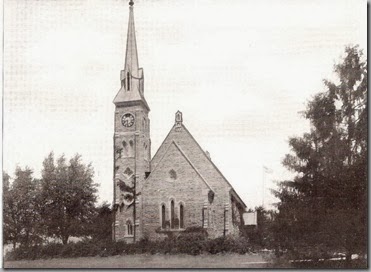
Soldiers Home Protestant Chapel, Dayton, Ohio

Protestant chapel Dayton

I haven’t seen this lovely church in Dayton, Ohio, but I think I’ll put it on my List of Places to See in Ohio (LOPTSIO).  The above photo is scanned from my grandparents’ Souvenir of Soldiers Home. There is no date on the booklet, but I assume it is late 1800s since they were married in 1901. They had a number of relatives in the Dayton area, so perhaps they took in the tourists sites while visiting.

cover soldiers home       soldiers home Dayton

“Contrary to the prevailing notion that the hospital chaplaincy is a program of the past few years. the Dayton institution has had a chaplain since the opening of the home September 9, 1867.

On that date, Chaplain William Earnshaw began his work at the Central Branch of the Asylum for Disabled Volunteer Soldiers of the United States. It is significant that when there were only five employees, one of them should be a chaplain, a religious leader. IN providing the original quarters for officers, a house was built before 1870 for the chaplain. It has housed succeeding chaplains and their families form that day to this, except for two brief periods.

Chaplain Earnshaw was a very energetic man. It was under his direction that the old Civil War soldiers helped quarry the stone from the rugged easter edge of the grounds to build the chapel. The corner stone was laid on November 21, 1868 and the building dedicated October 26, 1870, making it one of the oldest church buildings in this area. At the time of the dedication, Chaplain Earnshaw declared that it was “the first church ever built by the government for the benefit of soldiers”. Certainly, it was the first chapel built for veterans and so is now the oldest in government service.

Captain T. B. Van Horn, a chaplain in the regular army, was commissioned by Secretary of War, Edwin M. Stanton, to lay out the grounds of the new institution. It was no accident that the chapel was built on the highest point of ground of the then reservation. Previous to 1870, Chaplain Earnshaw had used a frame building just to the west as his chapel.

The chapel is a gothic structure, built of several different kinds of stone with a steep slate roof. The orignial pattern of the roof included 14 stars of David, the Jewish symbol now so generally recognized, surrounding a large cross. A cross surmounted each front entrance and another was cut in stone over the rear entrance. This was in the day when few Protestant churches used crosses. Before the steeple was added, the tower was adorned with a large clock. The bell which struck the hours and was tolled for services was made especially for the chapel by the Troy (N.Y.) Foundrys from melted-down Confederate cannon. Later the pointed steeple was built and crowned with an American eagle perched on its nest and holding the tip of the lightning rod in its beak. The outside walls of the chapel were once covered with Virginia Creeper vines, but most of these had to be pulled down for pointing up the stonework in 1947. In 1933, the front wall started to bulge and was taken down, stone by stone and laid up again the same way. Likewise, the large stained-glass window was taken down, section by section, and again placed in the rebuiltwall. The original name of the institution, National Asylum for Disable Volunteer Soldiers, is still engraved in stone above this window, although the name was changed to Home in 1872, just 2 years after the chapel was completed.

The inside of the chapel was unchanged from the original construction, except for installation of an organ, until 1947. At that time, new flooring, new linoleum and new carpeting changed the base, while redecorating, the new electric lights and the new chancel greatly modfied and beautified the the interior. The front platform has been enlarged, the console of the organ moved across the front to the opposite side of the organ and the original pulpit and high-backed chairs sold. An entire new front has been built in, consisting of altar and reredos against the background of rich red velour drapes, gothic-designed oak pulpit and chancel rail, also lectern and its rail, two communion rails and kneeling bench, one on each side of the broad steps to the altar, and an baptismal font of similar design and material. The Pileher organ, installed in 1900, was the first electric organ in the whole Miami Valley.

All this has made the interior as beautiful and worshipful as any church and matching the extraordinary charm and architectural appeal of the exterior.” . . .

“As the official librarian of the post, he solicited books for what he called the General George H. Thomas Library. This was in honor of his old war chief. The next year, 1868, Chaplain Earnshaw was notified of the gift of several hundred books and a hundred rare paintings by Mrs. Mary Lowell Putnam of Massachusetts, sister of the famous poet James Russell Lowell. This donation became the William Lowell Putnam Memorial Library in honor of her son who was killed in his first battle of the war. The Chaplain arranged and catalogued both libraries and made them available for use in the second and third floors of the old Administration Building, at present housing the Supply, domiciliary and Engineering offices of the Center. In 1880 the present library was built, but the two libraries were not merged until 1921 under the present librarian, Miss Helen Carson. Mrs. Putnam and her daughter continued to contribute to the library until 1913. Today [1950], a well-balanced library of old and modern books, totaling some 40,000, is maintained at the center.”

http://www.daytonhistorybooks.com/chapoldslodiers.html

According to the National Park Service, 28 pre-1930 buildings survive including the Putnam Library (Building 120) and the Home Chapel (Building 118).

“Dedicated in 1870, the Soldiers Home Chapel (Building 118) is the oldest building at the Central Branch and the first National Home for Disabled Volunteer Soldiers stand alone chapel. The Gothic Revival chapel features a bell tower that holds the 1876 “Centennial Bell,” which was made in New York from cannons captured from Confederate forces during the Civil War. Both Catholic and Protestant services were held in the chapel until the construction of the Catholic Chapel (Building 119) in 1898. The Catholic Chapel, also built in the Gothic Revival style, is made of yellow brick with buttresses supporting it. The small bell tower has an octagonal spire rising from a square tower. The altar’s centerpiece is by Heinrich Schroeder, a widely known altar/pulpit builder for Catholic Churches.”

http://www.nps.gov/nr/travel/veterans_affairs/Central_Branch.html

http://www.cr.nps.gov/nr/twhp/wwwlps/lessons/115dayton/115facts2.htm

image

According to this article in the New York Times in 1885, Rev. Earnshaw had an accident and died.

Tuesday, November 19, 2013

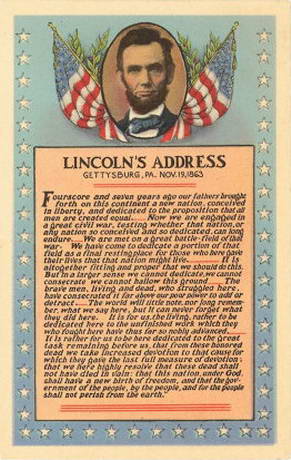
November 19, 1863, Gettysburg, Pennsylvania

President Obama is just not doing well with this Gettysburg Address thing. First he bails on attending the 150th event in Pennsylvania, offending even some of his strongest supporters (he had a meeting with some Wall St. CEOs scheduled for today, although he'd been invited over a year ago), then it comes out when he recorded the speech for Ken Burns to "mash" with other Presidents and celebs (a really odd collection including some of my least favorite TV reporters), he does so without the "under God" phrase, so Jimmy Carter got that part. Really, what is wrong with this man, who literally spoke from Lincoln's grave to get elected in 2008? It's like he carries a stick to poke us in the eye regularly.

Wednesday, August 22, 2012

Crinolines and camp

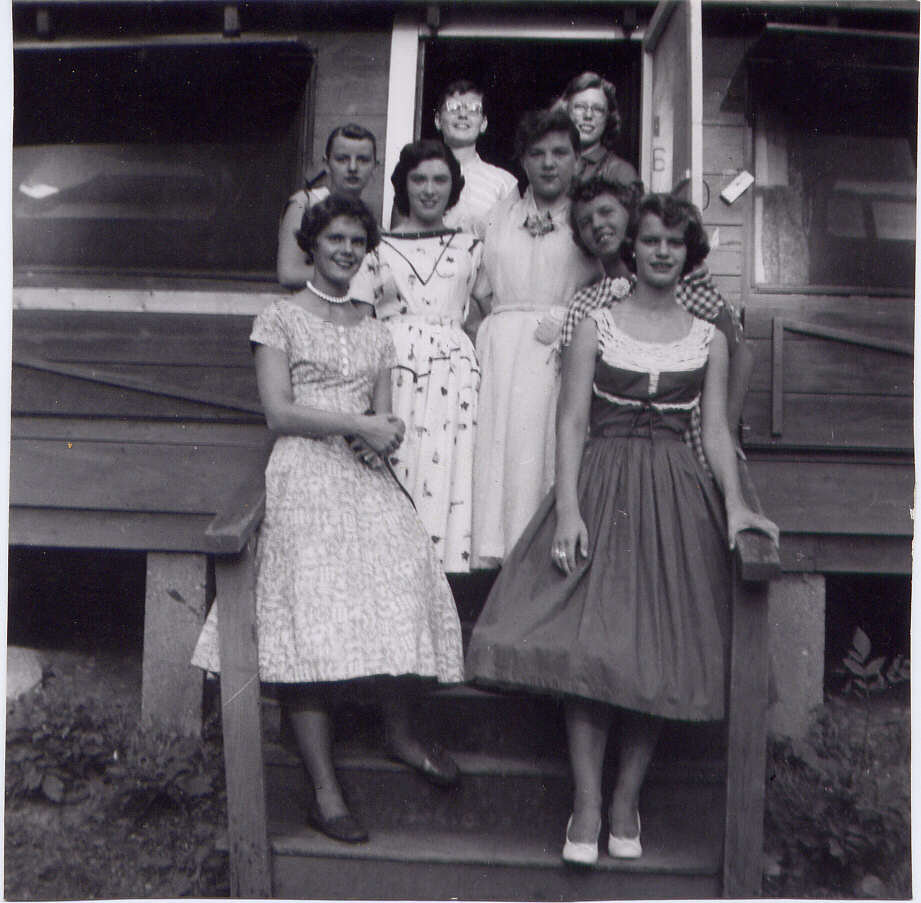
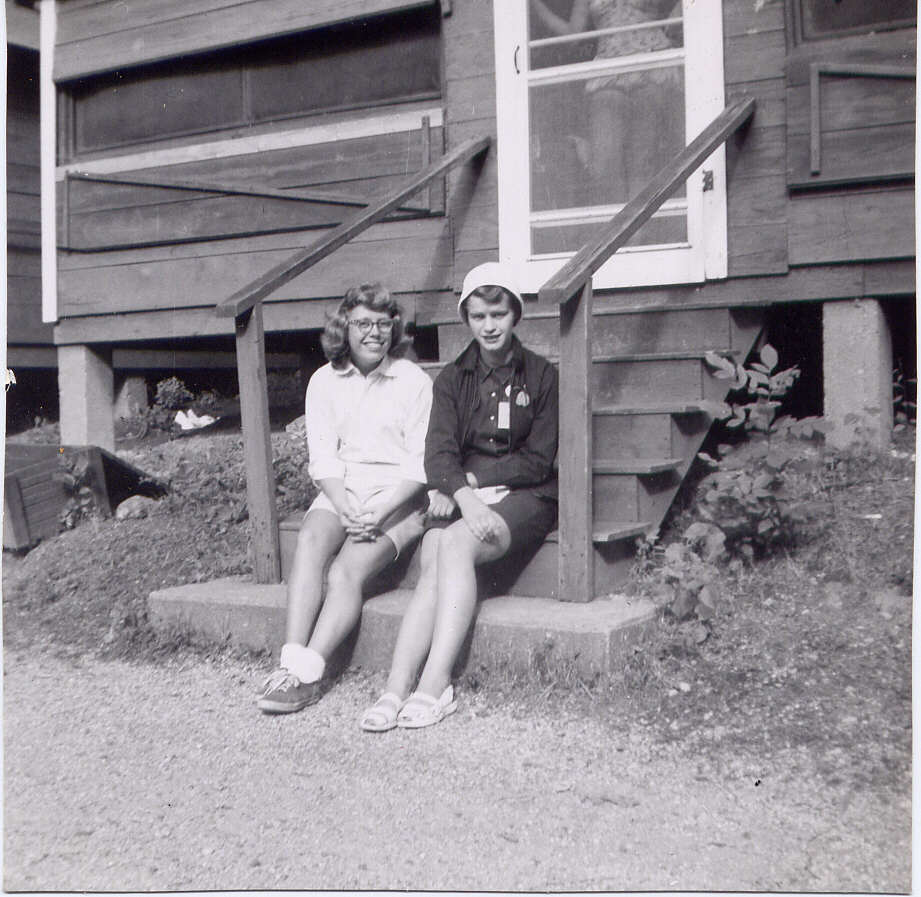
Yesterday at Lakeside (Civil War Week) we had a lecture on Crinolines, corsets and cravats.  During the question and answer period, I discerned that there are some gray haired ladies who don’t remember the crinolines of the 1950s. As they stood up in their shorts and capri pants, they pondered the restrictions.   I’m not sure how long those crinolines of the 1950s were in style—looking at photos of me in 1953, my dresses are hanging straight, but by 1955, I had a hoop with crinolines underneath, and by 1959 the chamise style with a baggy waist and straight skirt was all the rage.  I can even remember playing softball in high school wearing crinolines; we just scooped up our skirts and ran like the devil for first base (I never got much further).  When Priscilla and I went to camp on Lake Geneva in Wisconsin around 1956, we took dresses to wear to dinner, even though we were staying in log cabins.  So I must have taken some crinolines to camp.


.crinoline1


Tuesday, September 13, 2011

Book Club--beginning a new year

Monday our book club (I joined in 2000) met for our first day time meeting. The group is about 30 years old with some of the original members, and many of us preferred meeting during the day and not going out at night. Our first selection was "Two Girls of Gettysburg" and we had a wonderful time talking to the author Lisa Klein, who is actually a Shakespeare scholar. She got into Young Adult fiction when her career didn't go the intended direction, and I think I'll look at some of her other books, too. She talked a little about her Shakespeare interests, the genre of YA, and the thrill of the research.


She told us that one of the main characters in this book, Lizzie, is based on the memoir of Tillie Pierce of Gettysburg. Next month's title is a whopper.

For a very quick review, here's the rest of the selection:
October 3
The Bonfire of the Vanities by Tom Wolfe led by Dorothy.

November 7
In a Heartbeat: sharing the power of cheerful giving by Leigh Anne and Sean Tuohy. Led by Justine.

December 5
Lest Innocent Blood Be Shed by Philip Hallie. Led by Peggy.

January 9
The Story of Edgar Sawtelle by David Wroblewski (562 pages!). Led by Judy. January's meeting will be at Panera's Beechwold meeting room from 2-4 PM

February 6
The Big Burn: Teddy Roosevelt and the fire that saved America by Timothy Egan. Led by Jean. February's meeting will be at Panera's Beechwold meeting room from 2-4 PM.

March 5
The Good Earth by Pearl Buck. Led by Patty. [I read this in high school--thought it was a great book.]

April 2
Wait Till Next Year by Doris Kearns Goodwin. Led by Carolyn A.

May 7
Hold Up the Sky by Patricia Sprinkle. Led by Carolyn C.
A number in our group had recently visited Gettysburg (our hostess just this past month) and if I had a bucket list, I would add this. I visited in 1949, but visitor centers in all parks and memorials have really changed.

Saturday, August 27, 2011

Week 10 at Lakeside--Civil War Week

Because of our trip back to Columbus for a meeting and a quick visit to the vet for our cat, we missed the Monday and Tuesday daytime programs by Dale Phillips, Howard Strouse and the dinner with "President Lincoln" (Robert and Barbara Brugler of Columbus as Mr. and Mrs. Lincoln). However, later in the week Randy Koch who spoke on the Presidential Election of 1860 mentioned that at the Monday night dinner he shook the hand of a WWII veteran, whose grandfather had been wounded at Gettysburg, and he had been visited by President Lincoln and shook his hand. He said he got chills thinking about it.

There were 3 women presenters this week, Marjorie Wilson of Cleveland gave a very informative talk on Mortimer Leggett, one of Ohio's generals. She's a retired school teacher who got interested in the Civil War because she's a volunteer docent at Lakeview cemetery where 800 Civil War veterans are buried. Carol Zeh, a Civil War historian from Akron, provided great maps and explanations about the Battle of Gettysburg with graphic details on the injuries and deaths. She said if you want to be a volunteer guide at Gettysburg, it's harder than getting into medical school! That same day (Thursday) I attended "Horses of Gettysburg" a PBS documentary. Other than numbers and a few bad photos, there wasn't that much, but good information on the statuary that includes horses. Joan Cashin of OSU spoke on Black & white women of the Old South, which I didn't attend. Those who did said she gave good current information on slavery today--which in numbers is higher than the 18th century. On Friday Tom Lloyd of the music faculty of Columbus State led us in some rousing songs of the Civil War era with very interesting background about instruments, military bands, song writers and publishers. I had no idea that Columbus State even had a music department.

Socially, it's been a busy week. Dave and MaryAnn were with us Friday and Saturday and we had lunch at the Hotel Lakeside; Tuesday evening we had Dan and Joan here for dinner on our deck; Wednesday evening we went to the community picnic with Rob and Lynn; then Thursday morning we were at Dan and Joan's B&B for breakfast with Marsha, a former architecture colleague of my husband; then Friday night we went out to Crosswinds for great perch with Wes and Sue and then back here for dessert and an evening program of eclectic music--mostly Celtic.

With Dan and Joan at the Idlewyld B & B in Lakeside.

With David and Mary Ann at our cottage.

With Rob and Lynn at the picnic in the park.


Thursday, March 17, 2011

The No-Fly Zone vote

No more wars to keep Muslims from killing each other. All we do is install new despots and they hate us. Stay out of Libya.

Update: Sounds like Obama is taking us to war. Or at least the stand-in President Hillary Clinton is.
    Secretary of State Hillary Clinton says enforcing a no-fly zone in Libya would require bombing raids - one of several options being debated by the UN Security Council. Clinton made the comments while visiting neighboring Tunisia - where she met aid workers who have been helping refugees from Libya. NPR

Thursday, November 04, 2010

The cost of the Civil War

From Measuring Worth, which provides seven indicators for making comparisons in US dollars between any two years from 1774 to the present (2009):

"The Civil War was one of the most devastating events in the history of the United States. It lasted from 1861 to 1865 and has been estimated to have direct cost about $6.7 billion valued in 1860 dollars. If this number were evaluated in dollars of today using the GDP deflator it would be $139 billion, less that one-fourth of the current Department of Defense budget. This would be inappropriate, as would be using the wage or income indexes. The only measure that makes sense for an expenditure of this size is to use the share of GDP, as the war impacted the output of the entire country. Thus the relative value of $6.7 billion of 1860 would be $22 trillion today, or over 150% of our current GDP.

The $6.7 billion does not take into account that the war disrupted the economy and had an impact of lower production into the future. Some economic historians have estimated this additional, or indirect cost, to be another $7.3 billion measured on 1860 dollars. This means the cost of the war (as a share of the output of the economy) was nearly $46 trillion as measured in current dollars."