Wednesday, July 23, 2008

Barbara Boxer's shorts in a knot

We all know women like this--they don't listen, just wait to pounce. Guys do it too, but I'm allowed to criticize women. If you can't attack a man's science credentials or his research [Roy Spencer, testimony on climate change], go after a totally unrelated source.

SPENCER: In conclusion, I am predicting today that the theory that mankind is mostly responsible for global warming will slowly fade away in the coming years, as will the warming itself, and I trust you would agree, Madam Chair, that such a result deserves to be greeted with relief. That concludes my testimony, and I’d be willing to answer any questions.

BOXER: Okay. I also want to point out on that on your own blog you said you never were told you couldn’t speak about your scientific views. And lastly, I guess is a certain congratulations, Rush Limbaugh referred to you as the official climatologist of the Rush Limbaugh Excellence in Broadcasting Network.

Trapped in the Net

There's an informative article in the July 9 JAMA about web searching for information about physicians (JAMA: 300:2; 213). It suggests that the internet is both the friend and foe of the physicians. However, the same applies to anyone of any profession, or even a retiree such as myself who has a "presence" on the web. I'm going to substitute the word "you" for "physician," and "client" for "patient," so you'll see what I mean. All this is paraphrased from the article.
    States [or agencies or employers] now routinely publish information about your education, training, certification and publications.

    These sites may also include information about disciplinary actions.

    Information about lawsuits and [other employment problems] are often available with a dozen keystrokes.

    Increasingly, data about your performance are being made available in the public domain.

    Some information not available to the general public is shared by professional groups and insurance companies, and then indirectly to clients.

    Personal information is readily available on the web.

    Mortgage deed registries are now available online.

    With just a last name, in some cities, a client can obtain your home address, home price, and mortgage information.

    It is also possible to infer if you are married or in a domestic partnership by determining who is the co-owner.

    Several Web sites will complete discreet "digital background checks" for a small fee.

    Date of birth, criminal records, marriage records, bankruptcy records, small claims court filings, complaints to police and judgments are available on the web.

    Social networks sites, popular with younger web users, are a goldmine of information on hobbies, favorite movies, and relationships.

    Social networks often post photos of others in the network linking personal information about your friends, cyber and otherwise.

    Clients can determine what groups you belong to--who is your favorite sports team, your favorite political and social causes, musical tastes, sexual orientation, etc., and it's not to hard to track your whereabouts with a check of the leisure sites for your town.

    Sometimes there is slanderous information about you on the web on a blog or other social network site.

    Sometimes there is negative information about someone with your same name.

    The younger you are, the more tech savvy you are, the more likely it is that you've willingly traded your privacy for a presence on the web.

    The best way to control the information is to be pro-active--create your own web page so it appears first. Research shows that the average web user views 1.9 pages of results per search term.

    If you have a social networking site, use the privacy controls to limit access to your most special friends and family.

    Be aggressive about slanderous material about you on the web. This article suggested a WSJ story of Feb. 17, 2008, "Starting out: washing your Web face," by S.
    Banjo.

    Regularly conduct a web search of your own name, in all its forms with quotation marks.
I'm not sure I blogged about it, or just wrote the supervisor, but after I discovered pleasant little bios and photos online about the staff of a day care center that included the names of the women's husbands and children and their interests, I was able to find all sorts of information about them using public information from the county auditor and local newspaper stories about their children and husbands (sports schedules and leisure events). If I'd been a stalker or burglar, everything I needed was available within a few keystrokes. I urged the supervisor to take down the personal information about her employees because there's way too much information out there about all of us, including where the windows are on our houses, and the access roads. Sometimes when I look up a person, all I find are donor records for their university or favorite charity from the latest newsletter. That often supplies age (graduation date) and residence. Certainly an idea of assets and interests. But what a search that could start in the hands of the wrong person. Church newsletters are online these days, with home phone numbers for the head of this or that ministry and committee, as well as photos! These photos turn up in Google Image searches. And on and on.

Tuesday, July 22, 2008

Good news about tomatoes

Apparently there's no salmonella threat. We can eat tomatoes again.
    Although the FDA still believes that fresh tomatoes may have been a source of the bacteria in the early days of the outbreak, last week it said it is now safe to eat them because the trail had now turned toward fresh peppers.

    Dr. David Acheson, the beleaguered FDA associate commissioner in charge of the probe, on Monday called the discovery of a genetic match for the salmonella strain on the jalapeƱo "a very important break in the case," although the ultimate source of the contamination has yet to be found.

    Acheson was clear that, although the pepper came from a farm in Mexico, it has yet to be determined whether the source of contamination was on the farm, at the distributor or somewhere in between.San Francisco Chronicle
But there's more good news about tomatoes. New research shows the mechanism behind tomatoes' protective effect against prostate cancer. Rats fed tomato paste plus FruHis, a carbohydrate derivative present in dehydrated tomato products, lived longer than those in any other group. On postmortem examination, prostate tumors were found in 18% of rats in the tomato paste plus FruHis group compared with 39% of rats in the tomato paste only group, 43% of rats in the tomato powder group, and 63% of rats in the control group.

A combination of lycopene, an antioxidant in tomatoes that also protects against DNA damage, and FruHis caused a greater than 98% inhibition of prostate cancer cell growth in vitro compared with single agents. (story from JAMA, July 2, 2008, p. 33) Research published in Cancer Research 2008;68[11]:4384-4391.

Gasoline prices in Ohio

We never thought we'd be happy to see $3.77 a gallon, but since it was $4.09 over the week-end, seeing the price steadily go down as we neared Columbus was sort of nice. In the vicinity of Polaris on Rt. 23, it was $3.77; in Upper Arlington it was still $3.95 on Henderson Road, but today was $3.85 on Kenny Rd. But then, there's a Gulf storm coming. . . Let's get drilling again and build some refineries. Alternatives are fine, and we need them for their new jobs, but let's not kid ourselves into a Depression. Al Gore hasn't stopped flying or driving or heating and cooling his giant house. He just wants you to.

Carbama or Bush Lite?

Today I heard someone refer to Obama as "Carbama" meaning he was a lot like Carter. Frankly, I don't see the resemblance, especially not in clarity of speech. When Obama doesn't have a teleprompter, I don't understand anything he says, there are so many stammers and start-overs. Carter--maybe you think he was ineffective--but he didn't waffle and wiggle. They're both Democrats but that's about all you can say.

Listening to Obama track to the center to pick up the undecideds and the unhappy Obamacons I hear only Bush-Lite. He's been talking about the danger of nuclear weapons. Isn't that just an earlier word for WMDs? And he's talking about the need for a surge in Afghanistan. WMDs and surges. Bush-Lite.

Monday, July 21, 2008

New rule on abortions proposed

Apparently the NYT couldn’t find a single person to contribute a quote on why employees should not be required to perform tasks that they find morally or ethically objectionable. NYT story on Abortion provider proposal. It's called editorializing the news.

From WSJ health blog: “A rule under consideration by the Bush administration could broaden employment rules that now cover abortion to include emergency contraception. Under the proposed rule, employers that get federal funds would be required to guarantee that they won’t refuse to hire health-care workers who object to providing abortions.”

Hey folks, there are plenty of health care providers, doctors, nurses, and techs who have no qualms about abortion related deeds. But don’t discriminate in employment against those who do have a few scruples left about destroying human life. They are probably an underserved minority.

The growth of Wal-Mart

This is stunning. I remember the first time I walked into a grungy, crowded Wal-Mart in Florida. Probably early 80s. We didn't have any in Ohio and I'd never heard of the chain. Several years ago we toured Arkansas and witnessed what it has done for that state. But this growth data is amazing. Seen at Club for Growth. http://projects.flowingdata.com/walmart/

Today Wal-Mart affects everything you do or buy, whether or not you ever shop in one. If it's shipped, or packaged, or stored, or tagged with security, or manufactured, Wal-Mart's methods have influenced it. Wal-Mart's done more for the poor in employment and raising their access to material goods than all the government programs, and probably more for poor countries than all our government bail-outs and aid.

I wish vibrant Christianity or remarkable education ideas could spread like this.

Sunday, July 20, 2008

Lakeside 2008, Raccoon Run

Today was the 28th Annual Raccon Run with the one mile fun run at 8 a.m. and the 5K at 8:30. I took a few photos as we walked to the church service on the lakefront.

Here we have the Kete Family of Bay Village, Ohio.

Runners and spectators are important, but it couldn't be done with out the Lakeside volunteers.

Barbara and Marilyn match runners with their sizes.

A revival of chautauqua

When my parents were children, the traveling chautauquas were winding down in popularity (were popular from the 1870s-1920s). Movies, radio and the automobile were taking their toll on this "old fashioned" form of entertainment. There was one in Dixon, Illinois, close to where my dad grew up in Pine Creek, and one in Franklin Grove, Illinois, near the farm where my mother grew up (both were in Lee County, and there may have been others). People came from miles around and set up little tent cities, and enjoyed musicals, lecturers, medical shows, and entertainers. The peak year of the traveling chautauqua was 1924 when over 10,000 little midwestern towns hosted over 40 million people who came to be educated, entertained and uplifted. (American Midwest, 2007, p. 692). In fact, this is where I first heard of the Chautauqua movement because my grandparents had helped with the local organization. I didn’t know there were permanent Chautauqua sites like Lakeside, Bay View, Boulder, and Lake Chautauqua, NY until we first visited Lakeside. There is a movement afoot to revive the local traveling shows. Port Clinton hosted Ohio's traveling Chautauqua this summer.

Here’s a link to one called “New Old Time Chautauqua” which tours in Washington. They are having an Aqua Chautauqua this summer which looks like fun.

Founded by the Methodist Church, Lakeside on Lake Erie is one of the few remaining chautauqua communities that thrive today. I think there is one near Lancaster, OH, but I'm not sure it is called a Chautauqua community. I know there are permanent cottages, and entertainment. Each summer, Lakeside provides "spiritual, cultural, intellectual and recreational programs designed to nurture the mind, body and spirit." Sometimes, our summer population grows to near 10,000, but it's more like 500 in the winter.

See Illinois Harvest, Traveling Culture The above program photo is from the Redpath Collection

Blue, blue, my trash is blue

When we bought our summer cottage in 1988, it was an opportunity to redo a house with a color scheme (and someone else's furniture), so I chose blue, pink (mauve), and cream--certainly not a cutesy look I would have at home. The house is pink (mauve) and the outside trim matches the inside trim. I chose a coordinated wall paper border for each room with stylized sea birds, light houses, ducks, and flowers. It was fun. But that was 20 years ago, and a few things are showing some wear. The kitchen wastebasket, for instance. It's narrow enough to stand between the 20" electric stove and doorway, and tall enough to hold 2-3 days of trash, but last summer someone stuffed it a bit full and a small crack appeared, then another and another and another. I've reinforced the inside with large bands of sealing tape, but still the cracks appear. It has also gradually faded to gray from the afternoon sun, which is not part of the color scheme.

Blue plastic household items were all the rage in the 1980s and 1990s (I have coordinated laundry basket, dish drainer, dish pan, cooking tools, bowls, lamps, etc.), but they are scarce as hen's teeth today. Yesterday I prowled the Port Clinton Wal-Mart and Bassett's. Bassett's came close and I almost bought a white one for the size. They had the blue lids but were out of whatever container matched them.


I think I need to find an old timey hardware store or general store where the stock is infrequently updated, or kept forever until it sells.

I've seen some creative uses for old plastic, however, especially bags. I don't know what these artists will do when the environmentalists get all the women barefoot and pregnant again shopping with canvas bags and growing the family's food in our backyard gardens, eating by candlelight. Here's a very clever 1950s style dress done by a Kent State student, Cathy Kasdan of Cleveland, OH, for her thesis. Isn't it wonderful?

The artist writes, "The dress is all hand knit from grocery bags that were the result of actual trips to the grocery store. As soon as I told people I could use their old bags for a project they brought them in by the bag full, I received thousands! The plastic grocery bag came about in the 1950's along with futuristic optimisim about America, so I made a "typical" 1950's ensemble complete with pillbox hat and purse, not pictured. I am going to have my pieces in an art show on recycled art at the School of Art Gallery in downtown Kent along with a group of other people beginning April 19th." Seen at Craftzine.com

I could be wrong, but I really doubt that my trash container, dish drainer and laundry basket will ever be sought after for a museum of plastic. But you just never know. I have a blue-green glass electric wire insulator displayed on the book shelf that we dug up in the yard.

The closing of Starbucks

600 company-owned Starbucks stores are on the chopping block in a bid to weed out the losers and improve profitability. Here is
Ohio's list. None of these closings affect me personally, but today's WSJ reports customers are organizing "Save Our Starbucks" campaigns. I don't use Starbucks often--coffee is a bit strong for me, but it beats a fast food store if I have a choice. Another one has opened recently near our home in that ugly monstrosity on Tremont Road (multiple-use trendy), but it's within spitting distance of the Caribou and Panera's that I regularly use. I've seen Starbucks in some odd, difficult to reach locations, and they certainly aren't after drive-bys, because you'd have to plan miles ahead to figure out how to exit the main road and find the access. There's one on Bethel Road in Columbus between a shopping center and an underpass which you can get to only if you're driving east; there's one on the south side of Henderson Road in a maze and jumble of small food shops, banks and bars that you could miss if you blink; the access drive way for the new one on Tremont Road in Upper Arlington is so difficult to find that you might as well continue on and go to Caribou, just a block further south. Really, some of these seem designed for failure, or a training ground for difficult assistant managers, but what do I know? They aren't on the closing list. Maybe no one knows where they are?

Cross posted at Coffee Spills

Saturday, July 19, 2008

Lakeside 2008, Art class at the Rhein Center

This is the 10th season that the Rhein Center has been open. It's such fun to take classes there in a beehive of activity--kids painting rocks, grandpas making glass light catchers, moms building birdhouses, teen-agers learning watercolor--and last week, me learning to draw better. That was the name of the class and it was a short version of "Drawing on the Right Side of the Brain." As I've noted before, I was a good childhood artist, but quit some time in my teens. I tested high for art in college tests, but I didn't want to face the competition of those who'd actually had art training, so I've never had any formal art training, except taking classes for a week or two from local housewives, and hobbiests. I still draw and paint much like I did when I was 11 or 12. I'll quit for 20 years or so, and then start up again. I'm always 12. Here are 3 samples of age 12, age 34 and 64.

This is a bit fuzzy, but the center drawing is mine, 6th grade, Trigger.


Acrylic, probably about 1974

Watercolor about 2004

Anyway, I did buy a sketch book even though my drawing didn't change much during the class. It's very hard for me not to draw the way I've been doing it for 60 years.

Lakeside 2008 and the switch to digital TV

There are groups worrying about Spanish language viewers and their old TVs, but not older Americans who speak English and have old TVs all over the house and at Lakeside. Our itsy-bitsy Lakeside TV was purchased, I think, in 1987. It works fine and is hooked up to an antenna on the roof that the previous owner installed. (It's caught in the tree limbs so we might be able to get more stations if it would move.) We get a ton of stations--ABC, NBC, CBS, two different Fox, public TV from Toledo and Canada, some that are shopping or religious which appear or disappear depending on the time of day. Really, it's more TV than any vacationer really needs. But because of the age of the set (it's old enough to vote, drink and join the military), I don't think we can even connect to cable, and the converter box probably isn't a possibility either due to only one thingy (my all-purpose tech word) on the back which currently connects to the antenna.
    “Lawmakers have expressed concern that switching to digital technology may negatively affect people who live near the Mexican border. Because Mexican broadcasters are not required to switch off their analog signals, some Hispanic residents of southern Texas or California may opt to rely on Mexican analog programming instead of upgrading their TVs to receive digital signals from U.S. stations. As a result, they would not be able to receive important public-safety warnings and emergency notices broadcast within the United States.”
In Columbus, I think we have 6 TVs; I know it's silly since I claim to not use much TV, but I'm sure we're not the only older Americans who think our reception is just fine. Has anyone in Congress worried or even asked about the environment? Calculate the landfill problem when households like mine dump all our 1970 and 1980s TV sets. They work fine--yes, it's not the clarity of HDTV, but then no one looks short and fat with bad skin flaws like they do on the newer widescreen flat digital TVs either.

Friday, July 18, 2008

Italy, Saturday Day 11, Orvieto

We had a free day to explore the city before we boarded the bus to drive to Rome for the flight home on Sunday. There was a Saturday Farmer's Market right around the corner from our hotel. Wonderful local produce, cheese, meat, flowers, and clothing.


Is Grove Parc Plaza an example of politics as usual for Obama crowd?

Boston Globe looks at housing in his Illinois district. Not much hope or change here; move along.

"As a state senator, the presumptive Democratic presidential nominee coauthored an Illinois law creating a new pool of tax credits for developers. As a US senator, he pressed for increased federal subsidies. And as a presidential candidate, he has campaigned on a promise to create an Affordable Housing Trust Fund that could give developers an estimated $500 million a year.

But a Globe review found that thousands of apartments across Chicago that had been built with local, state, and federal subsidies - including several hundred in Obama's former district - deteriorated so completely that they were no longer habitable." Boston Globe article

The Developers were Obama buddies, according to the Globe.

“Campaign finance records show that six prominent developers - including Jarrett, Davis, and Rezko - collectively contributed more than $175,000 to Obama's campaigns over the last decade and raised hundreds of thousands more from other donors. Rezko alone raised at least $200,000, by Obama's own accounting.

One of those contributors, Cecil Butler, controlled Lawndale Restoration, the largest subsidized complex in Chicago, which was seized by the government in 2006 after city inspectors found more than 1,800 code violations.

Butler and Davis did not respond to messages. Rezko is in prison; his lawyer did not respond to inquiries.”

Thursday, July 17, 2008

Lakeside 2008 Nostalgia
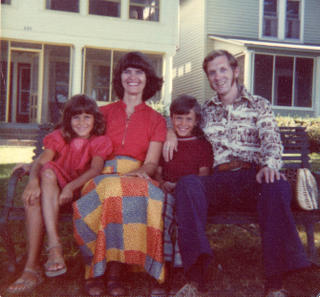

That’s one of the big selling points of a Lakeside vacation--nostalgia. A return to a simpler, easier, less stressful time--sort of time travel in reverse. We began renting in 1974 and bought our cottage in 1988, 20 years ago. Believe me when I say, the Lakeside of today is not that of 20 years ago, and especially not 35 years ago, despite the 19th century cottages you might see. That quiet piece of Americana is a figment of our imagination; Lakeside’s what city people think small towns are today, and what small town people seem to remember of the place where they grew up. I grew up in two small towns and I remember outhouses, hand pumps in kitchens, linoleum rugs, kerosene stoves, and basements with dirt floors. Trust me, you don’t want that!

There were a handful of cottages selling in the $40,000 range in the late 80s, but they did need work. When we started renting in the 1970s, if there were comparable houses in Lakeside and Columbus, the Columbus house would cost more; by the late 80s, a Lakeside house of comparable size and modernity would cost more because many people were investing in second homes creating a demand.

Our first rental was an upper unit in a four-plex and cost $45 a week in 1974. We had a porch and I could see the lake and the children playing the park. That unit has now been combined with the one next to it and rents for about $1200 a week, but the view of the Lake is still there.

What I remember about Lakeside of the early 1970s is that renewal and upgrades were beginning. There was a gasoline crisis (in 2007 dollars it was higher than today), long lines at gas stations, and people were turning to places closer to home for vacations. At Lakeside, property owners were starting to straighten the foundations, replace moldy wall board, paint the cottages, and install an additional half bath under the stairs or in a closet, and maybe a ceiling fan. A few people had telephones, televisions and AC, but not many. Bicycles were old clunkers. I remember stopping by the Fountain Inn to watch a few minutes of a Soap Opera---many others were doing the same. Our unit didn’t even have a radio, I don’t think the vacuum cleaner worked, and the kitchen made me ill--couldn’t cook in it until about Wednesday.

By the 1970s, the large cafeteria eating places and boarding houses had disappeared because most cottages had kitchens, and government regulations put most of them out of business. But today’s "old timers" remember that Lakeside. If they are nostalgic for standing in line in the sun or rain to eat, it must be for the prices. But in the 1970s and 1980s the Hotel Lakeside served 3 nice meals a day, and it was lovely to eat in the dining room and look at the water. We really miss that, but the Association doesn’t seem to be able to hire a company that can make that work.

A huge difference I see today over the 1970s are the activities for children and family groups. When my children were little, there was bike riding, swimming, fishing, sailing lessons, hanging out with friends, a game of tennis if you could get a court, a playground, miniature golf and shuffleboard with adults, and story hour on Saturday at the Women’s Club. There was no children's beach; no kiddie pool. Now there are so many programs for kids in arts, crafts, music, sports, and spiritual life, I couldn’t even begin to count them. I think it reflects our need to schedule our lives or face panic. No child at Lakeside could possibly whine, “There’s nothing to do.” Programming for adults has more variety too, from nature walks, historical tours, wellness programs, and exercise routes as well as the usual lectures and Bible studies.

A number of things have disappeared from the Lakeside we first knew in the 1970s: The lakefront got chewed up in the high water period of the 60s and 70s, huge boulders were brought in to protect the property, then the water receded so the view is very different; old clunky bikes are all but gone--mine is 40 years old and has 28 year old tires, but it’s a rarity; boom boxes of the 1990s--all the kids have I-pods now; dress-up clothing--women are wearing shorts and baseball caps to Sunday services in the auditorium, and I’ve seen more butt-cracks on men in baggy cargo pants than anyone should be subjected to; the payphone-- everyone talks on cell phones; cigarettes--I rarely see a smoker in Lakeside, not even the litter; fixer-up cottages--you probably won’t find one if you’re hoping for a bargain--you’ll need to fix one up that was remodeled in the 80s; healthy weight--maybe it’s the baggy clothes but I’m guessing the average Lakesider is 30-40 lbs heavier than 35 years ago, although some still jog and the Raccoon Run is still popular; antique shops--I think there were four in the early 1970s--fun for browsing; automobiles are slowly moving to remote parking--there are more and more streets with yellow lines; fewer big name programs--in the past we’ve seen Pat Boone, Shirley Jones, Emmylou Harris, and others--now programming is more family oriented and few are extra charge--Eleanor Roosevelt actually visited right here where I’m sitting in 1940.

What’s here now that we didn‘t have then: modern kitchens; beautiful bathrooms; many new homes; more open porches; lavish flower gardens and decorating; The Rhein Center is now 10 years old--it’s been a wonderful addition for arts and crafts; lakefront church services--I think those started in the 90s; ATM machine; credit cards; Wi-Fi; cable TV; the current lovely lakefront Pavilion was built in 1988--we never saw the original one, only the horrid 1950s “modern” version; golf carts are everywhere; over 30 cottages have been redesigned or designed new by my husband--something we would have never anticipated in the 1970s when we first came through the gates.

What hasn't changed: the sunsets and sunrises; summer love; lines for ice cream; getting together with friends and neighbors you haven't seen for a year; beautiful Lake Erie; picnics in the park.

Other nostalgia since the gate fee was ten cents, with a few highlights of the season:

1873: Lake Shore Christian Home becomes Lakeside Company
1874: Lakeside dedicated, 5,000 people attend the program
1890: Francis E. Willard, of WCTU is speaker
1895: Susan B. Anthony lectures; Governor William McKinley is speaker
1901: Lorado Taft lectures on art; Gen. Booth, founder of Salvation Army is speaker
1921: Fisk Jubilee Singers; Lutheran Chautauqua begins
1922: William Jennings Bryan
1924: Dr. E. Stanley Jones
1929: Billy Sunday preaches to 5,000
1934: Amelia Earhart speaker; Lowell Thomas--reserved seats $.25
1936: Mary McCleod Bethune speaker
1939: Last run of the Northern Ohio Electric Railway between Toledo and Marblehead
1940: Eleanor Roosevelt visits Lakeside
1940s: Gov. John W. Bricker led a Bible class
1950: Robert Taft teaches Bible Class
1951: Jimmy Dorsey Orchestra
1956: Marian Anderson sings; first Lakeside Art Show
1954: Island View platted; J.C. Penney teaches a Bible class
1965: Al Hirt, Jazz trumpeter; William Warfield; Mike Douglas; season pass $25
1970: Norman Vincent Peale
1972: Doc Severinson in concert
1973: Roger Williams plays; Lionel Hampton orchestra
1974: The Bruce family rents on Plum for their first visit to Lakeside
1975: Barby Bright and Jane Aigler open an art store
1981: Fred Waring
1982: Victor Borge
1983: Douglas Edwards, CBS News; Norman Vincent Peale
1984: Four Freshmen perform
1985: The Osmonds; Ray Charles; Duke Ellington Orchestra; Dale Evans
1989: Emmylou Harris; season pass: $175
1991: Shirley Jones (there was a storm and the power failed--the show went on with a generator)
1993: Four Lads; Four Freshmen
1996: Four Aces, Four Lads;
2002: The Turtles; Gaelic Storm
2003: Crew Cuts; Gary Puckett; season pass: $335
2005: Russ Taff; Phil Keaggy
2006: CeCe Winans; season pass $395
2008: John Davidson; Capitol Steps; Sandi Patti; season pass $435


19th century restored Lakeside cottage with landscaping

Why should I have to shop around?

Wal-Mart no longer carries the J.R. Watkins face cream I learned to love after purchasing it at the Port Clinton store last summer. I wonder if I can sue to require them to do so? Why should I have to shop around or send for it?

When I was researching the Gee accident story, I see Dr. Rebekah Gee, MD, MPH, an obstetrics and gynecology resident in the MGH/BWH combined residency program in Boston, was a plaintiff the Wal-Mart Massachusetts case forcing the mega-retailer to carry, Plan-B, a product the founders and owners find immoral and unhealthy. It kills embryos--it’s an early abortion without the trauma of thinking about a potential life.

It’s just amazing. Protesters try to force Wal-Mart to relocate or not build, denying jobs and low cost products in the area, and when they do jump through the hoops, they try to force them to change not only their business practices, but their personally held ethics and religious values.
    Feb. 14, 2006 (Just in time for Valentine‘s Day, Wal-Mart announces it will carry Plan B) “A new [Massachusetts] state law that took effect late last year following heated debate on Beacon Hill requires all hospitals to provide the morning after pill to rape victims. It also allows pharmacists to dispense the pill without a prescription, but does not require them to do so. . . .

    Sam Perkins, a lawyer for the three women, praised the board's decision and said he was prepared to file lawsuits in other states should Wal-Mart not overturn its policy. Abortion rights groups and women's organizations have also urged Wal-Mart to change its policy.

    "From our point of view, they've bowed to the pressure of litigation, in part," Perkins said.

    The plaintiffs — Katrina McCarty, 29, of Somerville, Julia Battel, 37, of Boston, and Dr. Rebekah Gee, 30, of Boston — were turned away when they tried to buy emergency contraception pills at area Wal-Marts.

    The women said they knew they would be refused when they went to the Wal-Marts in Quincy and Lynn and that the action was planned with the abortion rights groups and lawyers.

    "I'm proud to be able to tell my patients that they now can go anywhere for their prescriptions," Gee said. "My patients should not have to shop around." “
Gee’s attempt to fill the prescription was not personal, but a part of a planned action by abortion rights groups and Planned Parenthood. President Gee is a Mormon if I remember correctly. Should make for some interesting family discussions.

Now, will Wal-Mart be required to stay open all night, or to rush purchasers to the front of long lines at check-out? Will they need to stock kiosks outside bars on college campuses? How far do they need to go to satisfy the abortion lobby?

Happy Anniversary Ohio Sea Grant

Tomorrow, Friday July 18, Ohio Sea Grant will host its 17th State Legislature and Congressional Day on the shores of Lake Erie, giving state and local elected officials a chance to learn more about the issues facing the Great Lakes and what Ohio State University has done over the years to solve those issues. Ohio Sea Grant celebrates its 30-year anniversary as a NOAA program this summer. One of the dinner speakers will be Charles E. Herdendorf, Director Emeritus of Ohio Sea Grant and Stone Lab. He lectured at Lakeside last summer, and it was one of the most interesting programs we ever had.

What about heterosexual partners?

Seem to be a few inequities in the tuition break for OSU employees. Gay partners get a tuition break, but not garden variety partners? Technically, I suppose that's because of Ohio's marriage law--that marriage is between one man and one woman--but there are plenty of couples who live together for other reasons (hiding assets, don't want to lose pension benefits, are still married to someone else, etc.) who might wish to have a tuition break.
    "Eligible dependents of some Ohio State employees no longer have to wait to take advantage of the university’s reduced tuition benefit.

    Staff and tenure-track faculty have had a three-year wait from their date of hire to become eligible for the dependent tuition benefit. But starting fall quarter 2008, sons, daughters, spouses and same-sex domestic partners of eligible OSU employees can take a 50 percent reduction based on in-state undergraduate general and instructional tuition rates — 75 percent if two parents or partners work at OSU."
Why not foster children, siblings, nannies, and live-in in-laws? Y'all come. The state coffers are full!

President Gee's daughter and husband injured

According to the Columbus Dispatch, OSU President Gee's family has been injured in a scooter/SUV crash in Pennsylvania. We saw thousands of these scooters when we were in Italy (I think gas is about $9 a gallon there), but then, there weren't too many SUVs with which to collide. I remember Rebekah as a teen when her dad was heading OSU the first time. Her mother Elizabeth died of cancer; Gee later remarried and divorced.
    E. Gordon Gee's son-in-law suffered what authorities said were life-threatening injuries Saturday night while riding a motor scooter in suburban Philadelphia with Gee's daughter, Rebekah.

    Dr. Allan Moore, 31, was operating the couple's 2001 Vespa when it collided with a sport-utility vehicle. He was in critical condition last night in the Hospital of the University of Pennsylvania with abdominal and head injuries.

    His wife and passenger, Dr. Rebekah Gee, 32, was in fair condition in the same hospital with a broken leg and other injuries.

    Rebekah Gee, the Ohio State University president's only child, was seated behind her husband as they traveled on a neighborhood street in Bryn Mawr, Pa., shortly before 7 p.m. Saturday.
According to the article, the police didn't say whether they were wearing helmets. Two doctors. Service in ER during training. One would hope so.

According to Wikipedia, President Gee has held more university presidencies than any other American. Prior to his resumption of the presidency of Ohio State on October 1, 2007, Gee was chancellor of Vanderbilt University from 2000 to 2007 and president of Brown University from 1997 to 2000, of the University of Colorado at Boulder from 1985 to 1990, and of West Virginia University from 1981 to 1985. I remember him best as an advocate of good library services and his bow ties.

Update: Allan Moore died on July 24. OSU account.