Monday, March 27, 2006

2322 Another medical service opportunity I'll have to pass up

"Japanese researchers have harvested endometrial stem cells from human menstrual blood. These stem cells have "an extremely higher potential" as a source of cardiomyocytes compared with bone marrow-derived mesenchymal stem cells, they reported at a late-breaker clinical trials session here Sunday at the 55th Scientific Sessions of the American College of Cardiology.

The findings were presented by Dr. Shunichiro Miyoshi on behalf of his colleagues at Keio University School of Medicine, Tokyo. The researchers collected menstrual blood from six women and harvested endometrial stem cells."

Seen at Medscape.com which may require registration.

2321 Blog site Housekeeping

I really like the pre-packaged template I use from blogger, but it is fairly common and sometimes I think (after clicking around) I'm back on my page, but I'm on someone else who uses that same parchment and wallpaper look. So I've changed the side margins to reflect my own books. See those tall black leather bound volumes? My favorite books. I inherited 11th, 12th and 13th ed. of Encyclopedia Britannica, and that's what shows in the repeat, plus some of my kitty boxes and other books. Also I went into the help section and figured out how to reverse my archives so the most recent would be on top.

I took a peek at the Truth Laid Bear and discovered I am now #203, although I have no idea what that really means except today Blue Star Chronicles is #67 and Median Sib is #100--they are sisters that I always read along with their sister Joan and cousin Jane (I'd link, but it's been kicking IE out). "The family that blogs together . . . just might have a liberal brother blogger." Lately, I haven't been reading Blue Star Beth as often because she has so many things on it, it takes too much time to load. But that helps stats.
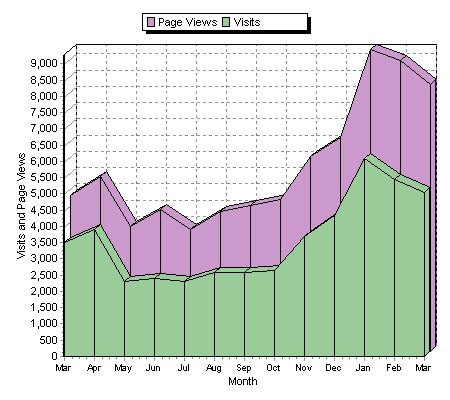
TLB always flat lines me a 71 hits a day, which isn't true. I get several hundred. Last week I was checking my site meter and for some reason last Wednesday I had over 500 page hits, and I think that was my busiest day ever, although I have no idea why. Something must have been in the news that pinged a story in my archives. Since I only track 100 at a time, most of it had scrolled by before I noticed. Thursday Thirteen has definitely caused an uptick in traffic (I started in January), and Monday Memories slightly so. And I swear, at least two out of every hundred are trying to figure out how to fix a broken zipper, a topic from October 2004.


2320 Love and Money

Today's WSJ has and article on nine financial points to consider if you are planning to get married. I'm going to suggest a tenth, or rather a first--talk about religion and faith matters, and factor that into the budget. First of all, it's just plain smart--you can't outgive God. But secondly, it could cause a huge fight in the future if you find out he's a dollar-in-the-plate guy and that was your first clue about his commitment! Thirdly, you might just find out that you don't know each other as well as you thought, and will call the whole thing off!

2. Know your intended's debt load.
3. Know how she uses her credit card--is she charging $1 soft drinks and lattes? Shop aholic?
4. Know your own financial behavior and mistakes--share credit reports with each other. Don't let a bankruptcy or students loans surprise her.
5. Giving up your career? Get a pre-nup. Or at least bring it up for discussion.
6. Talk about your dreams and aspirations.
7. Discuss career expectations. One income after kids? SAHM? Might be a good time to even discuss if you're planning to have a family, wouldn't it?
8. Who will be the gatekeeper and family accounts manager? Know this going in.
9. One checkbook or three?
10. Do you know the lingo--how to discuss finances--the acronyms--401-k, 403-b, IRA, etc. Do you know why paying the minimum balance on the credit card is a disaster for your coming marriage?

You can make it work without any of this--I should know--I've been married 46 years and didn't know zip about finances at 20 when I said "I do." But as we old folks are told each and every day, "It's not the same today."

2319 More ignorance about Christians

Robyn Blumner, a columnist for the St. Petersburg Times, writes from behind a shield of cultural bias about evangelicals today. She's upset that Bush claims ignorance about the various apocalyptic predictions for the Middle East. Well, doh! Who can keep track? If you get 3 Christians together, you'll get at least 2 viewpoints on end times, and the third (that'd be me or the President) will be clueless. (Actually, I won't take the paraphrase of a liberal columnist for anything the President said, but I'm giving her the benefit of the doubt here because she wants so badly to believe it.)

I'm a Christian and I'm not a tribulationist or dispensationalist. I couldn't tell a pre-trib from a mid-trib from a rapture prediction. And millions and millions of committed Christians don't see the modern day political entity called Israel as the one who benefits from all God's promises in the Old Testament. I know this; and I think the President does too. Someday Jesus is coming back. I know that because, like the song says, the Bible tells me so. I'm supposed to be ready and busy, because it could be tomorrow, or it may never happen in my life time (in which case I don't need to worry). I don't need to read the newspaper headlines, the Christian bloggers or the stars to believe this.

She's right that many dispensationalists voted for Bush. Like most of us, Christian or not, they probably couldn't figure out where Kerry stood on anything or stomach abandoning the Iraqis the way his post-Vietnam record (did you know he served?) would predict a similar diaster in this century. However, I'm guessing there's a few more issues conservative Christians have in common with the President other than support for Israel. They may have even hoped he'd keep on task about saving social security and securing the borders. Note to Robyn: brush up on what Christians believe. We're not peas in a pod.

Sunday, March 26, 2006

2318 Veggie and fruit plate

There is a Cursillo* Closing at our church tonight and I've been tapped to bring snacks. I always chose a veggie tray, when given a choice although it is a mixed tray of fresh fruits and vegetables. Carrots, celery, cherry tomatoes, white grapes, and 3 different types of apples, sliced. I thought about a fruit dip or some peanuts to sort of jazz it up, but who needs the calories? Not me! Today I had to do the old rubber band through the button hole trick to close my skirt--and I don't know anyone else in the Cursillo community, or even central Ohio, who needs more cookies and brownies. How about your section of the country? Most of the thin people I know have eating disorders or an illness. Or they are under 18. Yesterday we hung an art show. The artist is Greek Orthodox. And of course, it was her name day, so we had to celebrate, right? That means food.

*Cursillo, in case you aren't familiar with the word, is a renewal movement started in Spain by Roman Catholics maybe 60 years ago--means "short course in Christianity." The Columbus Cursillo community is ecumenical, but we aren't supposed to call it Cursillo anymore, since that's for Catholics. So in fact, the vegetable and fruit tray is for Cum Cristo, but because I did my week-end in the late 70s, I still call it Cursillo. But we still sing "DeColores" with gusto and peep like baby chicks and crow like roosters.

Other renewals based on the Cursillo model are: The Episcopal/Anglican Cursillo, The Presbyterian Cursillo, Walk to Emmaus (I think this is Methodist), Via de Christo, Tres Dias, Kairos (for prisoners), Great Banquet, Awakening, Pilgrimage Days with the Lord, Chrysalis, Vida Nueva, Happening, Celebration.

2317 How to blog a better blog

Pilar did a nice Thursday Thirteen on 13 steps to a better blog. Nice job, too.

Saturday, March 25, 2006

2316 School uniforms benefit the kids, schools and parents

In today's Columbus Dispatch there was an Op Ed written by a 16 year old girl, Tracy Somers, who attends a Catholic high school where uniforms are required. She defends the uniform policy and thinks her points are valid whether or not the school is religious.

1. Uniforms do not take away one's individuality--if anything, they enhance it.
2. Uniforms do enhance the learning environment. On the occasional "dress down" day, she can see the results of rowdy behavior, slouching, and the time spent admiring each other's outfits instead of paying attention to the task at hand.
3. Students who wear uniforms (which she calls uniformly ugly) learn to ignore outside influences--they help build their pride and self-esteem. (Apparently, people stare at them in public.)
4. Uniforms save her time when preparing for school in the morning.
5. Schools with uniforms rarely report violence.

No, this isn't it; just thought it was a cool way to show your school uniform


While I was reading this op ed, three Future Farmers of America (FFA) came in the coffee shop. Essentially, they wear the same jacket their members wore 50 years ago when I was in high school and it still looks terrific. I stopped and spoke to them--two girls and a boy, and they were pleasant and well spoken. Between the Catholic students and the farm kids, I think the country's in good hands for the future.

You are invited

We're hanging a wonderful art show today by the Columbus Dispatch artist, Evangelia Philippidis. Born in Greece, she includes many Byzantine, ancient Greece and Greek Orthodox motifs and symbols in her work. There is a reception for the artist on Sunday April 2, 2 - 4 p.m. at the Church at Mill Run (Upper Arlington Lutheran Church) in Hilliard, Ohio. The show will run through Thursday, April 27, 2006, and the art is for sale.


2314 Myths about the military

It's been awhile since I heard Democrat Charlie Rangle spouting off on Fox about reinstating the draft to make the military more fair. That the military recruits the poor and minority in a disproporationate percentage to their numbers isn't true, and in fact, it is probably less of a path out of poverty than it was for previous generations because today's all volunteer military requires a high education and skill level. You probably saw this piece in November when it first appeared, but it is worth repeating.

"Yes, rural areas and the South produced more soldiers than their percentage of the population would suggest in 2003. Indeed, four rural states - Montana, Alaska, Wyoming and Maine - rank 1-2-3-4 in proportion of their 18-24 populations enlisted in the military. But this isn't news.

Enlistees have always come from rural areas. Yet a new study, reported in The Washington Post earlier this month, suggests that higher enlistment rates in rural counties are new, implying a poorer military. They err by drawing conclusions from a non-random sample of a few counties, a statistically cloaked anecdote. The only accurate way to assess military demographics is to consider all recruits.

If, for example, we consider the education of every recruit, 98% joined with high-school diplomas or better. By comparison, 75% of the general population meets that standard. Among all three-digit ZIP code areas in the USA in 2003 (one can study larger areas by isolating just the first three digits of ZIP codes), not one had a higher graduation rate among civilians than among its recruits.

In fact, since the 9/11 attacks, more volunteers have emerged from the middle and upper classes and fewer from the lowest-income groups. In 1999, both the highest fifth of the nation in income and the lowest fifth were slightly underrepresented among military volunteers. Since 2001, enlistments have increased in the top two-fifths of income levels but have decreased among the lowest fifth.

Allegations that recruiters are disproportionately targeting blacks also don't hold water. First, whites make up 77.4% of the nation's population and 75.8% of its military volunteers, according to our analysis of Department of Defense data.

Second, we explored the 100 three-digit ZIP code areas with the highest concentration of blacks, which range from 24.1% black up to 68.6%. These areas, which account for 14.6% of the adult population, produced 16.6% of recruits in 1999 and only 14.1% in 2003."

Sean M., a commenter at Protein Wisdom has this to say about the war critics' opinion of our troops:
So, let me get this straight...if you support the war but don’t join up with the armed forces to go and fight, lefties scream “CHICKENHAWK!” at you, implying that your lack of military experience invalidates your opinion.

On the other hand, if you’re over there, your opinion on the legitimacy of the war isn’t to be trusted because you’re obviously some sort of moron who couldn’t get a job elsewhere, much less a college education.

HT for both items Yehudit.

Friday, March 24, 2006

2313 Do you have allergies?

A few weeks ago I went out for dinner with my daughter and her husband. While we were browsing the menu she mentioned being allergic to certain items. I was a bit puzzled because she didn't have any allergies growing up in our home in the 70s and 80s. "What are you allergic to?" I asked. "Oh, everything," she replied.

This week Medscape.com reported: "A recent nationwide survey found that more than half (54.6%) of all US citizens test positive to 1 or more allergens, and allergies are the sixth leading cause of chronic disease, with an estimated $18 billion annual healthcare cost. Alarmingly, this statistic is estimated to increase, presenting increasing challenges to patients and physicians alike to its management. Although self-help strategies, such as avoiding the allergen can be helpful, in most cases, this is difficult and inadequate and most sufferers rely on pharmacologic intervention. Because allergic disease in most cases is lifelong, effective management needs to be immediate, efficacious, and long-term. Despite the availability of several pharmacologic options, the effectiveness of current therapies is limited by treatment formulations, frequency of dosage, and side effects, which can have an impact on treatment compliance and overall outcomes."

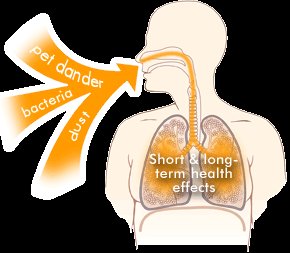
Thinking back, the only allergy I can recall knowing about when I was a child was that Francine, a classmate, had hay fever and she was miserable certain times of the year. So where did all this come from? The article suggests that 95% of our time is now spent indoors with constant exposure to allergens like pet dander, dust mites, mold spores and cockroach particles.

Well, let's take a look at this--what is indoors with us? When I was a child, most pets lived out of doors, in the basement, or on the porch. I don't think I knew a single person who slept with an animal, unless maybe the hired man on the farm napped in the hay mow. No one had wall to wall carpet, and rugs were periodically moved to the outdoors and beaten and left in the sun. Sheets were washed AND ironed--many with a mangle, which must have killed off a lot of dust mites.

Homes for the most part were not insulated when I was a child. The house we lived in here in Columbus for 34 years (built in 1939) had air space between the outside and inside walls--no insulation--and we had very reasonable heating bills. Air is a good insulator. Now we stuff or blow in all sorts of synthetic material and houses are much tighter. The house can't breathe and neither can you! And speaking of synthetics, we didn't have a lot of that--oh, yes, we wore nylon and rayon occasionally, but rugs and clothing were mainly cotton and wool when I was growing up. Most of that textile material did not come from Asia, South America or China.

Children spent a lot more time out doors 40 or 50 years ago. They weren't sitting in front of the TV or computer with a pet on their laps eating snacks. Also, we just weren't as concerned about cleanliness 40 or 50 years ago. A bath once or twice a week, or washing your hair once a week was considered just about right. That meant you didn't have as much soap and chemical residue on your skin and hair, nor did you smear on lotion to replace lost body moisture. Nobody had a hair dryer to blow dust around. There were no air conditioners were mold would grow and get blown into the house. You didn't have mold growing in the automatic defrost section of the refrigerator, because you only had manual defrost. Oh yes, and most people didn't have clothes dryers which also leak lint and dust into the air of a home and you used laundry soap, not detergents.

No one ate in restaurants except on special occasions, so if we shared germs, it was those to which we had some immunity. We all ate rather plain, homecooked food with very few additives or colors. Deep frying and reusing oil? Maybe if we bought a do-nut from the bakery. We ate meat, but not as much as today, and those animals weren't raised with antibiotics. The eggs and chickens were fresh, free-range for the most part (as a child I even watched them jump around the back yard headless after my dad chopped off their heads).

And everyone seemed to smoke--even up to about 10 years ago. I wonder how many little critters that killed off that we now are allergic to?

Now I'm no tree-hugger who thinks we need to go back to the way things were (and I'm going to a restaurant tonight for our Friday night date), but there are unintended consequences to "progress." $18 billion a year is a lot to sneeze at for "pharmacologic options." Might be smart to put the cat or dog in another room at night, and go outside more often to breath some fresh air. Couldn't hurt.

2312 Gay adoption

The "experts" have spoken again. It was reported in today's paper that some experts on child welfare have blessed gay adoption.

So how have the experts done in the past on this problem of extra or inconveniently conceived children? Well, in the 17th and 18th century in this country, when the parents died during the crossing from Europe, the children were indentured to strangers to pay off their parents' debt and their own for the passage. Even if they had co-religionists, like the Mennonites, to meet them at the ship, they still became unpaid workers in someone else's household. The experts agreed, it was best all around.

Then in the 19th century some early day social workers for the poor decided that orphan trains would be the best chance for some children to get out of the bad influence of the city. And, maybe they were right. City kids on the wind swept prairies of Kansas or Nebraska, torn away from siblings on the train platform, working behind the horses or cutting sod probably did stand a better chance of reaching adulthood. But my gracious, they must have been terrified and lonely.

In the 20s and 30s of the twentieth century, adoption became a little bit more formal, but if you lived in a small town, many people knew who your mother was and that she "got in trouble" so then you were adopted by that middle-aged couple who "couldn't have any of their own" or a relative. The experts thought that was the best way to handle it. With the Depression, you couldn't be too choosy about who raised the children--everyone had too many mouths to feed.*

Lots of babies of unknown origin appeared during and after WWII and our Asian wars. Movie star adoption was popular, like Michael Reagan, son of President Reagan. Even fake adoptions took place for out of wedlock babies like the daughter of Clark Gable and Loretta Young, Judy Lewis, who actually was "adopted" by her own mother. Experts of that era believed that the stigma of adoption was better than the stigma of legitimacy. Amer-Asian children, some biracial, were sent away from their Korean and Vietnamese mothers and villages to grow up the only Asian person in some small mid-western town.

In the late 50s and early 60s the experts, by this time with Master's in Social Work, decided absolute secrecy was best, so laws were passed in most states to falsify the birth certificates of adopted babies. Even when they became adults they couldn't get their real birth certificate--forever being legally a "baby." Unless they could prove they were Native Americans. Oh yes, the heritage of Indians was more important than Irish or German or English descendant children. You can't deprive an American Indian of his or her tribal rights even if he's only 1/16 or 1/32. But you can deny any Caucasian child of all birth family knowledge about their first degree blood relatives. How's that for turn around is fair play? I'm not sure which expert thought that one up. But they probably were members of whatever "rights" group had the ear of the legislators.

Then when the feminist movement joined hands with the abortionists, we got "open adoption." Supposedly, it should hurt a child less to know that his birth mother knew the past 25 years where he was and who adopted him, but chose never to contact him. Go figure. I don't know about you, but I wouldn't feel really terrific knowing my birth parents knew where I was and decided not to even meet me or thought the occasional photo would do! Open adoption was supposed to cut down on abortions with the logic (probably of a lawyer) that it hurts a woman more to carry a child 9 months and place her for adoption than to abort her and never let her live and just wonder about it the rest of her life. I have no idea really who thought up open adoption (which is sort of a throw back to the early 20th century), but that's what the experts believe. The experts will also tell you it is better to kill a child in utero than to let her face life with a family that can help her with a disability like Downs or club foot. The disability rights people who lead perfectly satisfying lives will tell you that "expert opinion" has absolutely nothing to do with the child's welfare.

When the local supply of infants was dried up by abortions (with the help of experts helping the mommies), other experts turned first to Latin America, then after the collapse of Communism to Russia and the Balkans. Girl babies are not much valued in China and India, so now the experts think raising the only dark skinned or Asian child within a hundred miles won't be noticed or will work out with enough love and support. This form of adoption puts lots of money in the hands of the experts, because only rich Americans can afford to create families this way.

And while I'm on experts, let's not forget all the doctors, lawyers and social workers (notice how these days it takes more and more education to become an expert, but the solutions get more bizarro?) who decided that a child couldn't care less if daddy's sperm came from a sperm bank which paid college students who had good grades, blond hair and blue eyes. Or if mommy was an egg donor or the local rent-a-womb lady. Didn't Woody Allen marry the adopted sister of his own children whom he'd helped raise? I'll bet there was an expert in there saying it was OK. I guess that example should go into the Asian group; nah, works better with bizarro.

Now the experts are even by-passing adoption and/or abortion and going directly to just using up the cells of the embryos of the inconveniently conceived for research. Isn't it just so sweet for the pre-child that he can be useful to society without all that messy living and growing up routine? Some of us can live our whole lives without ever making a contribution to medical science!

Excuse me, I'm gagging at this point. So, the end of the story is I don't trust the "experts" who tell us that gay adoption will help children, or that children don't really need a woman (gay men adopting) or a man (lesbians adopting) in their lives--gender identification and modeling being just more outdated artifacts of another time and different experts.

*I'm leaving out orphanages and children's homes, which considering what followed their closings in the 1960s and 1970s (recommended by the experts), may have been one of the better ideas for stability and care of children without parents.


2311 The working family

Who are they? I was a librarian, an associate professor; my husband is just winding down his architectural practice and had a variety of titles like associate, owner, partner and sole practitioner. So what were we? Chopped liver? Didn't we work? We've been in four of the five quintiles, and trust me, we were always employed. But every time the media wants to give us a sad, sad tale about the economy, they refer to what a tough time "the working family" is having. I think it is the new term for "working class" which pushed out "lower class" which was an unacceptable euphemism for "poor." It's really tough to find a good term for a family of five with an income of $55,000. But believe it or not, in Columbus, Ohio that income will qualify you to use the food pantry (AGI $45,200 for a family of 5).

The latest one I saw was a one column front page USAToday article on housing by Noelle Knox--either yesterday or Wednesday. She wrote that nearly 70% of Americans own their own home--but that's not good, because "working families with children" have less ownership than in 1978. Sometimes I talk back to these ladies (the journalists who write human interest stories about how tough the economy is are always women--even in the Wall Street Journal), so I said to Noelle: in 1978 "working families" weren't paying cable bills or monthly cell phones charges nor were they eating out several times a week, nor did they download music or have computers to eat up the paycheck with games, e-bay charges and blogging bills. Also, Noelle, in 1978, more of these "families" started out as married couples. Not being married, even for a period of years, helps reduce income.

And of course, Noelle didn't look for real estate in Ohio where it is affordable--no, no, no. For her sad story, she had to choose the Bacaros, a "working family" both with a good income (but not college) looking for a house in LA, or San Francisco, I've forgotten which. You can buy a perfectly decent crackerbox ranch in need of complete renovation in California for half a million, which will practically buy you a new-build mansion in a Columbus suburb.

But the real give away on these economy sad stories are the "think tanks" that provide the data. They are always "The Center for . . . name your cause." I think this one was Center for Housing Policy. But if the word "justice" is in the name, look out. Policy is another. Then they really want your money. It's the only form of justice they know.

Thursday, March 23, 2006

Thursday Thirteen


Here are thirteen poems I've posted on my blog over the last 2.5 years. I wouldn't expect you to read all 13, but here are some clues. Missing someone? Try #4, #7 or #8. Tired of winter? #13 is good. Ever wondered about gossip in a small town? #1. Had any really crummy jobs? Betcha can't beat #2. Do you like to paraphrase scripture? Think on #3. Nostalgia? #6, #11.

1. What I heard about you

2. Working for DeKalb Seed

3. On a theme from Habbakuk

4. The anniversary

5. Susanna looked East

6. Christmas Formal

7. Mothers of our Childhood

8. Daddy-lions

9. December 21

10. New and unread books and unopened music

11. Last day of July

12. Complementary Colors

13.The longest month


(If you participate, leave your link in the auto-link and it will post here, but please leave a comment.)

Get the Thursday Thirteen code here!

The purpose of the meme is to get to know everyone who participates a little bit better every Thursday. Visiting fellow Thirteeners is encouraged! If you participate, leave the link to your Thirteen in others comments. It’s easy, and fun! Be sure to update your Thirteen with links that are left for you, as well! I will link to everyone who participates and leaves a link to their 13 things.

Trackbacks, pings, comment links accepted!

2309 Everything's clearer now

There was a very interesting story about classroom teaching in this morning's Columbus Dispatch. A classroom in the Harrison Street Elementary School in the Big Walnut School District (Delaware County, Ohio near Columbus) is using full spectrum light bulbs and every student gets a water bottle as part of required school supplies. The teacher is fitted with a wireless microphone and there are four speakers in the room so that every child can hear the instruction easily. They are also treated to brief periods of calisthentics to stimulate their brains. This experimental classroom is based on the research of Laurence Martel, an educational consultant on reducing stress in the classroom for better learning. I remember when I gave freshman orientation to the veterinary students I would suggest that they get up periodically from the tables in the library and walk to the hall to get a drink rather than sit for hour after hour. I didn't know I was in the forefront of educational research. I thought I was just keeping them awake.

2308 Finding a human bean

Kidney beans. Lima beans. Pinto beans. Casserole beans. How do you find a human bean?

Gekko (big computer guru) says to try this Get Human Database. I didn't try it--don't know how many snapped and ugly beans you'll get. The product I am interested in wasn't listed. But it looks like it could be useful

2307 Cyclone Larry

One of the Thursday Thirteeners The Purple Giraffe, was in the path of Cyclone Larry. Here's a description from Earth Observatory with photos:

"Tropical Cyclone Larry formed off the northeastern coast of Australia on March 18, 2006. The cyclone gained power rapidly and came ashore on Queensland’s eastern coastline, where it hammered beaches with heavy surf, tore roofs off buildings, and perhaps most destructively, flattened trees in banana plantations over a wide area. The Australian Broadcasting Corporation reported early estimates that as much as 90 percent of the Australian banana crop may have been lost in this single storm. Since many trees have been destroyed, it may be many years before the banana industry recovers."

And if you're visiting that Earth Observatory site, take a look at the "Meddie" story. I wonder how they are going to blame this on President Bush?

Wednesday, March 22, 2006

2306 I want one of these

A PowerSquid for the office and a dough scraper for the kitchen. Cool tools.

The flap that didn't fly

This item was in the NYT yesterday. I'd sort of forgotten this little anti-Bushy tale from . . . December or January.

"An inquiry has found that an American public relations firm did not violate military policy by paying Iraqi news outlets to print positive articles, military officials said Tuesday. The finding leaves to the Defense Department the decision on whether new rules are needed to govern such activities."

Ah, now it's coming back to me . . .

"After disclosure of the secret effort to plant articles, angry members of Congress summoned Pentagon officials to a closed-door session to explain the program, saying it was not in keeping with democratic principles, and even White House officials voiced deep concern."

We should try planting good news about Iraq in the NYT and forget about the middle eastern media. Better yet, leak it. I read this story on-line, so I have no idea if it was buried in a hard to find section.

2304 PLO mission to Washington and the Muslim Brotherhood distribute this paper

says Alexandra at All Things Beautiful. And well they should. It's a gift from Allah. And Harvard. It's got legs and creds! The Israel Lobby and U.S. Foreign Policy By John J. Mearsheimer and Stephen Walt Working Paper Number:RWP06-011.

“To be sure, the contents of this essay are manna from heaven for all anti-Semites and enemies of the State of Israel. It provides well laid-out arguments and enough seemingly neutral 'facts' to mask once true and utterly irrational convictions as reasonable and scholarly. The left will be defending it on that basis alone, and ridicule any notion of it providing fuel for the anti-Semites' and Islamists' peddling agenda."

She's right (no pun), and I looked at some of the left bloggers she links to who are criticising not its content, but the right wing for taking notice of it and its poor scholarship.

She says: "I welcome this essay because it will lure out the anti-Semites amongst us, who have been waiting for such an excuse to dress their irrational hatred in reasonableness and fake moderation. It is our task to differentiate between those who welcome this opinion to debate the issues and those who pursue their morbid hidden agenda."

It lured at least a few to her comments section.

Tuesday, March 21, 2006

2303 Perhaps I should have known

One of the things I enjoyed about being a librarian was that everyday there was something new and exciting to learn. Retirement started to look good when I needed to relearn my job everyday because of evolving technology and therefore could never feel I really had a grasp of anything. Still, with the internet it is a bit like having a mega-million volume library in the attic of my garage. I didn't know that there were jobs for "curators of e-mail," did you? I suppose I should have, because often you read in these high profile legal cases, or even in all the investigations of Katrina mismanagement, that such and so was noted in an e-mail. So someone, an actual person and not just a computer, was tracking and saving things. So, if there are positions to corral e-mail and put them to bed, there must be workshops and conferences, which makes me wonder if Bachelor degrees in e-mail conservation and curation will be far behind?

"The Digital Curation Centre is pleased to announce that it will be delivering a two-day workshop on the long-term curation of e-mail messages. This event will be held in Newcastle on 24-25 April 2006.

The increasing use of e-mail has drastically changed the way that many organisations work. To provide evidential value and to ensure legal compliance, it is essential that traditional record-keeping practices are applied to the management and preservation of e-mails. This often requires a cultural change in organisational practices, which can be exceedingly difficult to implement. In addition, there are a range of technical issues that can impact the long-term viability and re-usability of e-mails. This workshop will investigate some of the organisational, cultural, and technical issues that must be addressed to provide accountability in the short term and to ensure that e-mails can be located, retrieved, accessed, and re-used over time." DCC Events

So, watch what you put in your e-mail. Someone you don't know and never intended for them to read it may be "curating" it for a court case, a tenure review or a divorce case.