Showing posts with label Forreston. Show all posts

Friday, August 16, 2024

Children and exercise--the gym or outdoors?

I go to Lifetime Fitness (I call it the gym) about 5x a week. Sometimes parents bring their children--I think they need to be 12 to be a guest. They are well-behaved and no trouble--but I do feel sorry for them, especially the young girls who are probably already a little over concerned about their bodies.

No one wants to hear that we knew better in the "old days" but here it is. I hated school PE classes, I admit it. I did avoid all organized summer sports although the town had community leagues. But I certainly had a lot of exercise. Watching a little kid on one of those machines today I recalled:
  • climbing trees
  • riding horses
  • biking on no-speed, manual brake bicycles
  • playing hop-scotch
  • raking leaves in the fall
  • mowing the lawn in the summer
  • pulling weeds in the garden in the summer
  • digging dandelions in the yard in the spring
  • running during recess
  • swinging on the monkey bars in the school yard
  • roller skating with strap on skates on the sidewalks
  • catching tadpoles and frogs in creeks
  • playing softball in the street with neighborhood kids
  • delivering newspapers on a morning route
  • running just because
  • and we walked because our mean mothers wouldn't drive us everywhere we wanted to go!
Most of these with the exception of newspaper delivery were social activities--done with friends or a group.

Monday, July 29, 2024

Vacation Bible School beautiful art at UALC Mill Run

After Sunday School on July 28 (Lytham Rd. congregation at Windermere school while our regular space is being remodeled) we drove to our church's other location, Mill Run, which is in Hilliard, to look at the art of the VBS Kindergarten-fifth grade. The theme was Jesus' parables and the children made 2 things in their art time--puppets and theater curtains.
 
When VBS was over the curtains were saved and hung in the upper level. The best view was standing at the end of the corridor and taking in the explosion of color. Like the parables, "the curtains REVEAL (open) and show the drama and they also CONCEAL (close) and hide it. They create anticipation. They help our hearts lean toward the truth. The stage curtain is open or closed and the meaning of the parable is open or closed depending on the readiness of the hearts in the audience. It's by grace that our hearts become ready to hear God's word with faith."


I think (I don't teach and have no one in those classes) they emphasized treasure, thus all the glam and glitter and jewels woven into the curtains. “The kingdom of heaven is like treasure hidden in a field, which a man found and hid; and for joy over it he goes and sells all that he has and buys that field.” It's difficult for adults to understand Jesus' parables, so perhaps this will start them on a study and discussion that could go on and on.

We were both impressed, not only with the message, but by the effort (by the adult volunteers and teachers). To make these people donated necklaces, earrings, bracelets and weaving fabric for the children to create the 12 curtains. 

I enjoyed art as a child, but hated "group" or "team" projects. I would have been the one complaining waiting for recess. I was artistic and always had to pull the others along. We think of that as relatively new--but we were doing it in the 1940s too. That said, I still have one VBS project I made when I was about 8 and we attended Faith Lutheran in Forreston, IL. Bookends made of wood with a cross on them. When I look at them now, I can remember all the adults who were working behind the scenes, because it was quite complex (involved wood burning, painting, and varnishing to preserve it). So even though I could say, "I did that," and take it home, there was a whole lot of labor in it that wasn't mine. God bless those VBS teachers (who learn more than the kids).

If you'd like to see it, the display will be up the rest of the summer. http://ualc.org


Tuesday, November 28, 2023

Memories

Many years ago, I read a short piece in a woman's magazine about clearing out the home of an elderly woman after her death. Among her belongings they found a large ball of string (frugal people used to save string, rubber bands, pieces of foil, bread bags, etc. for some need in the future). It was labelled, "Pieces of string too short to use." That's how I feel about my memories; I'm grateful I started a blog (web log, or diary on the internet) 20 years ago, because I remembered then details I can't recall now. I occasionally recall something from Alameda, CA during our time there in WWII, or an event at Faith Lutheran in Forreston, IL where we lived after Dad's time in the Marines. One piece of string I found today for which I have no story to write because I was trying to remember the pastor's name, is how cute my little brother looked in his Bumble Bee costume for the Mother's Day program at the church.
It's a piece of string too short to use.

Billy Collins wrote a poem called "Forgetfulness" in 1994. It's the only poem I have posted on my refrigerator. https://youtu.be/aj25B8JYumQ?si=M5m15Zd1J-cI5zvX You can hear the audience laugh, but you'll recognize every line. It's happened to you,

This 2011 blog entry includes both Alameda and Forreston at Christmas. Collecting My Thoughts: Monday Memories--Christmas in the 1940s


Wednesday, September 20, 2023

The 1950 census, Forreston, Illionois

I recently received a notice from Family Search about the 1950 U.S. census. So, I looked at my mother, p. 27--interesting to see the details from 1950--names of our neighbors, their kids, professions etc. I remember so many of these people. I didn't know our street had a name! However, my brother and I weren't on the list (we were 10 and 8), so I moved to the next page. No, we weren't there. Then I went backwards and there we were on p. 26 not attached to a family (at least not that I could discern). Maybe the paging goes down instead of up?  I also noticed that in 1950 49.51% of women over 14 were married, so I checked for current data, and found that in 2022 49.9% of women over 15 are married. When I looked at the 1920 census for my grandfather, I see that young children (under 3 or 4) also were listed with months.  My aunt Muriel was 2 and 11 months. That wasn't done for older children.

Friday, July 28, 2023

Time travel with memories

We've both been trying to remember the name of an electrician from Cleveland who was on Bob's Haiti team and was a friend on Facebook (until he blocked me because he was a Democrat).  But so far, we have not come up with a name.  But we will.  Long after we need it.

A few weeks ago, it came to me that I was forgetting a lot of names, faces and events (duh!), and I should write down a list of all the names of the people I remembered. What a dumb idea, I thought, but I couldn't get it out of my mind. I kept seeing a list in categories.  Forreston, Mt. Morris, church, Lakeside, college days, So, I finally started one in word processing, although at first, I was going to hand write it. I decided if I did it in the word processor, I could alphabetize, and use the "find" feature if I didn't remember where a name was. It's now up to about 12-13 pages. 

 I do have some printed church directories, our school annuals, our Lakeside property owners' directory, some club directories, etc. to use as guides. I also have the Mt. Morris Past and Present, and the Mt. Morris War Record. If there are photos, I look at them, and try to remember if or when I've ever really "known" the person. It's been interesting. I can remember many faces of the class of '52, but not '58 or '59. Some people I still know on Facebook like Dick Butler or Jim Isenhart. Then I have a little symbol next to the name if they have died and put in the death date if I know it. I remember a lot of the parents of friends, like Nancy's, and Lynne's, and Sylvia's. So, I'm adding those names too. I remember the people on our block on Hitt St. in Mt. Morris from when I was 4 or 5, because I use to walk into their houses and talk to them! For some I have to find sources for first names because they were, "Mrs. Aufterbeck" or "Mrs. Duncan," since we didn't call adults by first names. I knew so many adults from when I worked at the drug store and at the town library, so I'd better write down the names while I can still remember. There were a lot of farmers who came into the drug store, some all the way from Polo, and most of those names I've forgotten. I used to babysit a lot, so I'm trying to recall those names. There was a Jewish couple who lived on N. Hannah, I think their name was Fishman, but I've forgotten their first names, and their kids' names. Maybe it will come to me--in the middle of the night! :-)

Anyway, it's something to do when it's too hot to go outside. Who knows if I'll ever finish it.


Friday, March 24, 2023

Remembering elementary school teachers (two schools)

 I tossed all my blogging notebooks several weeks ago as part of my Lenten house cleaning.  That's where I kept my notes while reading the Wall St. Journal and the Columbus Dispatch back in the day when I still went out for coffee every morning.   I pulled out one sheet that had information for 2005 and 2006.  It was about i-pad ear, and apparently younger and younger patients with hearing loss are turning up at doctors' offices, according to WSJ 1-10-06.  It seems there were 38 million MP3 players shipped in 2005.  However, when I turned over the sheet, I had started a list of all the teachers I could remember.  I checked my blog, and it seems I never finished what I'd started. I think I was doing a Thursday 13. So, let's try that:

Miss Marguerite Flora, First grade, she lived across the street from us with her parents. I wrote a blog about her when she died at 99. Collecting My Thoughts

Mrs. Greta (?) Huntley, Second grade.  She attended the same Lutheran church we did. I visited the church sometime in the 80s and she remembered me 40 years later.

Miss DeWall, Third grade (my favorite teacher of all times) As I recall, she died rather young, when I was in college.

Mrs. Hiteman, Fourth grade, very young, newly married.

Miss Michael, Fifth and sixth grade, she also had taught my father in Polo, Illinois. She lived with her sister about a block from our house.

Miss Jennie DeGraff, principal, and she apparently knew my grandmother because she was in her address book

Mr. John I. Masterson, superintendent, JoElla's father.  In retirement he was the pastor at Pinecrest, and lived in Mt. Morris.

Mrs. Beth Amsrud, music; she was like a circuit rider and taught in Forreston, Mt. Morris, Oregon, plus the country schools.  Used to put on charming musicals--great fun.

Our family moved from Forreston to Mt. Morris in March 1951.

Mrs. Beth or Betsy (?) Withers, sixth grade. I have her in a class photo MMHS1957: The old elementary school

Mr. Ray Appler, nor sure where he fit in--perhaps came in to teach math. Later Supt. of Schools Ogle Co., WWII veteran, Marines.  Photo at our 50th class reunion along with Katie Dirksen and Warren Reckmeyer.

Mr. David Rahn.  He taught the other 7th grade students, but our class had him, too.

Mrs. Verna Westfall, 7th grade. Class photo. MMHS1957: Mrs. Westfall's 7-A class 1952

Mrs. Mamie Knodle, 8th grade home economics.

Mrs. Rosella Opsand (Warren) Burstrom, 8th grade.  She also directed class plays when we were in high school, and Warren was our physics and chemistry teacher. Died young (1981). 

That's 15, but if I left out the two principals, I'd have a Thursday 13.


Wednesday, December 07, 2022

Art show reception this Sunday

 Reception December 11, 2022, 2-4 p.m.

Bob and Norma, married for 62 years and UALC members since 1976, have both been painting since 1972 and this show is the story of their years together with a few samples of their watercolors and acrylics. Both were interested in art as children, but only Bob pursued it as a career and avocation. Norma enjoyed a library career. He became an architect with fine arts and design classes in high school and college, plus some classes at an art institute as a child. Norma had the family dining room table with art supplies and paper, but no classes. Her teachers in kindergarten and first grade “featured” her art of a May pole dance, and horses were scribbled in the margins of school papers and books. The Bruces met at the University of Illinois in 1959 and married in 1960, but art really wasn’t a focus. Bob’s interest in painting was rekindled by his friend Ned Moore in 1972, so he dug out his old brushes from college art classes. That piqued Norma’s interest so she began taking a few workshops with local artists and later at Lakeside. 

They’ve chosen paintings that tell about their lives. In the library lounge are some stories about Illinois where Norma grew up and where they vacationed with their children, Phoebe and Phil, in the 1960s-70s. Norma’s mother had renovated her parents’ farm home in the 1960s near Franklin Grove, Illinois, as a retreat center and the Bruce family enjoyed roaming northern Illinois looking for farm scenes to paint. Included are paintings of family, two by Bob of Phil who died in 2020, Norma’s childhood friends and family from the 1940s, and her paternal grandmother in her wedding dress. Norma’s grandparents owned the Lustron in Mt. Morris on the postcard. It then was purchased years later by her father after her mother died in 2000.
 
In the hall in keeping with the rural and farm theme in the library lounge they’ve hung some flowers and vegetables, although they don’t garden. These are usually from a workshop at Lakeside or a “how to” book. Also in the hall are paintings of animals—Norma particularly liked horses, and owned one as a youngster (no paintings of him).

Also in the hall they’ve included paintings of travels after retirement in Ireland, Israel, Egypt, Alaska, and Spain—two borrowed from the current owners for this show. Bob went with the UALC mission group to Haiti for 10 years and taught architecture there. At the library door is Bob’s painting of three children from Westerville who were neighbors at Lakeside reading their Bible together. They are homeschooled and Bob helped with their art instruction. Also you’ll see Bob’s paintings of two UALC pastors who’ve had a big place in their lives.
 
The Bruce family began vacationing at Lakeside on Lake Erie in 1974 and owned a summer home there from 1988 to 2022. Paintings from those years are in the Fireside Lounge. Bob taught many classes at the Rhein Arts Center in Lakeside and both took advantage of the classes in watercolor, acrylic, pen and ink, jewelry making, silk painting and pottery. Bob has been in the Lakeside summer art show for over 40 years and in 2021 published a book of his Lake Erie paintings.
 
1. Driftwood, Lakeside - Norma
2. Lakeside Transportation - Norma
3. Romancing the Freighter, Lakeside - Norma
4. Bring Three Friends, Lakeside - Norma
5. Marblehead Lighthouse - Norma
6. Post cards of Lakeside – Norma
7. Ice Cream More Ice Cream, Lakeside – Robert
8. Lakeside Women’s Club – Robert
9. Werden’s Porch, Lakeside – Robert
10. Lighthouse Spiral Staircase, Marblehead – Robert
11. Mouse Island Race, Lakeside – Robert
12. Lakeside Orchestra – Robert
13. Keeping Watch, Norma’s father, 1944 – Norma
14. Playmates, Forreston, 1946 – Norma
15. Grandma’s Wedding Dress, 1912 - Norma
16. Phoebe and Phil at the Marblehead Lighthouse - Norma
17. Snow Horse, Forreston, 1950 - Norma
18. Shuffleboard at Lakeside, 1974 - Norma
19. Phil Bruce with Guitar, 2018 - Robert
20. Phil Bruce, 2012 - Robert
21. Daysville Road Farm, Franklin Grove, 1974 - Norma
22. Olive in her Garden, Franklin Grove - Robert
23. Red Barns Vignette, Franklin Grove - Robert
24. Whitney House, Franklin Grove - Robert
25. Reflection no Horizon, 1974, painted at Franklin Grove farm - Robert
26. Red Geraniums in Brown Pot - Norma
27. Pink Geraniums - Norma
28. White Daisies – Norma
29. Squash in a Bowl – Norma
30. Vegetables on Lace – Norma
31. Purple Iris – Norma 
32. Jackie’s Daffodils - Norma 
33. Hall Children Reading their Bible -Robert 
34. Pastor Dave Drumel - Robert 
35. Pastor Paul Ulring - Robert 
36. Mendenhall Glacier, 2001 – Robert 
37. Camel and Pyramids, 2009 – Robert 
38. Wailing Wall, Jerusalem, 2009 – Robert 
39. Haitian Girl, Ouanaminthe, Haiti – Robert 
40. Ireland Landscape, 2007 – Robert 
41. Street Scene, Grenada Spain, 2015 - Robert 
42. Postcards of Alaska, 2001 – Norma 
43. Bay Horse, 1974 – Norma 
44. Mustang – Norma 
45. Cat on a Hot Pink Porch, Lakeside – Norma 
46. Baby Duck – Norma 4
47. The Plaza, Grenada Spain, 2015 – Robert 
48. Corbett Lustron, Mt. Morris, 2001 – Norma 
49. Mark fishing at Lakeside, 2022—Robert 
50. Friend fishing at Lakeside, 2022—Robert
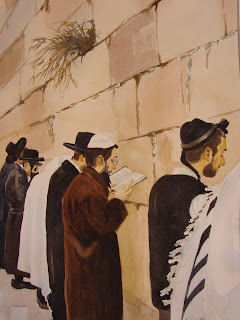
 #38
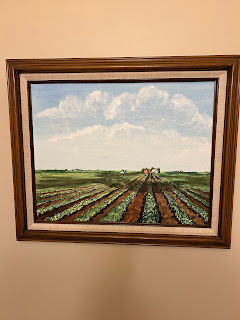
 #21 

Tuesday, February 08, 2022

This time next year we'll be laughing; a memoir by Jacqueline Winspear

 Our book club met yesterday (via Zoom) to discuss Jacqueline Winspear's memoir.  She is the author of the Maisie Dobbs series, that my husband loves and has read every title on the list.  I've only read a few of them.  Because it was on our 2021-2022 list and he loves her, I bought the book for him as a Christmas gift so I could read it! https://jacquelinewinspear.com/books/this-time-next-year-well-be-laughing/

I didn't find the memoir all that compelling, but what I enjoyed were those memories with which I could identify although I am 15 years older and grew up "across the pond." She is British (now lives in California) and grew up with WWII stories told by her parents and I lived in northern Illinois hearing my parents' stories of the Great Depression.

Two chapters (the book is not linear and each seems to stand alone as if she had written them for a class, and maybe she did) resonated for me--horses and neighbors.  Young Jackie loved horses and wrote about her first encounter in her long relationship, even to this day, with horses.  Sort of like mine.  I remember the day (although not the date) I fell in love with horses.  I think it's memorable because when our family was living on highway 64 in little Mt. Morris I probably never saw a horse except in the movies or in a parade.  My grandparents lived on a farm between Franklin Grove and Ashton, but there were no horses.  When we moved to Forreston in 1946 to a small farm house on the west edge of town there was a fenced 10 acre field right at our back yard that had several horses. I was fascinated; I fell in love. From that day forward I wanted a horse, I dreamed about owning a horse, I drew pictures of horses, I began reading all the horse series like Black Stallion and Marguerite Henry. When I finally got a 2 wheeler bike, it became a horse, at recess during play time I WAS a horse, and when in 1947 we moved to a better home, I became acquainted with the Ranz men, Charlie and Raymond, father and son horse and cattle dealers who had a barn--with horses! When I was old enough to earn my own money, it was saved quarter by dime in my "Marathon" bank (my dad delivered fuel oil for Marathon). How much money can an 8 or 9 year old earn to save for a horse?  By delivering the Rockford Morning Star through the snow and rain, and by babysitting by age 10, apparently a lot. We moved back to Mt. Morris in March 1951, and that summer I babysat for $5/week (a magnificent sum for an 11 year old). Like Jackie's parents, mine had made a promise--I could have a horse if I had enough money. By the time I was in seventh grade I had saved $100.00--about $1,000 in today's value.  I counted several times a week. One day I came home from my babysitting job and there on the railing of our house on Hannah Avenue was a leather, western saddle (not sure about the bridle).  My dad got my old friend Raymond Ranz to look at a horse I wanted--a lovely roan mare my friend Mary Ann owned. He declared her "unsound"-- she had a hip problem which is probably why Mary Ann was selling her. Then dad found a chestnut and white pinto gelding owned by the Orr family who lived a few miles away on the road to Dixon.  I had never seen the horse, but he was bought sight unseen by me, and my dad rode him to our house on Hannah (how he went back for his car I don't know).  And my happy story ends there, because if you ever want to fall out of love with horses, just own one and try to support their upkeep on what a 12 year old can earn!

One of the other stories in her memoir was about her neighbors at the Terrace, one of the places the Winspears lived.  There were the Martins and Jenners who took her to Sunday School (may be the only mention of church in her memoir), Elsie who took care of her own mother, two nosy sisters, the interesting Polly who apparently was a prostitute, Auntie Marion and Uncle Bryn, and Pat and Ken, teachers who had no children of their own. So I immediately wandered back to my old neighborhood on Rt. 64, with the Aufderbecks on one side and the Crowells, Ruth and Earl, on the other. Further down the street were the Ballards, my great grandparents, and the Potters. Behind us were the Rittenhouses, the Zickhurs, the Balluffs, and the Leopolds, plus some others whose names I've forgotten. Mike and Tommy and I would ride our tricycles up and down Hitt St. and around the corner to Mike's house. But I seemed to wander in and out of the houses of the neighbors--don't remember anyone telling me I couldn't. 

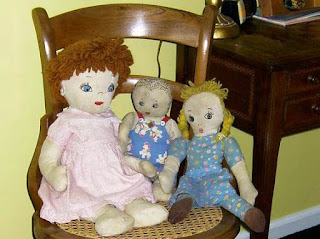
 Ruth and Earl had a box of toys that were charming--much more desirable than those I had to share with my siblings.  Ruth made two cloth dolls for me, Blue Doll and White Doll, and I still have White Doll. Earl would actually play with us in the back yard--casting his fishing line for us to catch, although no one could. One of our neighbors was a chicken hatchery, and we were free to walk in and look at the baby peeps, who were just about eye level for a five year old. The Burkes lived across the street and also owned a filling station and auto repair shop.  So I knew women could have careers because Minnie ran the station and repaired cars. Although I didn't know this until she died and I read her obituary, Minnie's brother was married to my Great Aunt. So we were sort of shirt tail relatives.  When Tommy's dad (they lived next to my great grandparents) went hunting or trapping, I'd go down and inspect the skins nailed to boards in the garage.  Tommy's dad had been a famous baseball player, Nelson Potter, so everyone in town knew him. When we grew up Tom was the valedictorian of our class and I was the salutatorian, so we sort of remained friends until his death a few years ago.  He became a professor of philosophy at the University of Nebraska in Lincoln.  https://en.wikipedia.org/wiki/Nelson_Thomas_Potter_Jr.  He may have been the smartest man to ever leave our little town.  Ruth died in 1950 when she was about 49 from heart problems--I was devastated, and remember to this day that phone call. Earl died in 1965 and I remember waving to him as I walked past the campus where he sat every day with the other old men when I was in high school.  In 1949, my great grandfather died, and we came from Forreston to attend the funeral.  I met people I'd never seen before--all members of my grandmother's family.

 
White Doll in center 


Wednesday, February 20, 2019

Time travel in church, “This is my Father’s world.”

The sermon theme this past Sunday was “Drinking Tea,” which doesn’t make a lot of sense, except the idea was to relax from our busy distracted life and take in the beauty and complexity of God’s creation with a cup of tea, or good music, or the smell of frying bacon (yes, Joe actually fried up some bacon during the service). One of the hymns we sang Sunday was, “This is my Father’s world,” and I was immediately transported back in time to the junior choir at the little Lutheran church my family attended (but never joined) 1946-1951 in Forreston, Illinois. Our neighbor in Forreston, Helen Vietmeier invited us to attend  (she died in 2010 and I last saw her at my mother’s funeral in 2000). The church welcomed us warmly and we children participated in everything, although we remained members at our home church in Mt. Morris.

This popular hymn by Maltbie D. Babcock was written in 1901, the year of his death, and wasn’t published as a hymn until later. But it’s probably in most Protestant  hymnals, and by the 1940’s even little kids could understand and gustily belt it out, particularly the “This is my Father’s world” line which is repeated 6 times. Franklin Sheppard adapted Babcock’s poem of 16 verses, to 3 verses of 4 lines each in 1915. So that’s only about 30 years for that hymn to become so popular even little kids could sing it and remember it years later.

Our pastor when I was belting out songs in the junior choir was Rev. Dr. T. B. Hersch (1871-1959) who was older than my grandparents, and was born and raised in Polo, Illinois. He retired to Polo after leaving the Forreston church in 1953 (as seen in the Freeport paper which you can find on the Internet).  I don’t remember him as an inspiring preacher in his black robe and white hair—but then, how much does a 7 year old remember?  Actually, a lot when his wife Alice got ahold of the children during Sunday School or VBS.  She was a dynamo, and you just kept your eyes glued on her and didn’t even whisper when she did those felt board Bible stories, moving Jesus and the sheep around the fields and mountains.  She died in 1970 at Pinecrest in Mt Morris. My mother volunteered there—wondered if she visited her?

Sunday, December 03, 2017

5:30 a.m. tail lights

I glanced out the window this morning and saw a car moving slowly through the condo.  A mom on newspaper duty. Just like I did, just like my mom did.

Actually, unless we had 4 feet of snow, my mom just gave us a warm breakfast, bundled us up, wrapped scarves around our faces, shoved on our leather and fleece snow boots, helped load the heavy Sunday Rockford Morning Star into our bags, and opened the door. But for three us, she had quite a work out before she could sit down with a cup of coffee and toast. My route was about 12 papers scattered at the SW of town with some farms--I was maybe 8 or 9. My sisters had the long routes with houses closer together.

My niece remembers that Mom told her she considered it good physical therapy for Carol after her bout with polio in 1949--riding her bike and walking with the bags of newspaper.  Also playing the saxophone for breath control and building up her lungs.

Friday, November 10, 2017

Friday Family Photo--Happy Birthday Marines

Happy birthday to the U.S. Marine Corps, founded Nov. 10, 1775 in a tavern in Philadelphia. My dad, (1913-2002) was a Marine in WWII, and the photo is me in 2007 pointing to his name on a monument in Forreston, IL where he was American Legion commander.

http://myplace.frontier.com/~ricksplumbing/forrestonillinois/id9.html

https://www.visitnorthwestillinois.com/what-to-do/history-and-heritage/forreston-veteran-s-memorial.html

Another memorial, this one in Oregon, for fallen soldiers, dedicated in 2015.

http://www.oglecountynews.com/2015/11/16/fallen-soldiers-memorial-dedicated-on-veterans-day/a24oy96/


Wednesday, June 08, 2016

Sauerkraut memories

When I was a child we lived in Forreston, IL which had an annual Sauerkraut Day and people would come miles for free kraut and hot dogs. The town smelled awful for days. I didn't care much for the dish, and still only occasionally have it on a Rueben sandwich or hot dog. Lots of health benefits, so maybe I'll give it another try, even without the Merry-Go-Round and gypsies.


Thursday, June 02, 2016

Designing failure

"If we were to chuck every single educational “innovation” visited upon us by political hucksters in the last eighty years, and simply teach what was then considered the norm for a person with a half-decent background in arts and letters, and call it “classical,” we would at once stanch the bleed from our enrollments and give our young people a standard deviation or two over their schooled counterparts." Anthony Esolen

I wasn't in school 80 years ago, but I was in first grade 70 years ago (first grade and sixth grade in both Forreston and Mt. Morris due to family moves), so what would I bring back?
  • Bible reading and prayer to start the day, and as children learned to read, they did it. I think we said the Pledge to the flag. No one was converted if their family already didn't attend church, but it did set the tone. Each child had a New Testament in the desk provided by the Gideons. Today police would be called if they tried that, even though under the first amendment it's still legal.
  • Money collected for savings bonds and we each had our own book (this extended well beyond WWII).  The stamps were 10 cents.  Not sure what poor children did. Very early we learned to watch our "savings" grow with pretty stamps. Today it would be considered discriminatory against immigrants or bad form to be patriotic.
  • Phonics, reading aloud, diagramming sentences to understand grammar and spelling bees. I really didn't enjoy being in front of the class, but I did learn from this to face my fears.
  • Recess and physical education through all grades. We were a hot, sweaty mess.  Probably less hyperactivity in those days.
  • School assemblies where we would gather for a lyceum event (speakers,magicians, inspirational, music, drama). The blind pianist was a favorite, I remember.
  • School wide musicals. Classroom art instruction although we didn't have art teachers and the music teacher served several rural schools.
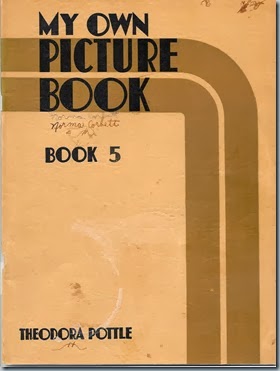
  •  My Own Picture book
  • Story time by teacher and resting after recess (for younger children)--I remember this through 4th grade. Loved those stories. My first exposure to The Wizard of Oz.
  • In room parties when moms brought cookies and we occasionally saw a movie. Halloween, Valentines and Christmas parties.  Principal read the Luke version of infancy story to the whole school.
  • In the 2 elementary schools I attended, there were no cafeterias--I either walked home for lunch or brought a packed lunch which no one inspected for the USDA approval. If we had allergic kids, I didn't know about it.
  • School wide vaccination programs--if there were religious exceptions, I wasn't aware of them. Small pox in kindergarten and polio in 7th grade.
  • Math instruction even someone like me could understand.
  • Geography and history, beginning with the world in the lower grades, then the nation, then the state and county.
There were other things that I hated then, and would hate now.  
  • Team or group projects where my grade depended on the slowest and most irresponsible person in the group. I was a good student, and hated this.
  • State testing--we didn't do as much then as they do now, but I hated it. Usually lasted a day. I was never a good test taker and it caused a lot of anxiety.
  • No special instruction for slow students.  They just dropped out after a few years to work the farm with dad, or were passed along and aged out at 16 in 7th or 8th grade. 
  • Grading each others work.  This was demeaning for both good and poor students.  I would sometimes "cheat" for the other guy, even if I wouldn't do it on my own, just so he could pass.
  • Weighing in front of class (I think our height and weight was recorded on our report cards). 
  • Mean teachers who bullied students. Yes, it happened then and probably happens now. I never experienced this because I was an excellent student and didn't cause trouble.

Monday, February 10, 2014

Monday Memories—My own picture book

Thursday evening we attended the opening of the Toulouse Lautrec show at the Columbus Museum of Art.  As well as drawings and posters by Toulouse Lautrec, there were interesting pieces by avant-garde artists in Paris around the turn of the twentieth century. . .  “paintings, watercolors and drawings; rare zinc shadow puppet silhouettes; illustrated programs for the famous Chat Noir cabaret shadow theater; and key ephemera for Parisian theaters, circuses, cabarets and café-concerts which document the activities of artists during this rich period.”

            PRESS RELEASE

This painting of  trees along a canal reminded me of a painting I’d learned about in elementary school. The next day I dug around in my bookshelves and found “My Own Picture Book” book 4 and 5, by Theodora Pottle.

Forreston was a very small town and we didn’t have art instruction, however, looking through these two books—there are eight in the series—if the teacher followed the instructions and plans, children would get a good overview of “interpretations of masterpieces.” 

My Own Picture book

Each book had 36 pages, and they were published by Johnson-Randolph Company of Champaign, Illinois.  Although I can remember working in the books, I don’t believe we were graded, and the excellent art instruction in the back of each book probably wasn’t used. By fifth grade, we cut the color reproductions with our scissors, but for the earlier grades they were included in an envelope in the back of the book.

Ave of trees 1

Ave of trees

The page on the left (black and white) includes some historical background about Holland, then describes what are the most important features of the painting, then a discussion of perspective, and finally a paragraph about the artist, Meindert Hobbema. The other nine masterpieces in book 5 have similar layouts.  Then the page on the right  has a color representation to paste in place, with questions and activities. There is a referral to p. 36 where one point perspective is explained. Looking through the two books I have, I became curious about the person who put together such a delightful set of learning tools—although I didn’t appreciate it in 1949 like I do in 2014.

Her name is Theodora Pottle, and she taught art at Macomb State Teachers College (now Western Illinois University). According to the website, she “received both her B.A. and M.A. from the University of Chicago; however, she also studied at the Art Institute of Chicago, Columbia University, the University of Colorado, the University of Arizona, and even the Ransom Studios in Paris, France. By the time she came to Western Illinois University in 1928, . . . as an instructor and head of the art department, she had already taught music and art in Duluth, Tucson, Ludington, Traverse City in Michigan, and the University High School in Chicago. She had also traveled to forty-eight states, Canada, Mexico, and had made frequent trips to Europe .


During her career, she published a number of children’s art textbooks called “My Own Picture Book Series.” These were designed to be used in elementary schools to generate an enthusiasm for the arts in young children.”

She retired in 1958 and never married or had any children, although certainly she must have influenced thousands of children over the years as well as the many students in her art classes who went on to teach others.

http://iwa.bradley.edu/essays/TheodoraPottle

When Ms. Pottle was a child, her parents had a theater company and she also performed with them. (Find a grave, Adelaide Eunice Goodrich Pottle)

Monday, November 18, 2013

Ten things I miss about being a kid—Monday Memories

I’m not one of those people who looks back in nostalgia about childhood—I always wanted to be an adult, as long as I can remember.  Obviously, children are naïve about adulthood—believe they’ll have more freedom and control.  And that’s the truth—it’s just not as they imagine.  Here’s a few things I do miss as I age.

Norma 1950 on horse

1.  I miss being able to run up and down stairs, taking them two at a time. As a child, I don’t think I ever walked when I used stairs, and I’ve always lived in a house that had stairs. I could also put my leg over my head and around my neck—not a particularly useful talent, but no one else could do it.

2.  I miss horses—the smell, touch and feel.  As a child that was my obsession.  I would hang out at the Ranz barn sitting on them and grooming them, I would ride friends’ horses, I would draw pictures of horses, I collected little horse statues, and I pretended my bicycle was a horse named “Red.” The bicycle was blue.

3.  I miss being the best artist in my age group and among my friends. My mother made sure I had plenty of paper, and 65 years later I still have some of the art supplies she gave me (dried up, but I don’t throw them away).

4.  I miss being able to eat all I wanted.  My mother really didn’t keep a lot of extra food in the house, and snacking was so sensible it would make a 21st century child weep—sliced raw potatoes, raw cabbage, or a slice of bread sprinkled with sugar.  But I never worried about putting on weight, which after age 18 was always on my mind. 

5.  I miss the sound of my mother’s voice as she read to my brother and me—Little House series (some published in the 1930s),  My Book House, or other quality books—even the Little Engine that Could, and Chicken Little.  Mother was great with accents and dialog, and always made the stories vivid. I already knew how to read, but it was more fun when she did it.

6.  I miss Christmas excitement—lying on the floor shaking packages to see if I could guess what was in them.  Hoping for new doll clothes made by my mother from left over fabric of my clothes.  Knowing some things would be practical clothing items didn’t dull the thrill. Traveling to relatives for a big dinner and seeing cousins was part of it, and I’ve forgotten all the squabbles about who would sit where and how long we had to wait. Looking forward to Grandma’s check each year (all year) and planning how to spend it came after she stopped buying us individual gifts like art supplies and magazine subscriptions.

7.  I miss winning the races.  Although I was never athletic and didn’t like to sweat, there was a time, around age 8 when I could outrun everyone in my class, even the boys.  Then I learned it’s not a good idea to outrun the boys, but OK to be ahead of the girls.

8.  To this day, I’m not competitive and don’t care much for games, because someone always loses, but I miss playing cards, jacks, racing around outside at night with the neighborhood kids playing King of the Hill, Mother may I, and Hide and Seek. We had a big yard, and other the kids came to our house—I don’t think I ever went elsewhere at night.

9.  I miss riding my bicycle to the next town in the summer for a five cent ice cream cone because they were ten cents in our town, and riding into the country to collect tadpoles in the creek with my brother.  Not sure what we did with them or how long they lived.

10.  I miss bringing dogs home or finding puppies and bringing them home, “Can I keep him, Mom?” There was Lassie 1 and 2, Jerry, Pretty, Curly, and Lady.

Monday, March 18, 2013

Monday memories—bathrooms

We are stripping the walls, moving furniture, and emptying bathroom cabinets that will soon be removed.  The contractor is to start on Tuesday.  Two 1970s era bathrooms are being upgraded (I’ve got a bad case of sticker shock). Who knew we had 6 different boxes of band-aids, and never could find one when needed? And to think my father was a senior in high school before he knew people had bathrooms inside their homes.             

                                 1930 Howard

The story he told me, which may be embellished a little because he was a great story teller, was he knew there were bathrooms in public buildings like schools.  He attended Polo High School and was in the senior play.  Because his parents lived on a farm and there was a night rehearsal and then the performance, he stayed overnight with a fellow cast member and realized that people living in town had toilets inside the house, just like at school!  He was a year ahead of his age group, since in rural schools they weren’t real picky about that, so I’m guessing he was about 16 or 17 when this was taken.

When I was in first grade and my father returned from service in the Marines after the end of WWII, his old route with Standard Oil had been taken over by someone else, so he was doing a long drive to a different area.  So he bought a home in Forreston, about 15 miles from our home in Mt. Morris.  It was an old farm house on the last street at the south end, and it had no indoor toilet.  And there was a pump on the counter of the kitchen.  Really, I don’t know what my mother must have thought, but she learned carpentry and plumbing and we soon had a bathroom.  Nothing fazed that woman. Of course, being six years old, I thought it was a great adventure.  Now, not so much!

Thursday, January 03, 2013

The Tennessee Waltz

This song, the B side of Boogie Woogie Santa Claus,  is forever associated with Patty Page, who died New Year’s Day.  Page was the top-selling female singer of the 1950s with more than 100 million records.  It tells of a love lost to a friend, who danced the Tennessee Waltz with the singer’s lover.  It was written by Pee Wee King and Redd Stewart in 1946, but was made famous by Page in 1950.

In 1950, I wasn’t listening to too many pop tunes, although I’m sure I heard them in the background on radio.  But I do remember hearing Tennessee Waltz around 1950 when riding in the horse truck with Charlie Ranz.   He sang it. Silly me.  I wanted to actually hear the Tennessee Waltz, not just a song about the Tennessee Waltz, and asked him if he knew THAT song.

Norma 1950 on horse 

Summer 1950 on a gray pony with Charlie Ranz with his truck in the background. Sweet memories of a dear man.

http://www.cbsnews.com/8301-207_162-57561785/patti-page-remembered-by-george-jones-charlie-daniels/

http://www.foxnews.com/entertainment/2013/01/02/tennessee-waltz-singer-patti-page-dies-at-age-85/

Monday, December 12, 2011

Monday Memories--I was a stranger and you invited me in

After Dad returned from the service after WWII he was assigned a new territory by Standard Oil, and he moved our family to Forreston, Illinois in 1946. Poor Mom! Housing was scarce and the old farm house Dad bought didn’t have a bathroom and the indoor water was a pump in the kitchen. I was only 6 and thought it was a great adventure--horses in the pasture next door, a new puppy, a different school and new friends.

Our next door neighbor, Helen Vietmeier, was beautiful, kind, gentle and soft spoken. Her family lived in a lovely home where I often visited and played. Although I didn’t usually call adults by their first name, she was always Helen to me which is what her lovely teen-age daughters Doris and Betty Jo called her. Helen reached out to the strangers in that shabby house and invited our family to the Lutheran church, one of three Protestant churches in the town of 1,000 settled by Germans in the 1850s.

Although we were members of the Church of the Brethren 15 miles away in Mt. Morris and remained “visitors” the five years we attended, we children participated in everything--choir, Bible school, Sunday School, plays for special events like Mother’s Day and Christmas pageants, and those wonderful Lutheran pot lucks. Because we were so young, we effortlessly learned the liturgy, difficult hymns, the creed and the Lord’s Prayer through regular Sunday attendance. When I didn’t understand Pastor Hersch’s sermons I would look at the amazing stained glass windows for which 19th century members had sacrificed. My sisters and I were all baptised in our former church, and they also attended confirmation classes at the Lutheran church. My oldest sister began her career as a church musician on the organ at little Faith Lutheran. We returned to our home community and church in 1951 after Dad owned his own business, and I didn’t see Helen again until my mother’s funeral almost 50 years later.

In 1975 we’d been living in Upper Arlington for 8 years. I heard about a speaker who was going to be at Upper Arlington Lutheran Church, so I decided to attend. I was a stranger and didn‘t know anyone, but I sat next to Dottie Wharton who invited me to attend services with her and a neighborhood Bible study at Denise Kern’s home. About a year later on Palm Sunday 1976, we were confirmed by Luther Strommen and joined UALC. I felt right at home.

Praise God for believers who reach out to strangers to extend a welcome and the Gospel. And praise God that the stranger is being Christ to the believer.

Friday, January 22, 2010

Faith Lutheran Church, Forreston, Illinois

Our family members were "visitors" here for five years--we participated in everything. Bible school, junior and senior choirs, Sunday School, confirmation classes, lots of church dinners, special dramatic events--we did it all. In the past 50 or so years I've been back several times. Still a warm, loving, welcoming congregation. This video is in honor of their 150th anniversary last fall.

Monday, December 22, 2008


It's a small, small world

This week I reconnected with my first piano teacher, a 17 year old (in 1949) from Forreston, IL. My college roommate enclosed our piano recital program in her Christmas card. There were the names of all the kids I went to school with--Leatrice, Darrell, Rosalie, Paul, Colleen, Harlan, J.D., Paul, Carolyn, etc. I really don't remember Miss T., but she must have been one ambitious teenager--my sister says she was also the choir director at the Reformed Church. But within 5 minutes through the miracle of the internet and her unusual surname and married name, I'd tracked her down. She'd grown up in Minnesota, and her name appeared on a school list (with her married name) and her year of graduation from Forreston High School and Hope College. Then I found her on Facebook, with a "friend" who had her last name, and I looked him up. He was a politician born in 1955, so I figured he was her son. Then I found her on a genealogy website under her married name looking for her birth name family. That gave me her e-mail. Five minutes. And she wrote back. Scary isn't it?

Then Sunday I was sitting in the church lounge before the 8:15 service with a woman I'd never seen (we have 9 services, so that's not unusual in our church). We chatted a bit about the cold. She had come early because her husband was in the choir and I was there early because I come at 7 a.m. to pray with the pastor before the service. We began sharing a few stories--she said she'd grown up in northern Ohio, I said northern Illinois.

"Where?" she asked.
"Mt. Morris," said I.
"You're kidding--I used to live there."

Mt. Morris is pretty small (ca. 2800), and sometimes I meet people, particularly librarians who have heard of it because of the magazine agency, or someone's mother went to college there. Once I met a guy in Indianapolis who lost his wife to an affair with a guy from Mt. Morris, but lived there? That's never happened. She lived there in the 1960s after I was gone, but knew a number of my classmates through church and extension. Still exchanges Christmas cards with some friends there.

It's a small, small world. On the internet and in the Lutheran church lounge.